
Memento Vivere
Illuminating the Facts About Behavioral Health and Rising Above the Stigma
Author Biography
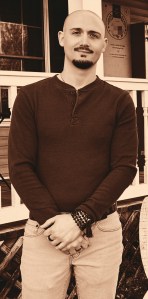
My name is Kēphen Merancīs, I am a writer and behavioral health advocate. As such, I advocate for the fair and equal treatment of individuals with mental health conditions and substance use challenges in employment and society. I also provide peer support and information about resources and services to people who are struggling. Behavioral health includes both mental health conditions and substance use disorders. Mental health conditions, in this context, includes but is not limited to chronic stress, anxiety disorders, mood disorders, depression, grief, post-traumatic stress disorder, suicidality, and so on.
I launched this website in 2010 to be an archive of personal writings about my struggles with mental health and my philosophical explorations, but in the time since then it has also become a place to find resources and information on services for other people struggling with their own life challenges.
I grew up in poverty living in a mobile home in a rural area outside a small town of less than 200 people in Missouri. An environment where my parents had to make tough choices about whether or not to buy food or clothing. It was also a situation where, as a child, bathing for me was not considered a parental priority and would frequently not be addressed for a week or two at a time, and where I did not properly learn how to address my oral hygiene until adolescence, things that resulted in shame and social judgment during elementary school. I encountered adverse childhood experiences including sexual, physical, and religious trauma. All these experiences caused future struggles with depression and suicidality throughout my teens and early twenties.
Despite my early experiences, I excelled in high school academically and received enough scholarships to attend a local technical college in 2004 without having any out-of-pocket expenses except for food. Unfortunately, I experienced a mental health crisis that resulted in my early withdrawal from enrollment. At the time I was too ashamed to inform the school staff that I was experiencing panic attacks, feeling depressed, and could no longer focus on my studies. Mental health was such a taboo topic back then that I didn’t think anyone working for the school could possibly understand what I was going through. Neither I nor the school made any mention of mental health as a possible cause of my withdrawal and so if any resources or services were available through the school or that they could connect me with, they were not provided.
I got into a dispute with my parents about wasting the opportunity to be the first person in my family to attend college and to do so for free. In anger, and quite honestly in shame, I left home with no job and no plan for where I would end up. I bounced around from place to place, sometimes sleeping on the couches of friends or other family members, or sometimes sleeping in my truck wherever I could park it without being disturbed. It was the first time in my life that I was unhoused, and it made me realize just how much more difficult life was when shelter (and the amenities it affords) lacked certainty.
Months later I reconciled with my parents and moved back home. I was finally able to access mental health therapy at the encouragement of a friend from a local counselor and disclosed for the first time that I had attempted suicide when I was 16 years old. After this disclosure I found the courage to begin sharing my personal mental health experiences with others outside of the clinical setting via in-person conversations and by writing about it online through social media starting in 2005. That same year I experienced another suicidal crisis and was hospitalized and clinically diagnosed with depression, but a year later this diagnosis was expanded to bipolar disorder and my treatment plan was adjusted.
For the next year I did profoundly well, it was a time of significant stability. In October 2007, I enlisted in the United States Marine Corps (USMC) after receiving a waiver from the Military Entrance Processing Station for my depression diagnosis. Due to advice from a Navy recruiter I did not disclose to the military physicians that I had also been diagnosed with bipolar disorder because he stated it was a disqualifying condition. I was also advised by this recruiter to stop taking my medications at least 6 months prior to shipping out for boot camp. While at boot camp in early 2008, I experienced a mental health crisis that reached the level of suicidality while in San Diego, California and was discharged from the USMC. Following this event I traveled back to Missouri and sought help from civilian health care providers and moved on with my life.
While employed from 2008 – 2017, I had regular opportunities to train and lead high school and college-aged students who were working for our agency in temporary office positions which afforded me opportunities to meet and interact with students of varying backgrounds and life experiences, including those who expressed their own personal struggles with mental health and substance use. It was during this time that I learned firsthand how disclosing my own personal story, offering support, recognition, and compassionate engagement can positively affect teens and emerging adults struggling silently with those challenges and suicidal ideation.
One specific interaction in 2016 with a teenager experiencing a suicidal crisis fundamentally changed the direction of my professional interests and eventually led me toward my own involvement in mental health advocacy, peer-support, and continued education in suicide prevention and behavioral health.
From that point forward I stopped thinking about mental health from my own internal perspective and started thinking about it as something beyond just me. I realized my belief that I was isolated and trapped in my own struggle was a false narrative. I wasn’t lost at sea in a storm in a tiny boat alone without sails or paddles, I was on a massive passenger ship with countless others experiencing the same storms and isolation but had simply locked myself in my passenger room. I needed to find courage to unlock the door, walk outside, and be brave enough to start a conversation that mattered so I could notice I was not alone in my experience and figure out how I could help others.
It taught me that while recovery is a journey and not a destination it’s also a path populated by others facing the same hardships and struggles and that if I wanted to truly be in recovery I needed to incorporate service to others. It inspired me in 2018 to become a field advocate for the American Foundation for Suicide Prevention. In this outreach role I shared information within my community about upcoming education and engagement events, support resources, and participated in advocacy efforts. I also started attending the local annual Out of the Darkness Community Walk, for which I still captain a team each year made of family members and friends.
I began independently volunteering in peer support (at no cost) for anyone I encountered who appeared or reported to be struggling with a mental health condition or substance use challenge, primarily focusing on men within the late teens through early thirties age demographics. In 2019, I became a Certified Peer Specialist, a credential I still hold. I volunteered in my community with a group dedicated to suicide awareness and prevention. We met regularly to discuss actions to forward our cause and facilitated support groups for community members in need. I gave talks about my experiences and wrote for the local newspaper.
While employed from 2018 to 2021 as a professional development instructor I was able to form and lead a team that developed inter-agency partnerships, hosted training courses facilitated by the MU Psychological Services Clinic and the ComPsych Corporation. Additionally, I facilitated recurring training courses on conflict management, motivation, and stress and anxiety, during which I discussed my own personal experiences with a mental health condition, treatment, and recovery.
I have attended many in-person and online training events and conferences hosted or sponsored by Missouri organizations such as the Missouri Behavioral Health Council, Missouri Suicide Prevention Network, Missouri Department of Mental Health, UMSL Missouri Institute of Mental Health, Mental Health First Aid Missouri, Missouri Task Force on Children’s Justice, NAMI Missouri, Missouri Partners in Prevention, Missouri Crisis Intervention Team Council. I have also attended national training events such as those hosted by the Suicide Prevention Resource Center at EDC, QPR Institute, American Foundation for Suicide Prevention / the Jed Foundation, and the Trusted Provider Network.
In 2024, I completed a six-month course with the Trusted Provider Network on assessing, understanding, managing, and treating chronic suicidality. This course was incredibly personal to me as the topic of suicide awareness and prevention has been at the forefront of why I entered and have continued to gravitate toward the mental health industry. Not just for my own personal experiences with chronic suicidality but because of friends, family, and strangers I have met along this journey who have also struggled with suicidal thoughts and behavior or who have lost loved ones to suicide.
I am openly a member of the LGBTQ+ community and identify as bisexual, but while I was very public and vocal about this topic when I came out in 2008 I have not been actively involved in public events, projects, or organizations solely focused on the LGBTQ+ community because I have not wanted that small aspect of my life to define the entirety of my identity. I mention it here solely to highlight the extent of my personal experiences and because it was highly influential and consequential to my childhood growing up in a religiously conservative small-town community.
As a practicing secular Buddhist, my dharma practice is important to me and I firmly believe and credit my recovery to my conversion to Mahayana Buddhism in 2010. This conversion granted me the opportunity to walk through the golden door and onto the middle path beyond. A path toward truth behind the veil of illusionary permanence, toward compassion for the cycle of suffering, and toward the wisdom needed to untether myself from the notion of a separate self. To learn more about Buddhism and how it may help you in your own life journey check out my article A Brief Examination of Buddhism.
Other interests include nature, history, astronomy, paleontology, gardening, baking, and ceramics. I enjoy hiking, road trips, documentaries, podcasts, nonfiction writing, and I’m particularly fond of cats and will befriend them anywhere I go. As a writer, I am influenced by the works of Fernando Pessoa, Rainer Maria Rilke, Thích Nhất Hạnh, Walt Whitman, and John Muir.
I invite you to explore the below personally curated collection of recommended content…
My Heart in the Sun (2010)
This creative essay illustrates the concept of using self-generated, unconditional love as a transformative, protective force, a “beacon of hope,” that reaches across the pain and isolation of a traumatized past to provide comfort and connection to others. Read essay >>
These Walls, That Shadow, Those Memories, and This Soul (2010)
This creative essay poignantly explores the concept of the “wounded inner child,” illustrating that true healing and wholeness for an adult requires addressing and nurturing the fragile, traumatized younger self that remains hidden within. Read essay >>
A Journey Called Hope (2012)
This essay was written in 2012 but was later expanded upon in 2020. It serves as an intimate, raw, and courageous autobiography of overcoming suicidal ideation in youth, detailing the profound pain of growing up closeted and the damaging impact of religious and societal shame, before finding the strength to reject those toxic narratives and choose self-acceptance. Read essay >>
In Search of Self (2016)
This essay chronicles a profound internal journey, articulating the shift from seeking external answers—through religion, therapy, and various life experiences—to the realization that healing is an introspective process of embracing one’s own authentic self, darkness and all. Read essay >>
Everywhere You Go, There You Are (2017)
This essay conveys the empowering realization that we are the architects of our own suffering and happiness, emphasizing that while we cannot control external events, we possess the ultimate freedom to choose our attitude and perception in any given situation. Read essay >>
No Arrival, No Destination, Just Being (2017)
This essay advocates for the practice of “being” over the frantic pursuit of “doing,” encouraging readers to embrace the present moment and cultivate mindfulness as a remedy for the pervasive distractions and anxieties of modern life. Read essay >>
Alone In The Dark (2017)
This article provides a somber, data-driven examination of child suicide, emphasizing that unlike in adults, these acts are often impulsive reactions to overwhelming external stimuli and stress, highlighting the urgent need for open communication and active adult intervention to recognize the subtle warning signs in children. Read article >>
The Macrocosm Perspective (2017)
This essay employs a “macrocosm perspective” to illustrate the vastness of the universe, arguing that contemplating such astronomical scales is a powerful tool for dismantling the ego and gaining a more humble, grounded understanding of our place in existence. Read essay >>
The Passenger: Commentaries on the Nature of Consciousness (2017)
This essay investigates the fragmentation of the human mind, using neuroscientific evidence—such as split-brain research and Dissociative Identity Disorder—to challenge the conventional notion of a singular, unified self and to question whether consciousness is an individual construct or a fundamental property of the universe. Read essay >>
When A Parent Dies (2017)
This essay serves as a deeply personal and vulnerable meditation on grief, documenting my process of navigating the loss of a parent while ultimately finding solace in a scientific, rather than metaphysical, understanding of life, death, and the enduring nature of energy and matter. Read essay >>
The Right Mindset for a More Meaningful Life (2018)
This essay was written in 2018 under the title “The Inexplicable” and was later transformed into a video essay in 2021. It reflects on the staggering statistical rarity of our own existence, using this realization as a catalyst to reject complacency and embrace a life of conscious, meaningful action in honor of those who never had the chance to live. Watch video >>
Choose to Live (2018)
This essay serves as a powerful call to action, framing the awareness of our own mortality not as a source of despair, but as a vital catalyst for escaping complacency and actively pursuing a life defined by wonder, courage, and genuine experience. Read essay >>
To be Acknowledged as Existing (2018)
This essay underscores the vital, life-affirming power of human connection, arguing that in the face of our shared mortality, the simple act of acknowledging another person’s existence can be a profound, life-saving gesture of empathy and love. Read essay >>
Moments in Time (2018)
This essay presents a comforting perspective on grief, positing that time is a static, multi-dimensional expanse where every moment, including those shared with lost loved ones, continues to exist permanently, much like frames in a film reel, thereby offering a sense of enduring connection beyond the constraints of our linear perception. Read essay >>
In the Twilight of Memory (2018)
This piece serves as a visceral, sensory-rich descent into the archives of the mind, illustrating how memories, though physically unreachable, remain vividly preserved in our consciousness as a permanent, haunting, and nostalgic “twilight” that continues to shape our present identity. Read essay >>
The Past That’s Not Forgotten (2018)
This article was written in 2018 and updated in 2021. It breaks the silence surrounding the sexual abuse of boys and men, challenging the societal stigma and false narratives that render male victims invisible while providing a critical, data-backed examination of the prevalence, causes, and long-term psychological impacts of this trauma. Read article >>
Chasing the Westward Sun: One Week and 3,500 Miles (2018)
This essay serves as a reflective travelogue that documents a 3,500-mile journey through the American West—an intentional pilgrimage undertaken in the wake of personal grief and career dissatisfaction to break the “loop” of daily existence and reconnect with the sensory, grounding experience of nature. Read essay >>
Liberation and a Return to the Sacred (2019)
This essay explores the transformative power of reconnecting with nature, arguing that immersing oneself in the wild is essential for breaking free from the “hologram” of the ego, understanding the true, interconnected nature of existence, and healing the mind from the toxic distractions of modern, urban life. Read essay >>
The Dying Light of Unrequited Love (2019)
This essay provides a raw, vulnerable examination of the cycle of emotional attachment and disappointment, articulating the painful realization that the “love” we often feel is not for another person, but for a projection of our own unfulfilled needs and hopes for connection. Read essay >>
The Scars of Loss (2020)
This essay provides a poignant meditation on the nature of grief, arguing that we never truly “heal” or “get over” significant losses; rather, we carry them as permanent scars—reminders of the love we shared and the parts of ourselves that were irrevocably changed by their absence. Read essay >>
The Power and Truth of Self-Awareness (2020)
This essay explores the foundational role of self-awareness in well-being, arguing that by accepting the inevitability of life’s hardships and choosing to focus our energy only on what we can control, our attitudes and responses, we can achieve true emotional autonomy and break free from the cycle of external suffering. Read essay >>
How to Practice Empathy and Prevent Emotional Impotence (2021)
This essay provides a critical examination of “emotional impotence,” a form of toxic positivity where individuals dismiss or compartmentalize trauma to avoid personal discomfort, and offers a practical guide on how to replace such dismissive behaviors with authentic empathy through active listening, boundary setting, and the complete removal of the ego from social interactions. Read essay >>
The Power of Purpose, Meaning, and Fulfillment (2021)
This article serves as a foundational “triage model” for personal growth, defining purpose as the goals we set, meaning as the internal justification we discover through struggle, and fulfillment as the resulting satisfaction, all while providing a comprehensive toolkit, including S.M.A.R.T. goal-setting and resilience strategies, to help individuals take self-directed control of their lives. Read article >>
Long December (2021)
A poem that serves as a raw, melancholic reflection on the lingering trauma of a past relationship, detailing the struggle to overcome feelings of betrayal, self-blame, and the emotional vacuum that can persist years after a painful separation. Read poem >>
Music & Mental Health: A Path to Recovery (2022)
This essay serves as a deeply personal testament to the therapeutic power of music, detailing how the artist Oliver Daldry became a vital companion during the my darkest moments of depression and suicidal ideation 2021, and illustrating how art can act as both a mirror for our inner scars and a “mortar” that helps hold our fractured selves together. Read essay >>
20 Years Later: A Letter to a Lost Teenager (2022)
This essay is a haunting, deeply vulnerable “letter to a ghost” (my former self from 2002) that contrasts the suffocating darkness and silent suffering of my teenage years with the hard-won perspective and relative liberation I have achieved two decades later. Read essay >>
Online Etiquette (2023)
This essay acts as a critical cultural critique of the “digital wild west,” arguing that the perceived anonymity of the internet has fostered a climate of performative hostility and emotional volatility, and calls for the institutionalization of online social skills training to curb the resulting erosion of real-world empathy. Read essay >>
On the Nature of Happiness (2023)
This essay deconstructs the common, often destructive pursuit of “happiness” as a permanent state, arguing instead that happiness is a fleeting emotion subject to the law of impermanence, and that true peace is found by shifting our focus from the impossible chase for constant joy toward the more sustainable and realistic pursuit of contentment. Read essay >>
Bildungsroman: The Trials of Transitory Transformation (2026)
This essay serves as a reflective, middle-aged retrospective on the transition from the anxieties of youth to the wisdom of maturity, arguing that the desire to “slow down time” through constant experience is a futile endeavor. Instead, it posits that life is defined by the inescapable reality of impermanence, and that true growth comes not from accumulating more experiences, but from cultivating internal virtues like courage and authenticity. Read essay >>
Memento Vivere
- Missouri Organizations:
- AFSP Missouri
- Mental Health First Aid Missouri
- Missouri Behavioral Health Council
- Missouri Crisis Intervention Team Council
- Missouri Department of Mental Health
- Missouri Partners in Prevention
- Missouri Suicide Prevention Network
- Missouri Task Force on Children’s Justice
- NAMI Missouri
- UMSL Missouri Institute of Mental Health
- National Organizations:
If you or someone you know is experiencing a mental health or substance use crisis, please access my immediate assistance resource page. A comprehensive listing of online and phone resources and services is also available.
Disclaimer: By navigating this website and utilizing the information and resources provided herein, you declare an understanding of and are acknowledging that I, Kēphen Merancīs, am not a licensed psychiatrist, psychologist, social worker, counselor, therapist, or any other clinical behavioral health practitioner that can diagnose or treat a mental health condition or substance use disorder. By navigating this website and utilizing the information and resources provided herein, you also declare an understanding that I am not a practicing attorney nor licensed to provide legal advice. Any resources, information, advice, recommendations, and support services provided are non-clinical in nature and are not a replacement or substitute for the mental health services such as therapy or medical advice, typically provided by a licensed behavioral health clinician or physician. Any legal discussions are not provided as a replacement or substitute for the legal advice provided by a licensed attorney.
*{According to the Copyright Law of the United States, Title 17 of the United States Code, all written content provided by the author is the sole property of that author and any reproduction or otherwise plagiarism of that content is strictly prohibited and such violations will be prosecuted under U.S. federal law, regardless of the national origins of the violator.
The photos that appear in the header on the desktop version of this site were taken by me in Grand Teton National Park, Yellowstone National Park, and Glacier National Park. Therefore, as my property through created content they also fall under the copyright law and cannot be used for profit without my consent.}
Thích Nhất Hạnh
Photo credit: Kelvin Cheuk Lotus in a Sea of Fire:Honoring Thích Nhất Hạnh Thích Nhất Hạnh, pronounced Tik-N’yat-Hawn, was a Vietnamese monk of the Zen tradition, part of the Mahayana branch of Buddhism. The first word in his name, Thích, is actually a title…
Rainer Maria Rilke
Letters to a Young Poet is a very short book first published in 1929. The book is comprised of ten letters written by Rainer Maria Rilke, a German speaking Bohemian-Austrian poet who died in 1926 from leukemia at the age of 51. The letters…
Walt Whitman
In Search of Walt Whitman, Part One: The Early Years (1819-1860) This engaging film tells the story of Walt Whitman’s remarkable life (1819-1892), the turbulent era in which he lived, and the timeless poetry he created. In Part One, Walt Whitman rises from a…
All essays publicly available.
Colin Madsen: A Decade Without Answers
It has been more than a decade since the death of Colin Robert Lloyd Madsen. There are still many unanswered questions surrounding his death. We (his friends and family) know that his death did not result from his own volition. His life was taken…
Fragrant Palm Leaves – Thích Nhất Hạnh
Thích Nhất Hạnh’s journal entries, Fragrant Palm Leaves, is a gem of a little book providing so much insight and strangely enough also comfort. I say strange because the selected journal entries were penned from 1962 to 1966, right in the midst of the…


Bildungsroman: The Trials of Transitory Transformation
My senior year of high school, 2004 Coming-of-age is terrifying and speaking as someone who turned 40 several months ago, so much of my life has not gone the way I imagined it would when I was younger. When I was a child, an…
Posted on June 17, 2026 by Kēphen
Leave a Comment