
Memento Vivere
Illuminating the Facts About Behavioral Health and Rising Above the Stigma
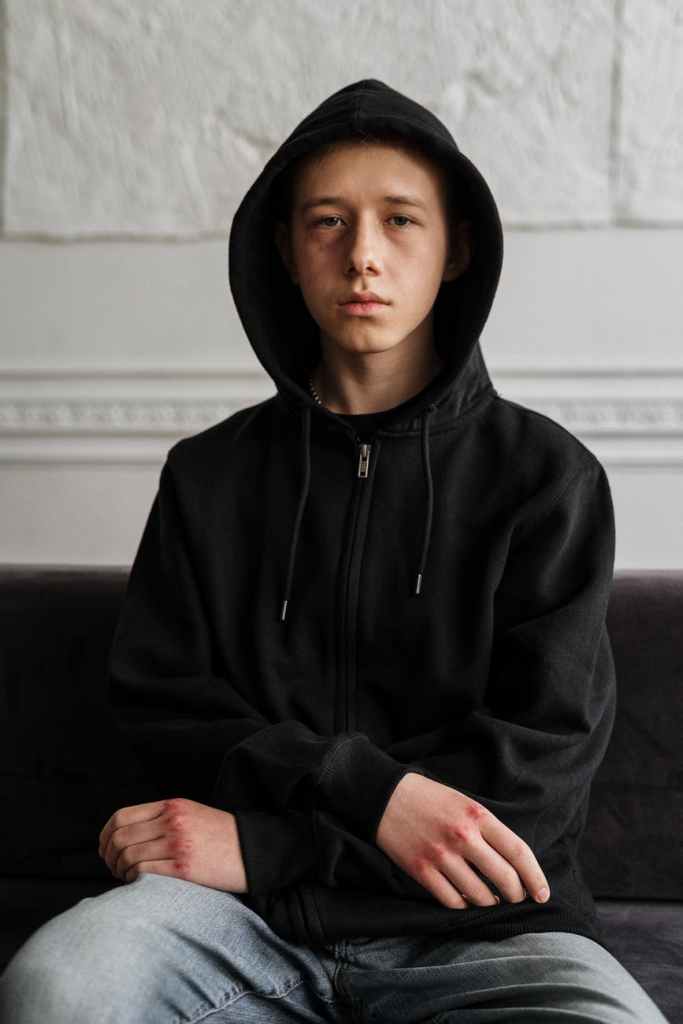
When Life Hurts the Most
When Life Hurts the Most
We are all broken, none of us are lucky enough to get through life unscathed. What sets some apart from the rest is that they learn and grow and become stronger in the broken places.
Who are you? Who do you want to be? Are you willing to face yourself in order to be free?
The only way to win in life is to do better, become better than the person you were yesterday. It’s not easy, but it’s not supposed to be easy. If it were, everyone would be successful.
Finding yourself is hard, but healing and building yourself up from the brokenness that you find within yourself is harder. It takes a lot, we must step outside our comfort zones, be willing to see other perspectives, be willing to question what we believe to be true about us and about the way things are.
The emptiness we feel can only ever be filled by finding, keeping and nurturing three things in life: (1) physical and mental health, (2) emotional connections to others, and (3) what we believe in.
Kyle Eschenroeder once wrote that there are 7 things that can destroy us: (1) ingratitude, (2) envy, (3) impatience, (4) feeling overwhelmed, (5) inaction, (6) loss of meaning in life, (7) an unwillingness to take risks.
Psychologist Martin Seligman established the belief that we can only flourish and live well if we can meet all of the criteria laid out in what Martin called the PERMA model:
P) Positivity: practice positive emotions, forgive your own past, be grateful for what you have, and choose to be hopeful for the future.
E) Engagement: find something to do either as a hobby or as a career that you find so enjoyable that it makes you become so captured and satisfied that you lose track of time when you’re doing it.
R) Relationships: establish strong bonds with other people, know and understand who is there to support you when facing life’s challenges.
M) Meaning: determine what gives you a sense of meaning, purpose, and fulfillment in life and pursue it, it will provide you with the most rewarding experiences in life.
A) Accomplishment: when you achieve victory or success, celebrate those wins and invite those you have a close friendship or relationship with to join you in the celebration.
One of the greatest American presidents we’ve ever had was Abraham Lincoln. He faced many obstacles, setbacks, failures, and even tragedies throughout his whole life. Before he ever became the 16th president, he told a close friend that he was considering taking his own life, but the only reason he didn’t was because he felt as though he had not yet done something with his life that made his existence matter.
He wanted to do something with his life that made a difference, that meant something, that was worth being remembered for. He didn’t want this for himself or even his family, he wanted it for the nation, for the people, to make the lives of those who also felt his struggle and his suffering to be changed into something better, something hopeful, something beautiful.
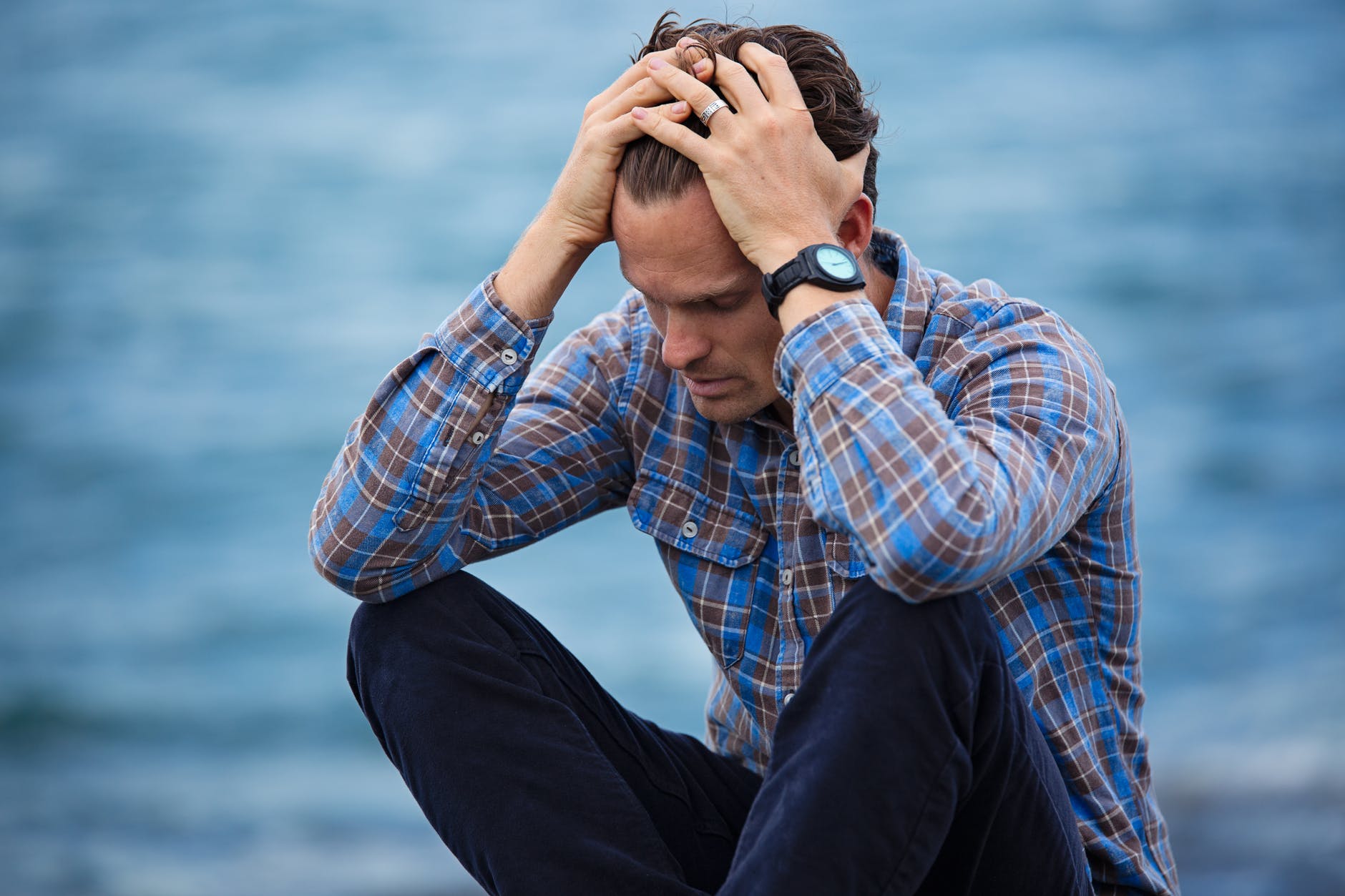
Start a Conversation that Matters
Start a Conversation that Matters
I can’t begin to tell you how much it astounds me when I ask someone to talk to me about how they feel, to share with me the pain they are afraid of that they harbor within, and their response to me is that no one has ever noticed or given them that chance before.
They tell me that no one ever seemed to care, people who have known them all their lives, people they call family and friends. Time and time again, I hear them say that they don’t matter, that how they feel doesn’t matter. They convince themselves that this is true.
Each of them has found a way to cover up those feelings, whether we’re talking about compartmentalizing and separating themselves from that pain, or taking things into themselves that bury, drown, or “sound” out the pain. Most of the time these methods are self-destructive and only temporary.
Why do the people closest to those who suffer, seem to be the ones most unaware, or unconcerned, or unwilling to reach out to help?
Perhaps it’s the same reason that some are unwilling to tell those they are closest to, just how much they hurt.
To ask is to know and share in the pain, to tell is to inform and share the pain. These are two sides of the same coin.
If you or someone you know is experiencing a mental health or substance use crisis, please access my immediate assistance resource page. A comprehensive listing of online and phone resources and services is also available.
The Power and Truth of Self-Awareness
The reality is life is hard and sometimes even painful, but so is the truth. We shouldn’t cover up the truth and we shouldn’t hide from life out of fear of or submission to hardship and pain.
Many of us have things in our lives that we’d like to change, in the hopes that it would make our lives better. Maybe it’s our past, maybe it’s something we’re struggling with right now, or maybe it’s something we fear happening in the future.
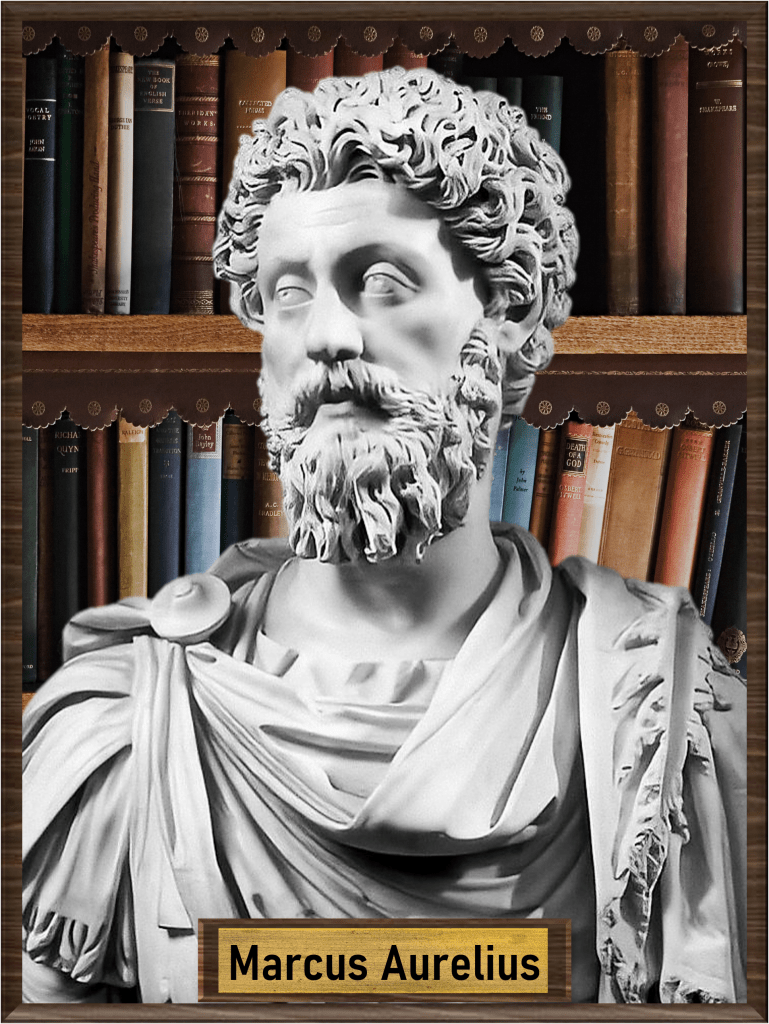
The last great Roman emperor Marcus Aurelius, wrote in his journal Meditations, that nothing is ever as difficult as what we make it out to be. We allow our troubles to be troubles. We allow our thoughts and our worries to trouble us.
Psychologist Julian Rotter pointed out that when we focus our thoughts outward onto external things beyond our control, we cause ourselves to suffer due to that lack of control and the never subsiding worry.
There really is something to an awareness of focus. Awareness of our attention and energy. It’s called self-awareness and we need it in order to ever begin the journey of wellbeing.
Understanding that we have the power to control, influence, or not control, makes this hard life a little more manageable. The rest is all attitude.
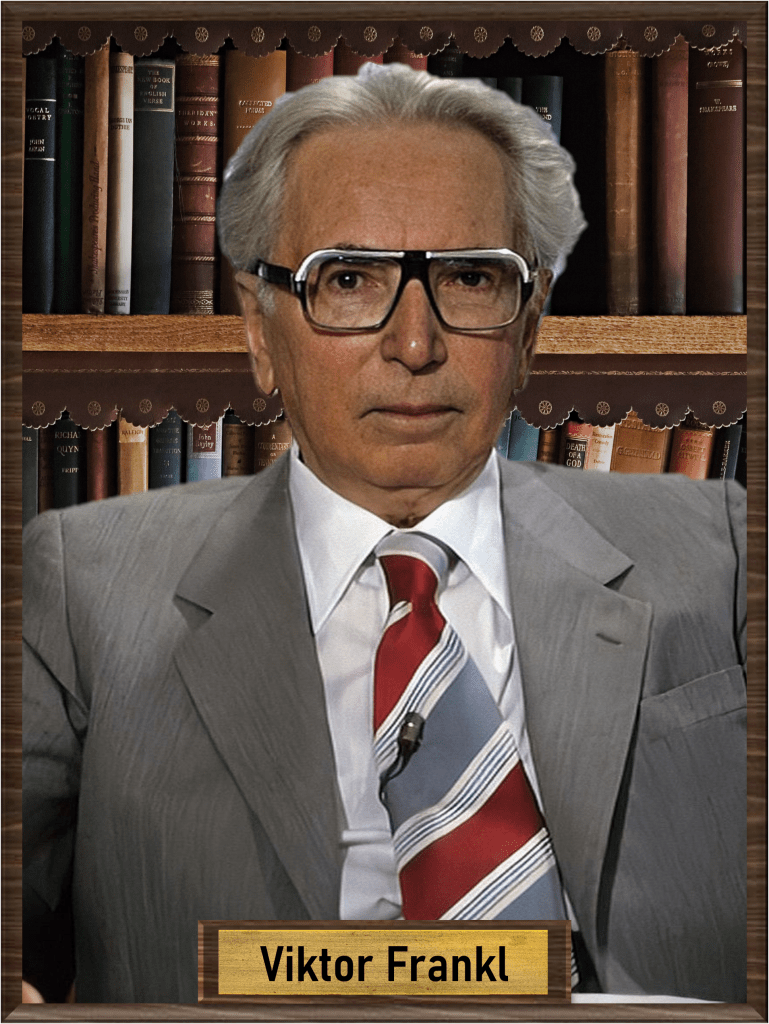
Holocaust survivor Viktor Frankl, wrote in his book, Man’s Search for Meaning, that the last of human freedoms is the attitude we choose to have in any given situation. It’s the one thing that cannot be taken from us.
With self-awareness we can begin to observe our own attitudes, behaviors, and choices. These things we have the power to control or at the very least influence. Autonomy and self-efficacy lay out the path before us. A path leading away from the past, a path that guides us through the present, and a path that promises a different future. All we have to do is choose to walk it.
All of those external things: other people’s attitudes, behaviors, choices, their opinions of us, they are all out of our control, and therefore, we should not waste our time, energy, or focus on them.
When someone says something to us in anger, they offer us that anger. We can either take them and allow their words to make us angry and spiteful, or we can choose to brush those words off of us. By not allowing the words of others to influence our emotions, we take away their power over us. We get to choose how we feel and we get to choose how we act on those feelings.
A Journey Called Hope
Pulled from the archives and originally written in 2012, updated and expanded.
Please be advised this entry discusses difficult emotions and suicide, it may not be appropriate for those easily disturbed or triggered by such topics. Support resources are provided at the end of the article.

When you’re just a kid and adults, both those that are strangers and those with authority that are trusted like teachers and priests, unknowingly convince you with their misguided words that the thoughts you secretly have are sinful, that it’s against the teachings of your God and your religion, it causes you to become shaken. You are confused and afraid. You feel wrong, you feel sick, you feel guilty as though you’ve done something wrong and yet you’ve done nothing at all, but be yourself.
You try to hide it, that part of you that’s an important piece of who you are. You push it down deep and try to keep it secret so that no one sees it. You learn how to fake things, to do things that prevent others from knowing the truth. You lie and you pretend, just so that no one will hate you, laugh at you or make you feel bad about yourself.
You struggle every day to keep a part of you caged up. Scared to death that someone might figure it out. Scared to death that you won’t be accepted, that no one will ever love you. Trusted adults tell you that religion dictates certain people to be bad, and these unfortunate and damned souls just so happen to remind you of you.
You become convinced they must be right because you don’t know any better. You look in the mirror and you think that you are bad. Even though you never made the choice, you are forced to live with the consequences of other people’s ignorance.
When you go home after school you withdraw inside yourself. You have so many thoughts that you try to fight. You tell your thoughts to go away, you fight against them. You tell yourself that the thoughts are bad and wrong, that you are bad and wrong.
At eleven years old you find a place to hide and cry, you cry out of anger, out of shame, you cry out and ask God why you are cursed, you cry because you don’t want to be afraid anymore, you cry because you don’t want people to hate you for having feelings you can’t stop. You cry because you don’t know what else to do.
You wipe away your tears and you carry on. You smile and you laugh because you don’t want anyone to know something is wrong with you. You try to hide the fact that you are different the best that a kid can.
By the time you are sixteen you have become someone that isn’t you. You don’t even know who you are. You are so messed up from pretending to be someone else. You are emotional, you’re angry, you’re lost, you’re withdrawn and quiet, you’re still afraid and still in hiding.
You don’t even want to talk to people in fear they may discover your truth. You don’t try to make friends because it’s too risky. You still cry when no one is around and you try to be by yourself as often as you can. You learn to write because words set you free, your bleeding heart fills up pages with sadness, self-hatred, loneliness, a blinding and painful misery you never deserved. A choice you never made.
You hear people still saying bad things about other people like you, use it as a slur to make fun of people. Sometimes you even join in just so no one notices you are one of them. In time, you start to blame those undeserving victims for your suffering. You blame them because they are open, you blame them because they are happy, you hate them for it.
Eventually, you fall to pieces and you hate yourself more than anyone else. You hate being alive. You hate that your heart flutters. You hate yourself for wanting to be loved. To just be noticed.
You begin to hate human contact. You don’t want people to touch you, to hug you. You don’t want to talk to anyone. Deep down, you want all of it, but you won’t allow yourself to have any of it. You don’t deserve it. You are filth, you are dirty, sinful, an abomination, you are depraved.
The pain consumes you. The sun stops shining, darkness embraces you. Your heart is dying and human contact evades you. You are falling down into a hole where no one can help you. Not that you expect anyone to want to.
You start physically hurting yourself to see if you can still feel anything other than emotional pain. You cut yourself in the hopes that the pain will bleed out too. You think about dying because you don’t want to hurt anymore. You can’t stand to look at yourself anymore. You keep hiding from everyone, but you don’t think you can hang on anymore.
Eventually you make the choice to kill yourself. You write a letter of apology to your parents and lay it on their bed. You walk outside your home for what you believe to be the last time.
For the first time in what feels like forever, you feel oddly free. Like a burden has been lifted off your shoulders, the choice to die feels like a relief, a refuge from your suffering. That the end of you is the end of it. The colors of the trees and the grass seem more vibrant, the smells more intense than what you’ve experienced for so long. In a strange twist of fate, now that you’re going to die, you feel more alive than you did before.
You walk until you find what you believe to be the place to end your life. You wish it didn’t have to be this way, that death wasn’t your only salvation. You wish that someone could love you for who you are. You wish that you could love.
In the seconds before your plan is completed and you do something that cannot be undone, you stop yourself as the faces of your family flash into your head, along with memories. You try to convince yourself that they will be better off without you as a burdensome worry. You’re no good to anyone.
You turn and look around you, as if others are there, watching you, waiting to see what you will do. Surrounded by woods on every side except behind you, you know that no one else is there, no one human anyway, just the trees and the animals, the only things that still understand you.
Like a tiny distant whisper, a voice seperate from the others in your head, reaches out from nowhere and offers you two words, “What if?” Your head races with thoughts of what if life could be different, what if you could feel differently, what if you could be loved, what if you could love, what if there is hope?
Your hand opens and your instrument of death falls away from you in slow motion, you watch it fall to the ground until it makes contact with the yellow grass. Everything else blurs, everything else goes silent, your legs give way and you collapse to the ground on your knees.
You don’t kill yourself. Instead you become angry at yourself because you believe you are still too afraid to die, you’re confused that a part of you wants a reason to live. You fight on desperately wishing someone would notice how broken you are, that someone would just reach out and ask you if you are hurting so that you could finally tell someone. But instead you remain alone and scared. You are only sixteen years old.
A little over two years later you find yourself without hope again. Unwilling to accept yourself because you think no one else will, you believe that death will come easier this time. You have no more hope. No one even seems to notice you, and if they do they have chosen to say nothing. You’re convinced you don’t matter, that no one cares.
You’re tired of everything. Tired of the pain, tired of the lies, tired of pretending, tired of hating yourself. Tired of wanting to drive your truck off the road every morning on your way to work, tired of thinking of other ways to kill yourself. You decide that shooting yourself is the only way this will end.
On the morning of what you think will be the last time you’ll ever see the sunrise again, you’re angry that still no one seems to notice how much you’re hurting, that no one will miss you, that no one cares about you at all, that you don’t matter, your life doesn’t matter.
Strangely enough your anger is actually your saving grace. Your plans are interrupted when people intervene after an emotional outburst. Your life is about to be forced to change, and though blissfully unaware, they have helped you save yourself from things they do not yet understand. The lock on the door that for so damn long has held you imprisoned within has been broken off the door. You are nineteen years old.
Three more years of emotional ups and downs, of medications and therapy, have come and gone and at the age of 22 you decide that you have nothing more to lose. You decide that you’ve wasted enough of your life and you finally open the door that’s been sealed shut since you were thirteen years old.
You choose to accept yourself and find the courage to tell others who you really are. You realize that living as you is worth more than dying as someone you were never supposed to be.
If you or someone you know is experiencing a mental health or substance use crisis, please access my immediate assistance resource page. A comprehensive listing of online and phone resources and services is also available.
Unsolicited Stranger

Unsolicited Stranger
Over the past eleven years I have witnessed and personally experienced hostility and aggression from other men due to my sexual orientation. It has never occurred in person, but it has occurred online, where people are much braver and less filtered in what they type out in messages to others.
My sexuality is not overtly obvious. In other words one cannot immediately deduce my orientation by merely meeting me as I do not externalize it nor exert characteristics stereotypically common to men who are interested in other men.
Online, however, one need not even ask me as my sexuality is clearly stated on my social profiles, publicly accessible.
This morning, I received an unsolicited message from a guy living in my state who appears to be in his 20’s, who I do not know nor have any mutual friends with, according to Facebook. This guy decided to send me a message with only one word, “fag.”
Now in my younger years this type of message probably would have provoked me to send some sort of angry response. However, with age and experience often comes a more level head and so I spent today contemplating this message and whether or not I should respond or even spend any additional amount of my time thinking about it.
Though it has happened a few times over the last decade, I typically do not receive random hate messages from guys I don’t know or never heard of. Usually it’s from guys I do know or who I have mutual friends with.
For example, when I made my interest in men publicly known in 2008, I had male “friends” or acquaintances who sent me unpleasant private messages prior to unfriending me on Facebook.
One went so far as to publicly comment unkind things on my Facebook wall because he was so unsettled by my interest in other men, as though I had suddenly become a completely different person to him and everything we went through together was nullified, forgotten, and meaningless.
These experiences are partially why I changed my name ten years ago; I feared that people would verbally or physically attack my family members merely because of my no-longer-secret sexual orientation.
This type of resentment from others is not an uncommon thing, the vast majority of people who are part of the LGBTQ+ experience this to some degree. Some far worse than others and some are even murdered due to homophobia.
In my experience, men who behave in this way towards men like me, do so for one of four reasons:
1. Self-hatred / Denial
2. Victim of Sexual Abuse
3. Attention Seeker
4. Fear of the Unknown
Frequently there is another common thread that appears in addition to any of the above four reasons. This co-occurring thread is religious zealotry. When I looked at this guy’s profile he had several religious posts about his Christian faith. Ironic, I know, but typically religious faith is used as a justification or validation for hatred. In other words, they use it as an excuse to hide behind, and their personal reason for their hatred or fear is left concealed.
I’m going to break down each one of the above four reasons or categories into more specific detail for further explanation and understanding.
1. Self-hatred / Denial
I know this category very well because I used to be in it. Many people who are lesbian, gay, bisexual, or transgender, didn’t want to be and some still don’t want to be.
This refusal to acknowledge or accept this aspect of their nature leads down a path of hatred not only for oneself, but for everyone who reminds them of that side they’re hiding or rejecting.
I already suspected I was into guys when I was 11 years old. By the time I was 13 years old I knew it for sure, but I didn’t want to be. I wanted to live a life like everyone else, with a wife, kids, white picket fence, all of those things we fantasize about in our youth.
So I tried to smother those feelings, pretended like they weren’t there. Of course, this was pointless, one cannot deny their feelings without serious consequences to their emotional and mental state.
So I became angry. Angry at others who I thought looked gay, or acted gay. I became hypersensitive to these things because I was fighting those same feelings inside myself. I used gay slurs and derogatory words, as if doing so would somehow hide my own sexuality.
And then I became aware that these romantic feelings were not going to go away even if I didn’t acknowledge them or accept them or act on them. So my anger became internalized and I hated myself. And that self-hatred and denial became less about others and more about me.
I began to realize that I was going to be like the gay people I hated. That I was going to be an outcast, unwanted, hated, misunderstood, vilified by my Catholic community and by society as a whole. Sitting in my Catholic studies class as a 6th grader while my teacher read from a pamphlet that said homosexuality was a sin, didn’t make me feel any better.
This chaos of feeling attracted to other guys and at the same time hating it and oneself, can lead guys in this category to seek out gay or bisexual men to antagonize or harass because deep down they want their attention, but they hate themselves for wanting it, so they externalize that hatred onto the gay or bisexual men.
It is a bizarre, confusing, and unfortunate state to be in, but one that is fairly common for permanently closeted men. Typically these men will not outwardly appear gay or bisexual which allows them to fly under the radar and go unnoticed. Some may even be married to women and have children.
Sometimes they marry women because they believe it will validate for themselves that they are straight and not gay, other times it’s because they are bisexual and do truly love their spouse emotionally and physically, while still harboring secret feelings for other men.
2. Victim of Sexual Abuse
Unfortunately, this category exists. Trauma of any kind can have lasting effects on a person. Sometimes even for a lifetime.
Understandably, men who were sexually abused as children by other men or who were sexually assaulted by other men when they were teens or adults, sometimes harbor a lot of anger and aggression, particularly towards those individuals who remind them of their perpetrator. This triggering of their trauma can lead to violent confrontations and altercations.
Sometimes these negative feelings can expand into entire groups of people, such as entire genders, races, and sexual orientations. In other words, people who look like or behave in a way that is reminiscent of their assailant will trigger them and whole groups of people will be the recipients of their distrust or hatred.
3. Attention Seeker
Loneliness is a real thing. Sometimes the lack of emotional connections and social experiences can cause these men to act out in order to get attention from anyone.
By intentionally trolling other people, they are able to partially and temporarily satisfy their need for attention. Even if they have no personal angst towards the people they are attacking.
Their feelings of abandonment, loneliness, feeling forgotten or unwanted, compel them to lash out at anyone they see as an easy target, believing that the person will consequently confront them.
This confrontation can be in person and can include an escalation into physical violence, but more often than not this challenging and aggressive behavior occurs online where they can maintain some degree of anonymity.
4. Fear of the Unknown
This category is usually for men who experienced very sheltered childhoods and lacked interaction with people of different sexual orientations. Quite often they grew up in very religious families and communities where “sameness” was celebrated and “different” was viewed as dangerous.
These men grew up feeling uncomfortable, distrustful, and even fearful of men who did not think, look, or behave the same way they did.
For some, that distrust and fear can lead directly into aggression and anger due to their need to feel safe, secure, and familiar with their social surroundings.
Put into a situation with someone of a different religion, race, or sexual orientation quickly takes away that sense of stability and familiarity, leading them to lash out, especially if they feel as though they’re being forced into the situation. For these reasons men in this category can also initiate violent confrontations and altercations.
For some of these men, this response transcends distance. Meaning whether they are standing next to a man of another sexual orientation or encountering one online, they feel the same insecurity and will react with the same level of fear, hatred, and anger.
With that exploration complete, you may be wondering what category I think the guy who messaged me fits into. Honestly, he could have been any of them. I did reply back to him, with nothing but kindness and understanding, he immediately read the message but never responded to my lack of hostility.
If you or someone you know is experiencing a mental health or substance use crisis, please access my immediate assistance resource page. A comprehensive listing of online and phone resources and services is also available.
The Dying Light of Unrequited Love
The Dying Light of Unrequited Love
We spend most of our lives trying to emotionally connect with other people, only to realize that we cannot emotionally connect with most of the people we meet.
I could probably write a book about the experiences I’ve had and I’m willing to bet most other people could probably do the same. We could write about those times when we fell so hard for someone, or were completely convinced that this time it would be different and that things would work out for the best. Only to then learn we were utterly incorrect.
This realization of course leads us to be completely broken for weeks, months, or maybe if you’re like me you feel broken for years.
Afterwards, we don’t feel as though we could trust anyone ever again. We don’t want to trust anyone ever again because that’s how we became hurt in the first place.
We try so hard to be with someone who we can show all of our scars to, reveal all of our pain to, lay bear all of our brokenness, in the belief that they genuinely care for us and are willing to be there for us. We bend over backwards for them, give them everything we have, and then we keep giving more and more and more.
And when the moment comes where we realize that we have been taken advantage of, we feel betrayed and used. We feel as though we have given away pieces of ourselves that we will never get back.
We want to hate them and blame them for what they have done, but often it seems as though we just hate ourselves for believing in possibilities. Blame ourselves for having hope and allowing ourselves to be optimistic, open, and compassionate.
We look around and we see the things that remind us of them and we feel angry and sad, but are filled with a sense of longing to have the person back. To smell them again, to see them again, to hear their voice again, and to feel their presence once more. This longing is not for the person who hurt us, but for the person we thought they were, hoped they were, wanted them to be.
We long for the completeness they could have been within our lives. We long for the should have, the could have, would have, and the if only. We want to destroy those little reminders, burn them, throw them in the trash, to cause the same destruction we have felt in our hearts.
Lies and secrets, false hope and unrequited love, these are the things that rip apart the souls of human beings. There is shame and guilt in bleeding hearts and an irony in our inevitable defeat.
Nowhere else in our lives are we as devastated than in the broken bonds of human connection. No where else can we be lifted so immensely high and tossed aside like a piece of trash in such rapid succession, than in the trials and tribulations of emotional attachment.
Perhaps you have as well, but I have grown so tired of this process. I have been disappointed, betrayed, hurt, tossed aside, overlooked, so many times that I swore I’d never let it happen again. And I swore the same oath the next time it happened, and the next time it happened, and the next time it happened. After the last time I had become so broken, there were no more pieces of me to give away and I spent the next four years putting myself back together.
In order to do that I had to shutdown the process of emotionally connecting to other people. I locked myself away from the world and created a haven within myself, a place of solace and solitude, of silence and healing. I had finally washed my hands clean of other people and the desire to be with someone. I thought that I was finally free and content in my aloneness. Not loneliness, but peaceful aloneness.
All good things must come to an end I suppose. My aloneness was shattered by the cries of someone else and I felt compelled to reach out and save them from the cruelty of the world and from themselves. What I didn’t realize was that in time I would grow emotionally attached to this person, and it happened very very quickly.
Like a match being lit in the darkness, this rapid change in my world had illuminated the hope that I had tucked neatly away in the cedar chest of my forgotten ambitions. Emerging like a sunrise, it revealed all of the emotions I had removed from my life. I felt alive again, I saw hope for human connection again, I felt lifted up again. I felt compassion again, I felt that old familiar yearning to protect and care for someone else other than myself. As though I was no longer alone.
My thoughts were transformed, my heart was beginning to beat at a different pace, my perception of life became very different, it was no longer a cold and harsh place. Rather it was a place of opportunity, of growth, of comfort, of wonder, of promises kept. A dreamworld of sorts, a fantasy land, a place of make-believe. And so it was.
Friendship, feelings, love, these are not tangible things, only perceptions that we create. They only exist for as long as we believe they exist. Just as the dawn births the light that we need in order to see hope and believe in things we cannot force into being, the dusk inevitably brings the dying light of unrequited love.
Mixed signals and kind words were enough to woo me and convince me that becoming more than just friends was a possibility.
Secrets shared and pain revealed threw open the doorway of human connection and I felt as though trust and commitment were being sewn between our hearts. Spending so much time together and ambiguous actions led me to draw conclusions.
Every whim and worry expressed to me, was quickly met by my desire to care for and tend to their needs. Money, time, resources, all of it given with the hope that I was not being used, that my emotional needs would be tended too as well. Alas, I was wrong.
Torn from my chest was my heart, and it was kicked right into the friend-zone. I was but a chauffeur, an unpaid Uber driver, an errand boy, an ATM for free money, just a resource to be utilized. I was merely a fountain of compassion and comfort, used to replenish the lack of human contact in their life. There were no questions about how I was feeling, no expressed concern for my troubles, only the expectation that I would be there at every beck and call.
Like tearing a leech from my flesh, I removed them from my life. Now I am wounded and bleeding, feeling betrayed and used, depressed, broken, wondering how long I will have to walk alone once more into that dying light.
If you or someone you know is experiencing a mental health or substance use crisis, please access my immediate assistance resource page. A comprehensive listing of online and phone resources and services is also available.
Liberation and a Return to the Sacred
“Nature is not a place to visit. It is home.” ~Gary Snyder
Liberation and a Return to the Sacred
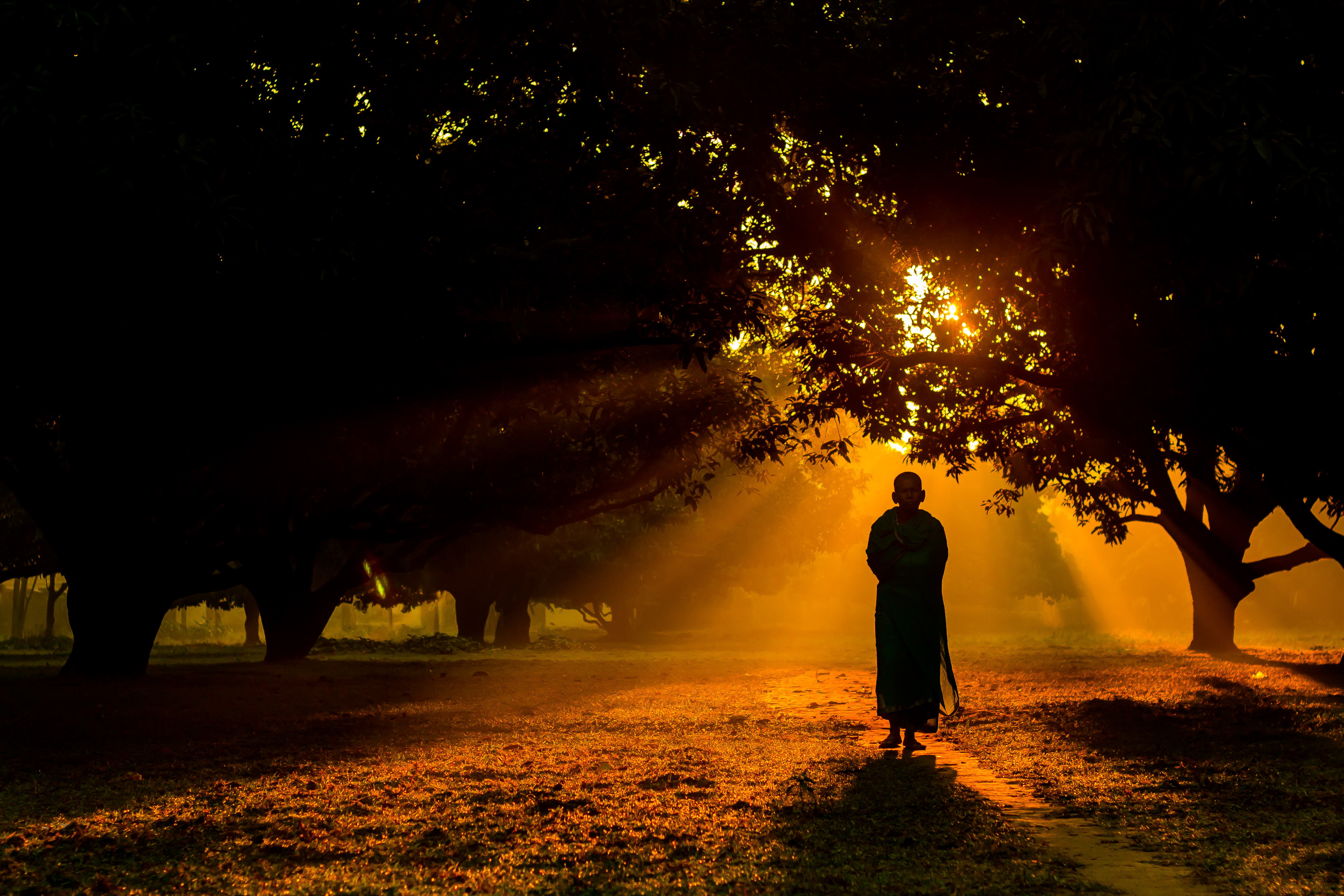
Buddhism has a long history with the forest. Siddhartha Gautama fled the comforts of the Shakya Kingdom and immersed himself with the lands beyond to better understand the human condition. In the years that followed he reached enlightenment beneath a sacred fig tree, known as the Bodhi Tree in the Indian town of Bodh Gaya, and frequently gave Dharma talks in and around forested areas such as the famous deer park in Sarnath.
Even today, there are some traditions within the schools of Buddhism that remain committed to continuing the practice of living in and around forests. A prime example is the Thai Forest Tradition, also known as the Kammaṭṭhāna Forest Tradition.
These traditions reject the modern amenities that we frequently take for granted, believing that they are distractions that prevent practitioners from reaching Nirvana.
More than two millennia ago, Siddhartha outlined his Four Noble Truths and the Eight-Fold Path. In Mahayana Buddhism we teach people to look at the things they are troubled by and to not fight or flee from them.
When you’re angry, acknowledge your anger, do not ignore it by pushing it down inside of you or make it grow by feeding into it. Instead, just look at it. Observe it. Give the ego the attention it demands without empowering it.
With this method you will find the cause of your anger. Not the superficial cause, but the true cause, and from that understanding you will learn how to tend to your anger and eventually transcend it the next time it arises, without getting stuck in it.
The Four Noble Truths teach us that the ego or the self is a false entity, a projection of ourselves that is not real, a hologram of desires. Anger is one of the many facets or aspects of this ego or false self. Others include pride, lust, shame, greed, among many others.
Saying the self is a false entity does not mean that we don’t exist or that we are not real, it just means that we are not separate from the whole. We are not islands in an empty ocean, not even separate islands within an archipelago. Mahayana scripture teaches us that just like islands we are all connected beneath the surface, you just have to be brave enough to dive down deep to see those connections.
What is true for human beings is true for all other living things. If you look hard enough, you will see that all life is connected, and that no one is a separate self. The trees, nature, we are all part of the whole.
Studying and practicing Mahayana Buddhism aided me in my search for self. It taught me that the self I was searching for didn’t exist, it was a false vestige of desire and fear, and many other things. The true self is the collective self, the whole. The connection is the self.
Sometimes in order to understand what we are facing, we must remove ourselves from our comfort zone or familiar environment to truly focus on our current condition. Just as the Buddhist monks have done for centuries by joining a sangha or community removed from the general populace.
This is not running away from or escaping from our problems, rather this change in environment can lead to a change in perspective. Allowing us to see our issues and ourselves differently and more clearly. Nature is perhaps the greatest sangha to become a part of.
Research on the therapeutic qualities of nature go back decades. The environment in which we immerse ourselves plays a huge role in how we feel, both physically and mentally. Just as a chemically toxic environment is dangerous for the body, an emotionally toxic environment is bad for the mind.
Once you understand that we and nature are a part of the same whole, it only makes sense that being in nature provides a deep connection to the self. The trees, the birds, the smells, the sounds, they are all one interconnected system and we humans are a part of that.
Being removed from this system depletes our energy and our stability, not to mention there are vast amounts of pollution in urban environments. Unfortunately today, the rural environments are also becoming increasingly polluted with pesticides and other contaminants.
The sanctuary of nature is at risk of becoming a hazard to our health. Without woodlands we lose touch with ourselves, we become unwell and have difficulty controlling our emotions. We get caught up in the world we have created, becoming lost to its many distractions and impurities.
Nature is a place that teaches us many lessons, from survival to death, from patience to tenacity. The very ecology of forests impacts our minds and bodies, from the microorganisms in the soil to the trees that provide oxygen. Humans evolved to live in the wild, yet we are often so very far removed from it.
Liberation from the ego means letting go of the self and reconnecting to the whole. This connection cannot be felt more deeply than in nature. We must return to the sacred. To learn more about the effects of nature on the human body and mind, check out the included links below.
Links of Interest:
- Morbidity is Related to a Green Living Environment
- Take Two Hours of Pine Forest and Call Me in the Morning
- Restorative Effects of Natural Environment Experiences
- Children With Attention Deficits Concentrate Better After Walk in the Park
- Get Outside! 7 Scientifically-Backed Health Benefits of Being in Nature
- 5 Benefits of Being Outdoors
- Why Spending More Time Outside is Healthy
US National Library of Medicine – National Institutes of Health Publications:
- Green Space, Urbanity, and Health: How Strong is the Relation?
- Effect of Forest Bathing Trips on Human Immune Function
- Forest Bathing Increases Anti-Cancer Proteins in Female Patients
- Interacting with Nature Improves Cognition and Affect for Individuals with Depression
- Preventive Medical Effects of Nature Therapy
- Effects of Short-term Forest Bathing on Human Health
- Therapeutic Effect of Forest Bathing on Human Hypertension in the Elderly
- What is the Best Dose of Nature and Green Exercise for Improving Mental Health? A Multi-study Analysis
- Outdoor Activity Reduces the Prevalence of Myopia in Children
- The Physiological Effects of Shinrin-yoku
- Can Electrons Act as Antioxidants?
The Perfect Life

The Perfect Life: An Unexpected Loss
In order to protect the identity of his family, I will only refer to the young man in this article as “A.J.”
A.J. was in his senior year of high school, where he was active in sports, playing soccer and lacrosse. He loved being outdoors, deer and duck hunting, boating and fishing, but especially skiing. He was always tinkering on his jeep and loved listening to music. He was a proud member of a yacht club and loved to go sailing in Maine.
His greatest enjoyment was being with his family and friends. He loved being on the water especially on the family boat and always looked forward to the yearly trip to the East Coast.
He was active across social media, including Facebook, Instagram, Twitter, Pinterest, YouTube, sharing posts, photos, and videos of his active and extraordinary life with his hundreds to thousands of family, friends, and followers.
On November 30, 2018, this 18 year old young man, so active and full of life with exceptional athletic ability, enthusiasm, a beautiful girlfriend, loving family and friends, and a promising future, died by suicide.
Why he felt as though suicide was the best option for whatever he was secretly going through, we may never know. No one seems to have the answer to why he made this choice.
It’s possible someone did, that he mentioned or let slip something to someone at some point, but if so it wasn’t taken seriously. Sometimes our busy lives don’t allow us to see the suffering in others, or it doesn’t provide us the opportunity to express our own suffering.
Suicide does not discriminate. Anyone can die by suicide. No matter the gender, age, race, sexuality, financial status, employment status, perceived success, popularity, or happiness. Suicide transcends all demographics.
Just because someone appears to be on top of the world from the outside, highly successful, popular, attractive, all the things we attribute to “having it all,” does not mean they’re not falling apart in their mind, carrying a huge burden on their shoulders, or concealing a heart-wrenching emptiness inside of them.
Not everyone shows their pain, and such people are often ashamed of how they feel and because of this shame they intentionally hide it from others. This choice to keep it a secret prevents them from seeking help. The belief that emotional pain and mental suffering are signs of weakness is the stigma of behavioral health. And it’s this stigma that kills.
Some people are so embarrassed and ashamed of how they feel that they’d rather end their life (their pain), than tell others how they feel.
By making the two core aspects of behavioral health a common subject in our conversations, in other words mental illness and substance use, we begin the process of reducing the taboo aura that perpetuates stigma.
It’s okay to ask someone if they are feeling depressed. It’s okay to ask someone if they are considering self-harm. It’s okay to ask someone if they are thinking about or planning ways to complete suicide. No one wants to die, people just don’t want to hurt anymore, and they can’t see a way out of that pain because they see the pain and their life as one synonymous struggle.
People must make the choice to keep getting up when they stumble and fall. We have to make the choice to smile again and keep moving on when someone breaks our hearts. We have to keep choosing to live when those we love have passed away. When we experience mental health issues, we have to reach out and get help.
Is that easy to do? No, absolutely not. It takes several things to get there, from therapy to medication, and physical health by maintaining an active lifestyle. Our bodies and minds are connected, an ailment in one can affect the other.
What must come first is hope, even the tiniest little bit can make a difference. The hope that maybe, just maybe, tomorrow will be different and possibly even better than today. If anything is true at all, it’s that the circumstances of our lives are not constant, provided we take the time to lift our heads and look around us to see how things can be better.
Does having a little hope make everything wonderful and allow you to see butterflies and flowers every waking moment? No, absolutely not. The point of behavioral health isn’t to take away every negative aspect of life and make it a fantasy-land.
Behavioral health is about learning the best practices for maintaining wellness in a world and in an existence that will bring obstacles, setbacks, and heartache into life. It’s about having the tools, support, and resources to take on those challenges one step at a time and triumph over them.
If you or someone you know is experiencing a mental health or substance use crisis, please access my immediate assistance resource page. A comprehensive listing of online and phone resources and services is also available.
Love Me Not
Love Me Not:
A Conversation About Mental Health & Relationships
If you’ve read my previous work, you know that I’m often very personal and brutally honest about my experiences and my mistakes. This essay will be no different.
I want to share with you some experiences I’ve had over the last couple decades and I want to be open and revealing about how mental illness can drastically impact our ability to create and sustain romantic and other types of intimate relationships and friendships.
It’s been a long time since I last wrote about the status of my romantic life or the relationships that I have been in. I quit writing about it for a couple of reasons. One being that I didn’t want to share information about that aspect of my life anymore and because there honestly wasn’t anything to write about.
The last time I had feelings for someone whom I was dating, was in December of 2013. The last time I attempted to have sex was in 2014. I intended to make that statement exactly as I wrote it… “I attempted.”
The status of your mental health, or really your behavioral health as a whole, greatly impacts your romantic and intimate life. The word romantic is used here in the sense of your love life, the feelings that you express for another person or receive from another person, and intimate life refers to the sexual aspects of expressing that love, or lust in certain cases.
Having a mental illness or as I prefer to say, a mental health condition, such as depression, bipolar disorder, among others, can have a profound effect on how you approach and experience these types of relationships and even friendships. Often times in a very negative way.
Such is the case for me. Experiencing bipolar disorder and having depression since at least my mid-teens has made love, lust, and even friendship an extremely complicated and quite often heartbreaking experience that has led me to my adult life of chosen isolation from romance, deliberate avoidance of sexual encounters, and apprehension to appear in social environments.
People are complicated enough on their own. Having a mental health condition and interacting with other people makes that process doubly complicated, and often times less rewarding. Mix into that a willingness to explore emotional and sexual intimacy with others of the same gender and suddenly you have a maelstrom of complications.
For those unfamiliar with my past romantic experiences and bizarre friendships, I will revisit those before continuing with the direct subject of mental health and its effects on relationships. As I go through this, you may find yourself making observations that mental health was clearly impacting these human-to-human relationships without me needing to directly point it out.
When I was in kindergarten, I wrestled with another boy for a photo of a girl that I thought was cute. She hadn’t given me one of her school photos and I was very jealous of his newly acquired item. So when I saw him on the bus and he just sat there looking at her photo, I decided to act and jumped into the seat with him and grabbed at the photo.
A tug-of-war ensued as both of us fought for this girl’s photo. I had the element of surprise on my side though. Looking back I really don’t remember why I wanted that photo so bad or how much I really liked that girl. I have no memories of her and I interacting in kindergarten, only that I thought she was cute, but in that moment on the bus I was willing to fight to have that picture. I did prevail in that battle, as I had a good grip on most of the photo. It did end up tearing, but the only piece I lost to the other boy was an upper corner that included one of her purple hair-clips. An acceptable sacrifice.
I remember the other boy’s disgust with me for my theft, he was red in the face and threw that corner piece with her hair-clip on the floor of the bus and sat in his seat pouting. I considered retrieving that corner piece, but decided it unnecessary. I never interacted with that boy before that fight and I’m not sure if I even knew his name at the time.
The girl who was in the photo was sitting in the next seat over, observing all of this unfold. I remember her telling me to let him have the photo because she hadn’t given it to me, but I was selfish and only cared about what I wanted. So I kept it, held on to it for years as though her photo was a trophy. What I didn’t realize back then, was that a photo was not worth losing the chance at a friendship with the boy I fought with, or with the girl in the photo who consequently had no desire to talk to me for the rest of the school year.
Elementary school saw my bad behavior continue and my report cards often reflected this in my grades. Often picking on boys younger, physically weaker than me, or out of shape. My bad behavior included name-calling, pushing, throwing things, tripping, punching, kicking. Sometimes my aggression was even directed at girls and I did not treat them more gently than the boys.
In terms of girls, there were only three in my grade during elementary school, the rest of us were boys. While there was an ongoing joke that one of those girls and myself would one day get married, it certainly never came to pass as that sentiment was mostly one-sided. She would, however, be the first girl to kiss me, despite my objection. During a bus ride home, an older boy held me down in one of the seats so she could kiss me, he thought it was hilarious – I didn’t.
The first time I got to kiss a girl (by my own choosing) was with the one I had feelings towards for a long time during elementary school. Her father worked with my father, her older siblings were close in age to my older brothers. That kiss happened in the back of a bus during a field trip, where I presume many first kisses happen. Years later, she would pass away in a motor vehicle accident at the age of eighteen, the first time I experienced a close personal loss, and one that had lasting effects. You can go here to read my thoughts on that loss: At Peace With Goodbye.
In terms of my behavior in elementary school, I was sometimes the aggressor, but also sometimes the victim – which added to my desire to act out. I was short, the shortest boy in my class, and while I was athletic and one of the best runners, I was also skinny and perceived to be weak. Other kids, some older and some just more popular than me, looked to that as an opportunity or justification to exploit me.
You shouldn’t feel sorry for me though, anything negative I experienced was well deserved. Between the ages of 10 to 12 is when my level of aggression began to reach its climax, not surprisingly the point at which I hit puberty. There was one kid in my class, skinny, dark curly hair, prominent nose, who I saw as an easy target, bizarrely enough this kid was also often my best friend when I wasn’t being an asshole.
I frequently would trip this kid, push him, tackle him on the school bus, hit his head up against the window, sit on him, called him names based on his appearance. The worst of these nicknames was “Dirty Jew,” and even though I had watched WWII films and read books about the Holocaust in school, I didn’t understand the gravity of those words at that age and to my immature 12-year-old mind he just looked stereo-typically Jewish. The other kids laughed when I would call him that, so I kept using it. Their laughter was a type of approval, they were being enablers and eventually they took to calling me “Little Adolf.” None of us as Catholic students in fifth or sixth grade understood the gravity or offensiveness of what we were doing.
While this kid I picked on was my primary target, he wouldn’t completely submit or go without trying to fight back. One day he tried to trip me on the playground, so I chased after him in anger. While he could easily run much farther than I could, I was faster and I caught up with him and tackled him. I pinned him down underneath me, I spat in his face, pulled up clumps of dirt and grass and shoved it in his face, calling him by the nickname I had given him.
I specifically remember one of my teachers looking angrily in my face and asking, “What is wrong with you?!?!” I told her I was raised that way. But that wasn’t really true, my parents did not intentionally raise me to be aggressive. There were plenty of fights between myself and the brother closest to me in age though, not sure how he and I survived some of those fights, but I certainly carried that mentality of repressed aggression to school with me – where it did not remain repressed.
Unfortunately my verbal assaults were not exclusive to the curly-haired kid, as I also unleashed my anger on boys who were physically weak or “girly” in appearance or behavior, stereotyping them as gay and thus I called them names such as fag, faggot, and queer.
All of this will likely make you ask the same question my teacher did, “What is wrong with you?” To best answer that question we should look outside of school. Francis Bacon perhaps put it best, “No man is angry that feels not himself hurt.” It means that bullies are often times themselves victims of some sort of abuse, sometimes at school, but often times at home or within their community or neighborhood. Nowadays that also extends to the internet. Not able to handle the situation themselves, they begin acting out physically – sometimes towards other kids they see as non-threatening and easy targets – to vent their built up emotional anguish.
So, what was happening in my life that made me behave this way? Certainly, some of it was mental health related, I was a very active kid and could not sit still. I climbed all over things, ran around a lot, very rambunctious. My grandmother can be heard in an old family movie shouting, “Don’t you ever sit still!?!?” These days, kids get diagnosed with ADHD and are given pills for it.
My hyperactivity or any underlying mental health conditions I may have already had at that point, were still not justification enough for my aggressive behavior at school. For the most part, I did not behave that way at home. I believe a large part of my behavior had to do with my father and the lack of relationship I had with him. While he lived in the home and was a part of our lives in that sense, I spent most of my childhood either afraid of him or hating him, and wanting my mom to divorce him. I was not comfortable being around him, and especially being alone with him.
My father worked in construction for all the years that I can remember and while he didn’t hate that work he has always been the kind of person who gets easily stressed out and develops anxiety. After being at work all day he would come home with his nerves already on edge and having kids screaming and running around the house would push him over the edge. Sometimes my mom had to say to him, “That’s enough,” to bring him back from his own emotional outburst towards us.
I was the youngest of six kids, with nineteen years between me and the eldest sibling. My mother did not work outside of the home as we were raised in a traditional and religious household. She cooked, cleaned, and raised the kids, while my father financially supported us. We lived in a trailer, three of us boys shared a room and had to sleep in the same bed for several years until the last of the three oldest siblings moved out. The number then dropped to only two having to share a bedroom, while the third upgraded to having his own bedroom.
I grew up on a farm with about 200 acres, but as I mentioned we were not financially stable and lived below the poverty line. My parents could not afford to have health insurance for us kids so we never went to a doctor unless it was an urgent issue like a broken bone, major wound, or what they perceived to be a serious illness. One of the ear infections I had as a kid did not warrant a costly doctor visit, and that resulted in major damage to my eardrum due to the bacteria eating away at it, I am now mostly deaf in my left ear. As kids we were only able to go to the dentist because the gentlemen we went to was kind enough to not charge my parents for seeing several of us kids at once, even though my parents had scheduled the appointment for only one kid.
While some of these things sound borderline neglectful, my parents did the best they could with what they had and made sure we never starved, had clothes to wear, and were in school. My father dropped out of school at the age of 14, my mother at the age of 16. This of course was during the 1950’s and early 1960’s, in the American Midwest, where a high school diploma wasn’t considered necessary to find a job and earn a living. My father was already 45 years old by the time I was born, establishing yet another hurdle to our relationship. At school, kids would ask if I lived with my grandparents, not realizing that they were actually my parents.
I can remember being jealous of the other boys in my class, as they talked about their dads and the things they did together. Their father-son relationships seemed strange to me, I could not relate to them, but wanted to know what that felt like. My two eldest brothers were both nearly old enough to be my dad, so I often looked to them as father figures instead of my actual dad. While I can’t say that I was necessarily emotionally close to them, I certainly preferred their company over my father’s and so I spent a lot of time with both of them.
These two brothers have always been very different people. My eldest brother would let me ride around with him while he did farm work. That may not sound very interesting to some, but for others it’s a father-son activity and all these years later I still hold on to those memories. The other brother was a little more wild and free, he enjoyed giving rides on his dirt-bikes and ATVs, and he owned a ’69 Chevelle which he would take us fishing in and to the local Dairy Queen afterwards. Again, activities that fathers typically do with their sons. I have more father-son memories with my older brothers than with my real dad. My father has stated that he and my grandfather never had a close relationship either, and that he spent a lot of his time with his mom while growing up, which remained true up until his father passed away in 1981.
My aggressive years would fade away once I left elementary and junior high school behind and entered into high school, leaving behind the private Catholic school I had attended and nearly every one I knew. This transition changed me and I became extremely introverted, not making any attempts to make friends for the first three years. Unless people spoke to me directly, I rarely spoke to anyone else. While girls asked to date me, I made no such attempts of my own to emotionally connect with anyone. My grades improved dramatically during this transition, hiding the fact that all of my anguish was now entirely within me.
Instead of acting out in anger, I held everything in and it started to eat away at me slowly. Other students saw me as a quiet kid who was smart, but I was filled with so much self-hatred. At times I was taunted by older students, but nothing serious, I tried to disappear into the background as I did not want to be noticed. Lingering questions about my sexuality exploded inside my head and haunted me 24/7, expounding my desire to fade into the crowd and not be seen or spoken to, terrified that other people would find out about these feelings growing inside.
People who are lesbian, gay, bisexual, or transgender, never initially chose to be, but in time learn to accept themselves as they are. However, some continue to fight against it. This refusal to acknowledge or accept this aspect of their nature leads down a path of hatred, not only towards themselves but towards everyone who reminds them of that side they’re hiding.
I already suspected I was interested in the same gender when I was 11 years old, but by the time I was 13 I knew it for sure. I didn’t want to be, I wanted to grow up and live a life like every other guy, with a wife, kids, white picket fence, all of those things most fantasize about in their youth. So, I tried to smother those feelings, pretending like they weren’t there. Of course, this was pointless, one cannot deny their feelings without serious consequences to their emotional and mental health.
So, I became angry. Angry at others who I thought looked gay, or acted gay. I became hypersensitive to these things because I was fighting those same feelings inside myself. I used gay slurs and derogatory words, as if doing so would somehow hide my secret.
And then I became aware that those romantic feelings were not going to go away even if I didn’t acknowledge them or accept them or act on them. So my anger became internalized. I hated myself and denial became less about others and more about me.
I began to realize that I was going to be like the gay people I hated. That I was going to be an outcast, unwanted, hated, misunderstood, vilified by my fellow Catholic school classmates and greater community, and by society as a whole. Sitting in my Catholic studies class as a 6th grader while my teacher read from a pamphlet that said homosexuality was sinful, didn’t make me feel any better.
In the chaos of feeling attracted to other boys and at the same time hating it and myself, can lead boys like me to seek out perceived gay or bisexual boys to antagonize or harass because deep down we want their attention, but we hate ourselves for wanting it, so we externalize that hatred onto the perceived gay or bisexual boys through bullying.
It is a bizarre, confusing, and unfortunate state to be in, but one that is fairly common for permanently closeted boys and men. Typically these boys and men will not outwardly appear gay or bisexual which allows them to fly under the radar and go unnoticed. In adulthood, these men may even be married to women and have children while battling repressed homosexual feelings.
Sometimes they marry women because they believe it will validate for themselves that they are straight and not gay, but other times it’s because they are bisexual and do truly love their spouse emotionally and physically while still harboring seductive feelings for other men.
Ages 16 to 22 were the worst years of my life, layers of depression and suicidal thoughts caused by the turmoil of my sexual identity and an unfolding mental illness buried the moments of happiness I experienced. The only bright moments from that period occurred at the age of 18, during my senior year of high school. I had finally made friends. I spent time with these two guys outside of school and I became close to both of them. Multiple factors prevented me from taking my own life in my late teens, but these two people deserve a lot of the credit.
At the age of 22, I finally came to the realization that I would never be at peace until I stopped worrying about what other people thought of me. I knew that I needed to stop pretending like other guys didn’t interest me, I had to face the fact that I was more than just a little curious and needed to let go of my self-hatred and my fear of the unknown. I took small steps and I came out as bisexual, but soon after breaking up with my then girlfriend – I came out as gay on social media. This single choice had wide sweeping consequences, from the literal loss of “friends” to opening up a door of judgement and criticism from people I didn’t even know, who felt it necessary to tell me how I was wrong or confused and was making a mistake.
I was young and rebellious, but in some sense they weren’t necessarily incorrect about my actions. Once I opened that door there was no going back in the proverbial closet and closing the door behind me to hide. That door was broken now and there would no longer be any refuge. Looking back at that decision ten years later, I probably should not have been so open and outspoken about that aspect of my life. It soon went from being my sexuality to being my identity and I got lost in it. I went from being Kephen, to being “Kephen the Gay.” My conversations became hinged on my sexuality, my posts on social media were usually LGBTQ related, people would befriend me solely because I was “gay.”
It’s a mistake I see a lot of young men make, they allow this one small aspect of who they are, to become the sole piece of them upon which every other part of their lives pivots and they confuse their sexuality with their identity. It took me about eight years of going through different identities based on various sexualities before I got to a point where I was tired of it. I stopped calling myself gay and referred to myself as pansexual, then I went back to calling myself bisexual, and then I stopped talking about it all together. I was finally able to put that piece of me in its place and re-establish my identity along the spectrum of interests and characteristics I have as a person.
I stopped having conversations about LGBTQ issues, I stopped having conversations about men I was attracted to, I stopped posting or sharing posts from gay-themed websites, and I stopped writing articles about it. In some sense, this act was another type of freedom – this time a freedom from the social pressures of the LGBTQ community to conform and assimilate into their ranks. Finally, my sexuality returned to where it belonged, my private dating life and my bedroom.
Those eight years in between breaking down the proverbial closet door and realigning my identity in the wake of that decision, is what this article is mostly about. And now that you know the back story, the heavy stuff involving mental health can be discussed.
When I ended my last relationship with a girl, I thought that dating a guy would somehow be easier. I also thought that my uncomfortable feelings toward intimacy would no longer be an issue. In my experiences, dating a guy and dating a girl are not very different, many aspects are exactly the same. However, I’ve never had sex with a girl, so I cannot speak on similarities or differences between them and men in the bedroom.
My first six months of exploring my sexual attraction to men, was mostly through gay apps and websites. Living in a rural community, most other guys interested in men were closeted, and those that weren’t closeted had already moved away. I knew very little about what it meant to be “gay” and knew even less about how to be it with other men. All I had to go one were my feelings of attraction, both emotional and sexual.
These apps included such gay classics as Grindr, Scruff, and Jack’d. While some gay and bisexual men certainly use these apps for serious dating, they are also heavily used for meeting other men for sexual encounters. I expanded my inventory by adding websites to find other men, these included typical dating sites like Plenty of Fish, OkCupid, and even the notorious personals section of Craigslist.
Those first few experiences were mostly messaging back and forth, exchanging photos (nudes included), and phone calls. I was not yet comfortable meeting these people in person, most of them just wanted in my pants anyway. When I was finally able to meet a guy in person for dating purposes, it turned sexual fairly quickly. This would be the pattern for all future dating experiences, and generally by the second date – one or both of us were at least partially naked.
These sexual experiences started out as you would expect them to go, hands being placed on certain areas of the body, cuddling, spooning, but usually didn’t go very well once they progressed beyond that. Most of these men liked kissing – something I found deplorable. I really struggled with the idea of kissing men, I did not enjoy it and it made me uncomfortable and frequently turned me off during sexual situations. This disdain for kissing men has continued throughout my dating experiences.
Other issues arose during these intimate situations that further hindered my experiences. Frequently, I found that these other men were very easily aroused to the point of erection by a touch or even a conversation, but I on the other was not. Even during sexual acts of foreplay, I would still not get an erection. Obviously this began to concern me as I did not have issues when I was alone with myself, but every time I engaged in sexual acts with other men I either could not get aroused or if I did it would go away as soon as I got hard.
The fact that I did not enjoy kissing other men, the fact that I either could not get an erection or keep an erection when engaged in foreplay with other men led some of them to conclude that I was not gay or even bisexual. This was not easy to accept as true. I knew that I was emotionally and sexually attracted to men. I had been crushing on or falling for men since I was eleven years old, I’d been sexually fantasizing about men and jerking off to those fantasies for just as long, and yet here I was in my twenties and things were not going well for me. If my body was working fine while I was alone, why was it not working while in the company of someone else? Why was I so uncomfortable in physically intimate situations with other men?
My mental health was affecting me in ways I hadn’t expected. My issues were not arising due to some sort of physical impotency, but because of psychological issues – a form of performance anxiety. Despite years of therapy and medication, my issues never went away and still remain with me today. This lack in sexual gratification with male partners is what drove me to walk away from attempting one-night-stands and even eroded my interest in dating. As I mentioned in the beginning of this article, 2013 was the last time I dated anyone, I was 27 years old. 2014 was the last time I attempted to have sex with a guy, and I say attempted because that experience did not go well.
In fact, none of my sexual experiences with men have ever really gone well for one reason or another since 2008, and I’ve never even tried to have a sexual experience with a woman. I have never had an orgasm during sex with another man, though I have during foreplay. The last time I attempted anything sexual with another guy was in 2015, and I never got an erection or even removed my underwear for that matter – it was all about him, not me.
I cannot speak for women, but as a man – being sexually dysfunctional does not feel good, it does not lead you to a positive state of mind. It makes you feel embarrassed and as though you are less of a man. It’s easier and less shameful to just avoid those situations all together by not allowing anyone to come into your life, to just prevent that awkward conversation of, “I’m sorry, I can do me, I just can’t do you.”
To learn more about my thoughts on human sexuality: The Choice That Never Was
To learn more about my journey with mental illness: Out of the Darkness

 Memento Vivere
The Scars of Loss
Posted on January 26, 2020 by Kēphen
Leave a Comment
The Scars of Loss
We never forget the people we have lost. Sometimes our losses are so close to our heart that we lose a part of ourselves with the passing of our loved one. The pain from this kind of loss is initially so severe that it feels as though everything meaningful is gone and the value of our own life is lost with the loved one, the vessel of our very soul made empty.
The pain of losing someone that we once let into our heart isn’t about moving on, but about finding ways to hold on. Loss is a cut, and when it happens it goes deep and feels as if we won’t survive the devastation. Even though time and love will make the pain hurt less, the scar left behind from that loved one’s absence will never fade away and we never fully “heal” or get over it. Like any other scar we always see it, always know it is there. We feel it from time to time because there are moments when it will ache, as if to remind us that we have lost a part of us that we will never get back.
There are moments when we feel as though we lost them yesterday, no matter how many years have passed. We find ourselves thinking of things we wish we would have told them, worry ourselves with the thought that they never knew how much we cared. We wonder if there was something we could have done, some way in which we could have prevented their passing. We have and will continue to ponder a thousand why’s and what if’s.
Sometimes we don’t realize in life how much people mean to us until we lose them. Not because we didn’t love them or appreciate them before, but because we took their presence for granted. The rapid passing of time fooled us into believing they would somehow be here with us forever. I think that’s just part of being human. The only thing we have left to do is to honor the people we have lost by remembering them and by living our lives the way they would have wanted us to.
If you or someone you know is experiencing a mental health or substance use crisis, please access my immediate assistance resource page. A comprehensive listing of online and phone resources and services is also available.