
Memento Vivere
Illuminating the Facts About Behavioral Health and Rising Above the Stigma
Chasing the Westward Sun
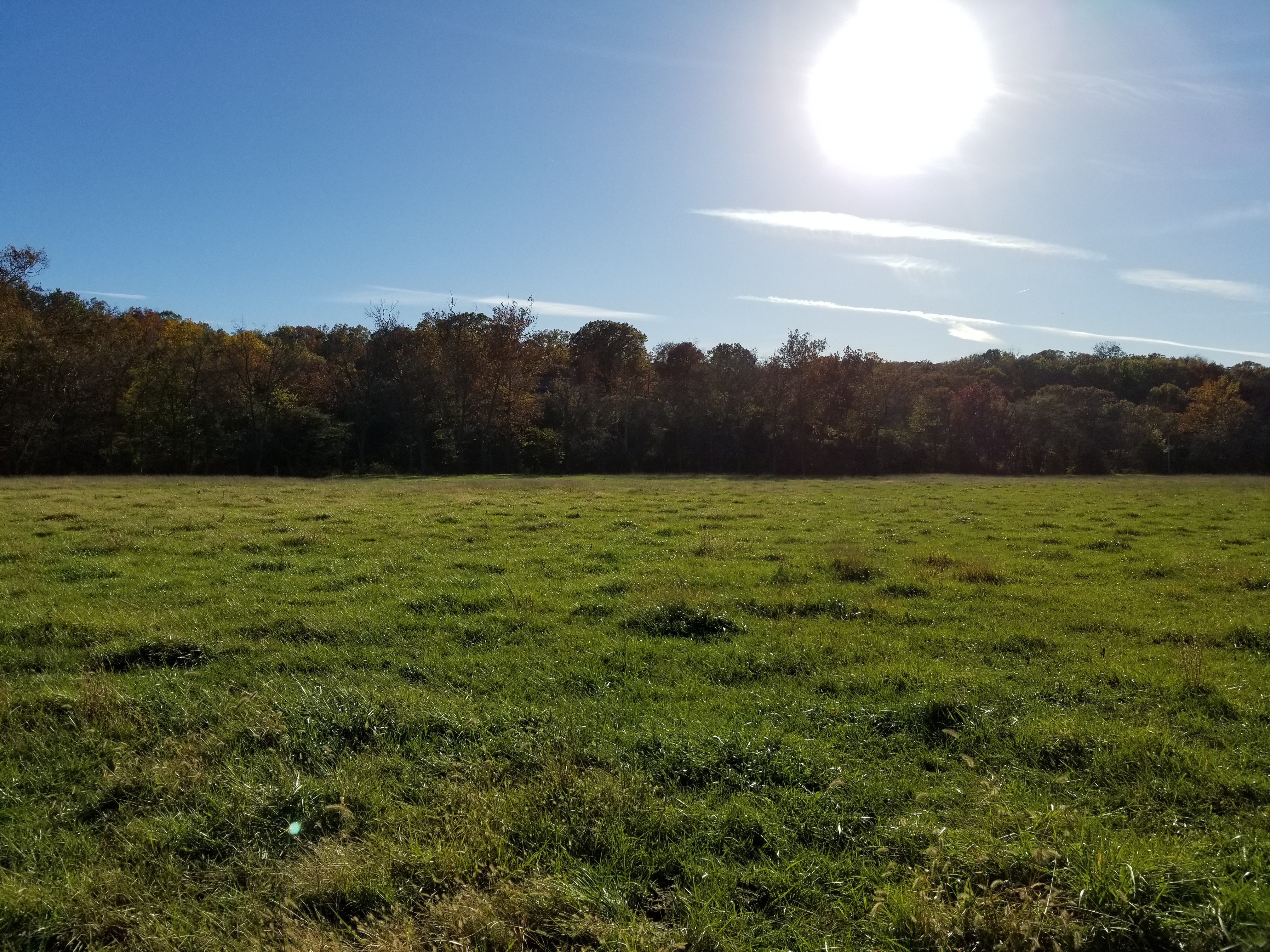
Chasing the Westward Sun: One Week and 3,500 Miles
In the summer of 2017 I went on a one-week 3,500 mile road trip through Kansas, Colorado, Wyoming, Montana, and North Dakota. The road trip had spawned after the death of my mom the year before and my need to come to terms with that loss, it also formed from a growing dissatisfaction with my career and the sensation that I was trapped in a cycle. I felt as though I was living life on repeat and I desperately needed to get out of that loop and away to a place that could offer me some peace.
Growing up on a farm shaped not only my childhood, but also my character. My parents lived in poverty for most of their lives, my mom never worked outside of the home and never finished high school. She dropped out and married my father less than a month after turning 16 years old. My father had already dropped out of elementary school at the age of 14 to begin a life long career in the labor industry. Farming never provided the opportunity for more than subsistence living, therefore, being employed somewhere else was mandatory to support his wife and the six children the two of them would have over their 55 years of marriage.
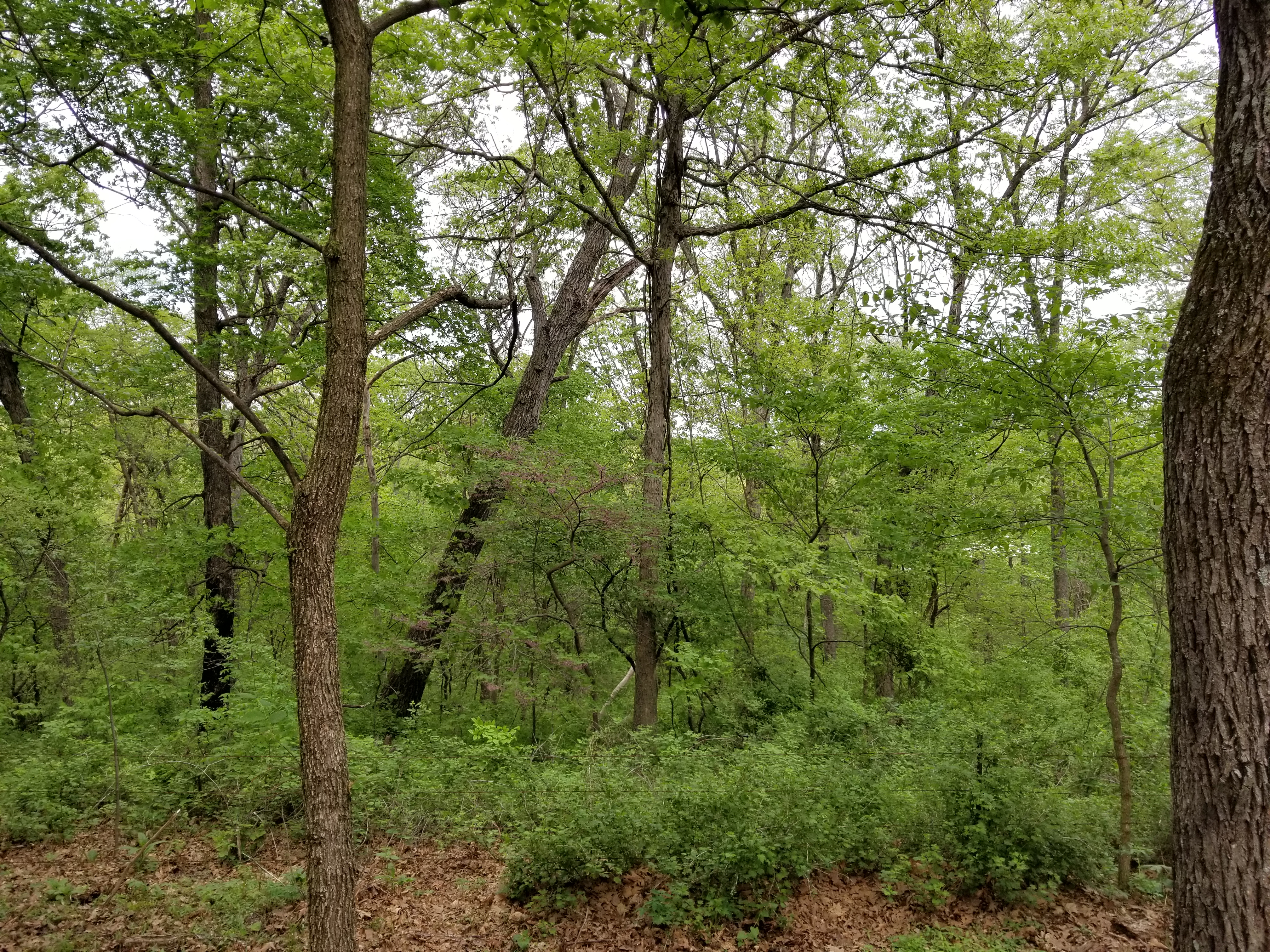
My childhood was spent roaming through woodlands that covered the mostly hilly farmland that had been passed down from my grandfather. My grandfather owned the staples of the idyllic American Midwestern farm, including horses, cattle, and chickens. When my father inherited the land he tried his hand at pig farming as well, but lost any hope of profit when the hog market collapsed in the mid 1990’s.
My memories of that time and place are peppered with hot summer days in hay fields, and damp but brisk summer nights with the stars spread across the sky overhead. There were bullfrogs and tree frogs croaking and chirping in the distance, coyotes howling in the hollers that surrounded the farm, as it lay within a valley. In the early evening you could hear whip-poor-wills making their iconic calls echoing through, or owls hooting from the treeline.
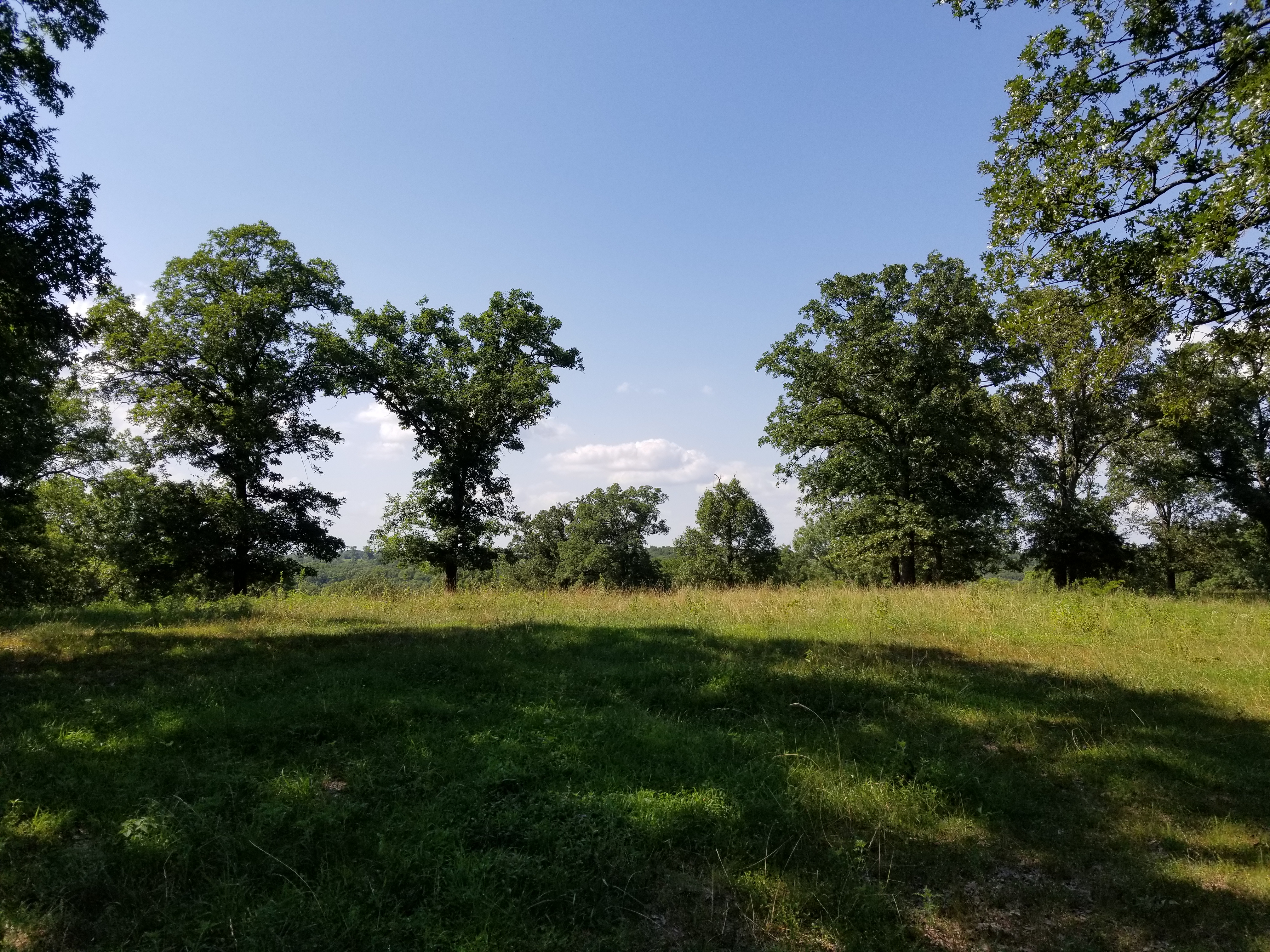
A creek ran right through the middle of the farm, often flooding during heavy rains. As much time as I spent in the woods, I also spent a significant amount of time in and around that creek. As a kid, you don’t stop to think about all the pig and cattle manure that washes down into those waterways or all the dead animals that find themselves swept into its current, or when cattle are standing up stream urinating right into the water. You still walk barefoot through it, stick your hands in it, or even at times jump right into the deep pools that form from the carved out boulders that make up its bedrock.
I have more than a thousand memories of my time living on that land, so many that time has taken many of them away and yet my mind still feels full of them. While I’ve never been fond of the smell of hog manure, cattle manure does oddly trigger memories of my childhood. From throwing clumps of cow shit at other young relatives, pushing them into it, or sticking bottle rockets or firecrackers in them to watch them explode and splatter everywhere, these are defining experiences that color the childhoods of many Midwestern boys.
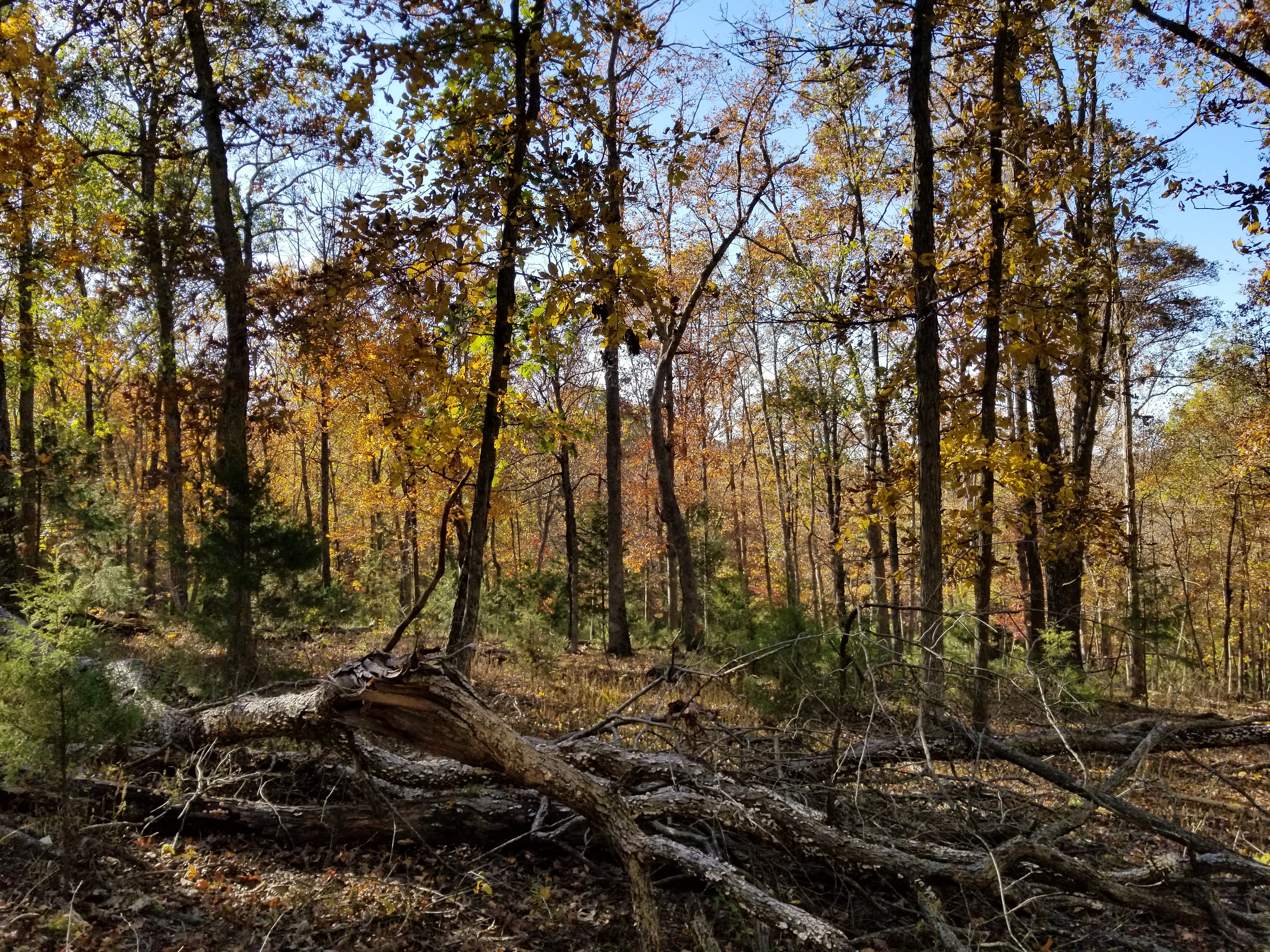
For me, scent has always been a heavy trigger for memories and nature is full of them, beyond just the cow manure. Cedar and walnut trees, the creek, freshly cut hay, ponds, the organic decaying matter that makes up dirt, these are just a few of the things that have their own unique smell and they coalesce to create the experience of nature, an experience that feels like home. Perhaps Gary Snyder said it best, “Nature is not a place to visit. It is home.”
Other senses play a role in the things we remember, from prickly cocklebur that stick to your pants and shoes, tossing square bails and getting cuts and covered in itchy dust, to touching cedar limbs and needles and getting sticky hands, your feet slipping on the slimy algae that covers rocks in the creek, hearing the sound of the leaves rustling in the trees as the wind blows through them, crowing roosters, squealing pigs, the bellows of cows, the humming cicadas in summer, the chirping crickets in the evening, the many different bird songs throughout the seasons, the babbling water as it runs over and between the rocks in the creek and the many streams that form it.
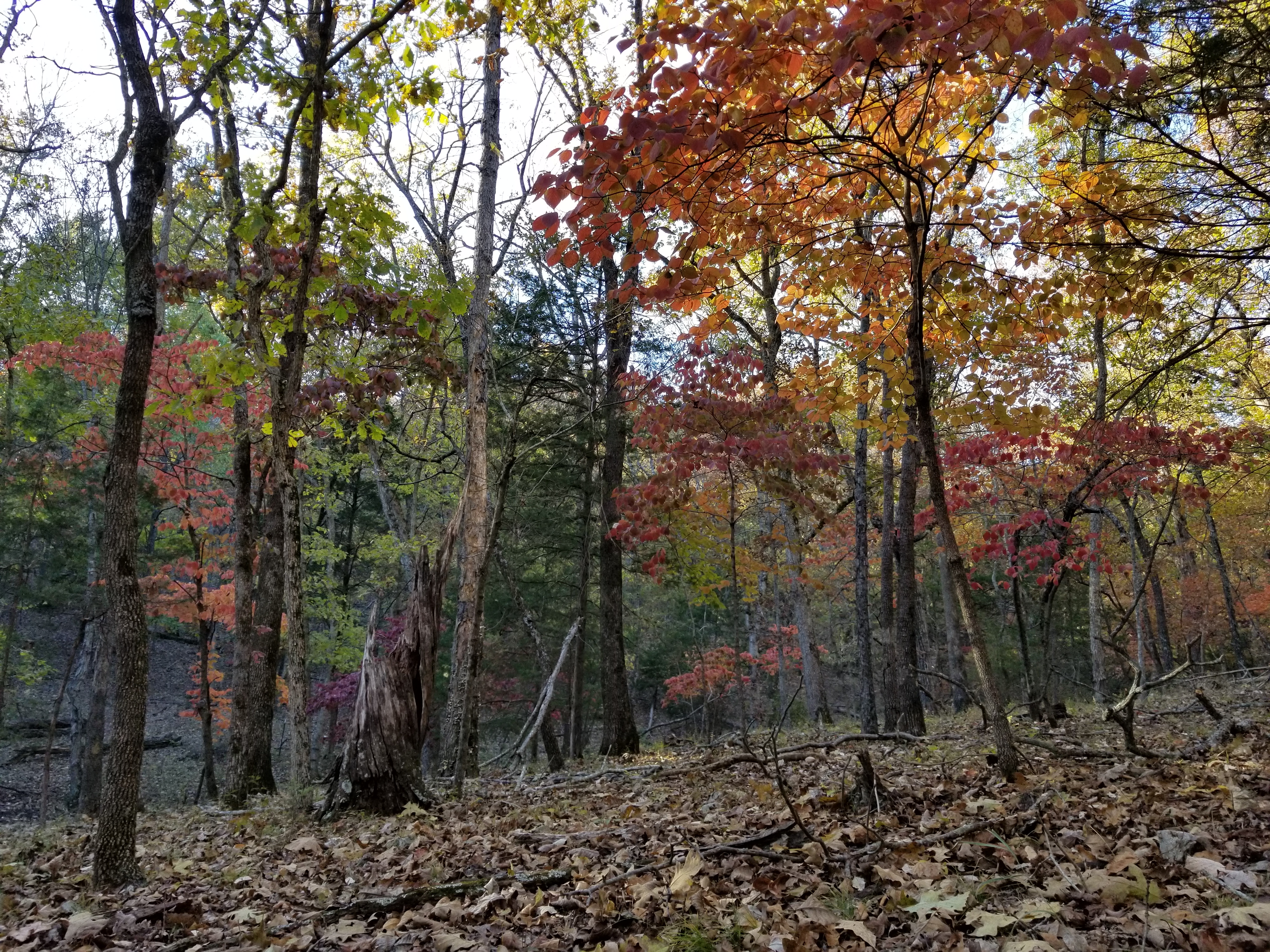
Nature is a full sensory experience and growing up on a farm provided me with that phenomenal opportunity, one that I would never trade for anything. So it is no wonder that as time passes and my opportunities to visit and experience that type of nature decreases, I yearn to return to it. At the time that I began contemplating my road trip west last year, I was working a job that required me to sit in front of a computer all day. A type of job that would make any man restless and yearn for something more.
Of the different landscapes that I find beauty in, wooded lands and hilltops are my most beloved. Hiking through woodlands can only be topped for me by hiking through a conifer forest in the mountains. With this in mind, I knew the land I needed to escape to, the place that would give me the most serenity or solace. Of the many different types of trees here in the Midwest, the tree commonly called the cedar or red cedar, is probably the tree that I gravitate to the most due to its aromatic smell and my childhood history growing up around it.
Ironically, the Eastern red cedar tree of the United States is actually not a cedar tree at all. It’s a species of Juniper (species: Juniperus virginiana) and is what’s known as a false cedar, belonging to the cypress tree family. True cedars are not native to America, but are naturally occurring in Africa and Asia. All are conifers, however, and this classification of trees are certainly my favorite. Some of the largest mountainous conifer forests in the United States are in the west and the north of the country, part of the Taiga biome or boreal forests of the world. Oddly enough, a large subtropical lowland conifer forest exists in the wetlands of southeast United States.
My love for conifer forests and the mountains established a pretty clear destination for my escape from the world of glowing computer screens and posture-destroying office chairs. While my desire to just get in the car and drive off after the westward sun was strong, I had enough self-control to realize that I needed to plan a budget and map out my route, and choose the places out west and in the north that I wanted to stop and spend some time in.
For anyone wanting to take a road trip, whether it’s across the country or just through a few states, knowing how much money you have to spend and how or where you’re going to spend it is critical. You need to take into account the supplies you will need, including food, clothing, hiking or camping gear, and the cost of gas for your vehicle – you need to know how many miles to the gallon your vehicle can get. Knowing this will help you plan out your fuel budget to cover the distance you will be driving.
You should also have a plan for when things go wrong, such as if your vehicle breaks down or you have a flat tire. The terrain you will be facing is another matter of consideration and whether or not your vehicle can traverse it. Will the roads your traveling always be paved, will some be dirt roads and rough? Will you need a lifted vehicle, what type of tires will be appropriate for the season and the climate that you will be driving in?
If you’re not driving a large van or RV across the country, where will you be sleeping? If you plan to camp outdoors, you will need to pack according to the climate in the region you’ll be staying in. If you plan to stay in hotels along various stops you should book in advance to get the best prices and the best rooms. Popular locations such as National or State Parks are difficult to find hotel rooms near because people often book them up to six months in advance of their trip. When booking hotel rooms, consider amenities such as free parking, free breakfast, to try and save on your costs. Also consider offers of free cancellation in case something happens and your trip gets cancelled or your planned route changes and you will no longer be traveling through that area.
Whether you plan to bring all of your food or plan to eat at local joints, you will need a budget for meals. This aspect of spending has been difficult for me as sometimes I eat more than expected, and sometimes less. What sounded appetizing when I packed it, has at times not been so appetizing when it came time to eat it. I chose to mostly eat locally while traveling and slept in hotels, which I booked weeks in advance. I set aside a lot of time to read reviews, compare prices, and picked hotels near my destinations. Generally speaking, plan to spend more than your initial estimate suggests on most of these budgetary costs, especially on gas.
It’s a good idea to round up by $50 to $200 on each of your cost estimates. By the time my trip ended and I was back home, I had spent more on food, gas, and sleeping arrangements than I had originally budgeted, in fact I over spent by $500. So, just realize things don’t always go as planned, and you may fork over more money than you budgeted. If you don’t have the financial safety net that I had, consider that you may have to cut your trip short if your spending has taken up too much of your budget early into your road trip.
As I did my research to figure out what National and State Parks would be best to see the kind of scenery I was yearning for, and any other opportunities along the way, I compiled a list of places to visit. My list consisted of Grand Teton National Park and Yellowstone National Park in Wyoming, and Glacier National Park in Montana. To get there and back I also had to drive through Kansas, Colorado and North Dakota. This trip was planned for July due to it being a great time of the year in northern Montana, my main destination.
My road trip was planned to last a week, which meant that I would not have an extensive amount of time spent in each location. Though my budget wouldn’t allow for extended stays, I wanted to see all of those locations and so I accepted the scenario of not getting to spend a lot of time in any one location.
Colorado was the first stop on my trip, though I knew I wouldn’t be exploring any of the parks there as it was an overnight stay only. This was my second time in Colorado, I had visited there in 2002 with my family, and back then we stayed in the Vail region. This time around I stayed in Parachute, so I did have the opportunity to drive through parts of Arapaho and Roosevelt National Forests and White River National Forest. As this was July and I was driving in from the east, most of eastern Colorado was dry and it wasn’t until I got closer to the Rocky Mountains did the land begin to appear more beautiful.
For the overnight stay, I had a room booked at the Grand Vista Hotel. My experience there was pleasant and they earned a 5-star rating from me. For dinner I went to the Mexican restaurant just up the block, called El Tapatio. I was hitting the road early the next morning, so I did not have time to explore too far from the hotel. I did take some time to walk around the town, spent some time in the hotel’s hot tub, and then just settled in for the night.
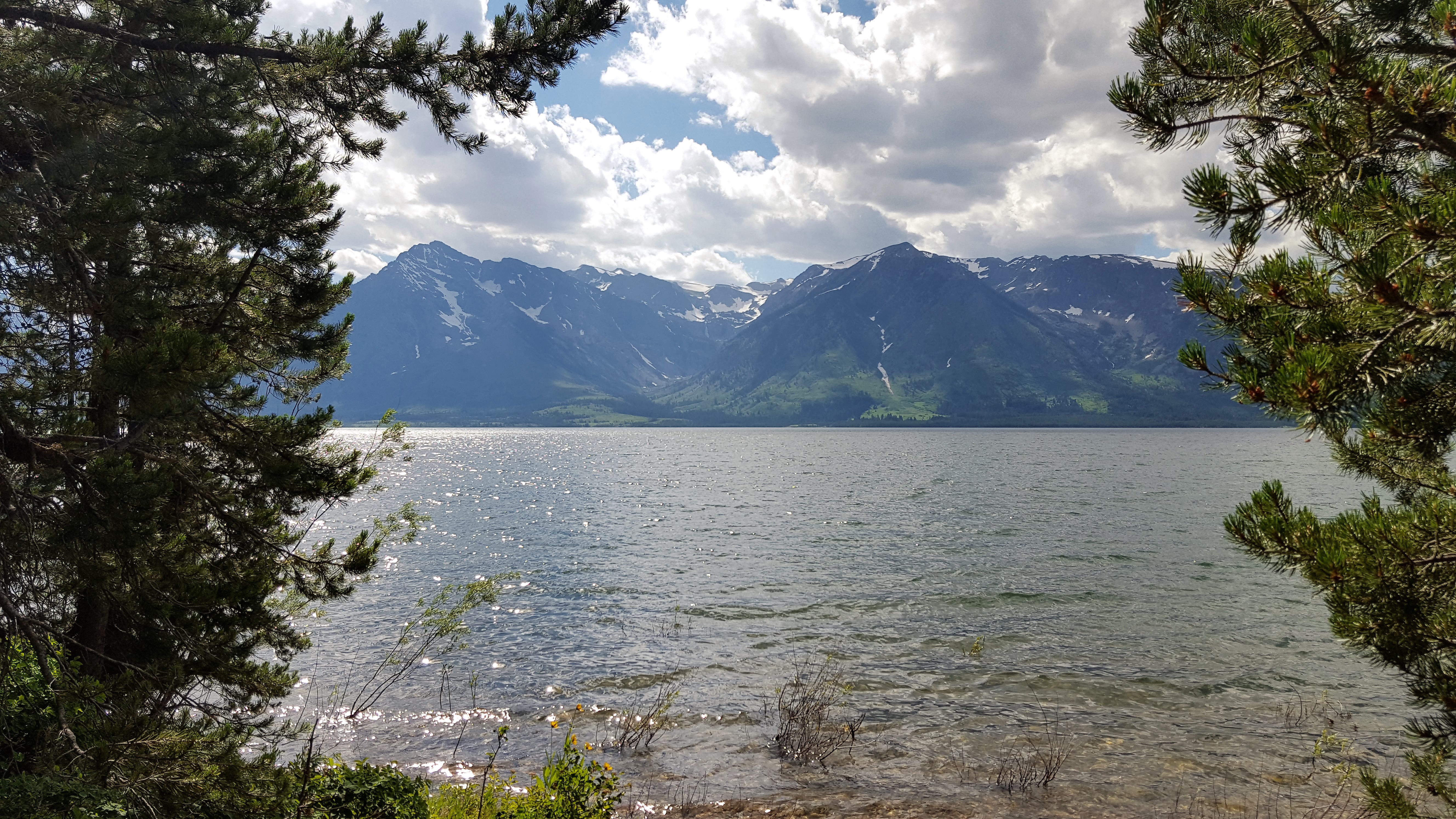
The next stop was Grand Teton National Park in northwest Wyoming. While the scenery driving up from the south was similarly as dry and arid as Colorado, the closer I got to the park, the more things began to fill me with awe. Some of the photos I took there can be seen in the below slideshow. Jackson Lake was a major part of my exploration, and was one of the most beautiful places I have ever visited in my life, I highly recommend visiting. During this phase of my road trip, I slept at the Baymont by Wyndham hotel in Pinedale, which I give a 5 out of 5 star rating to also.
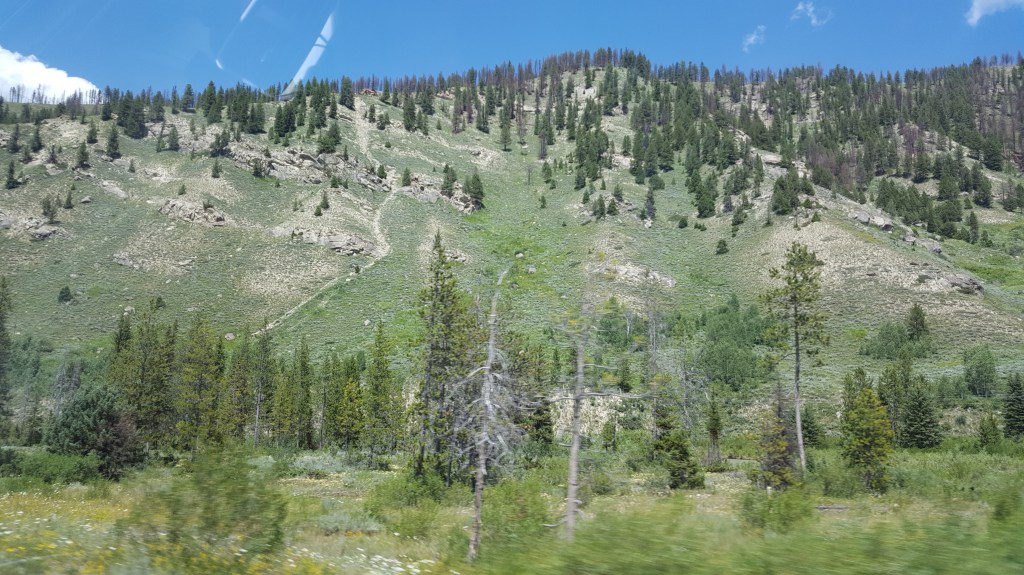
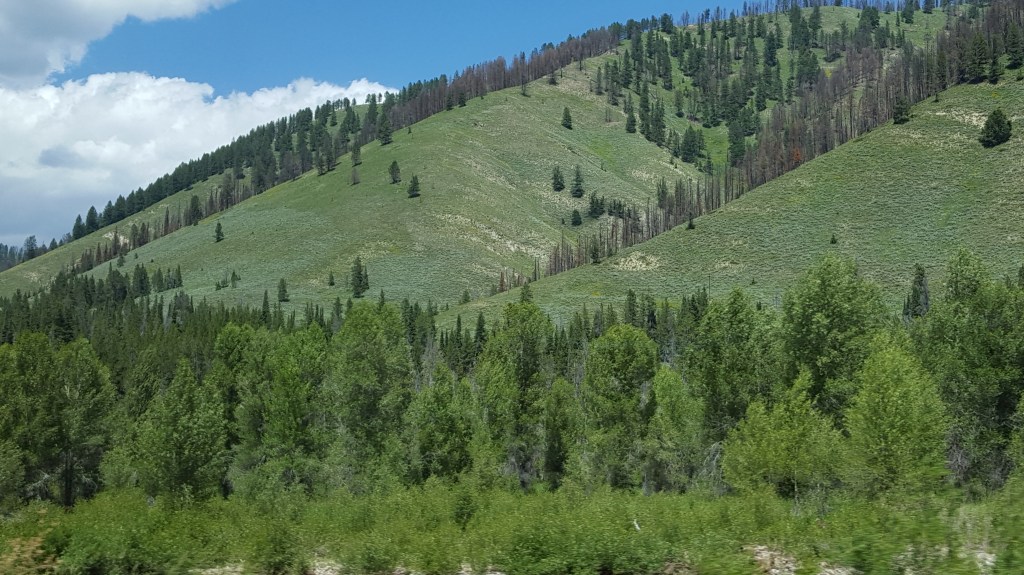
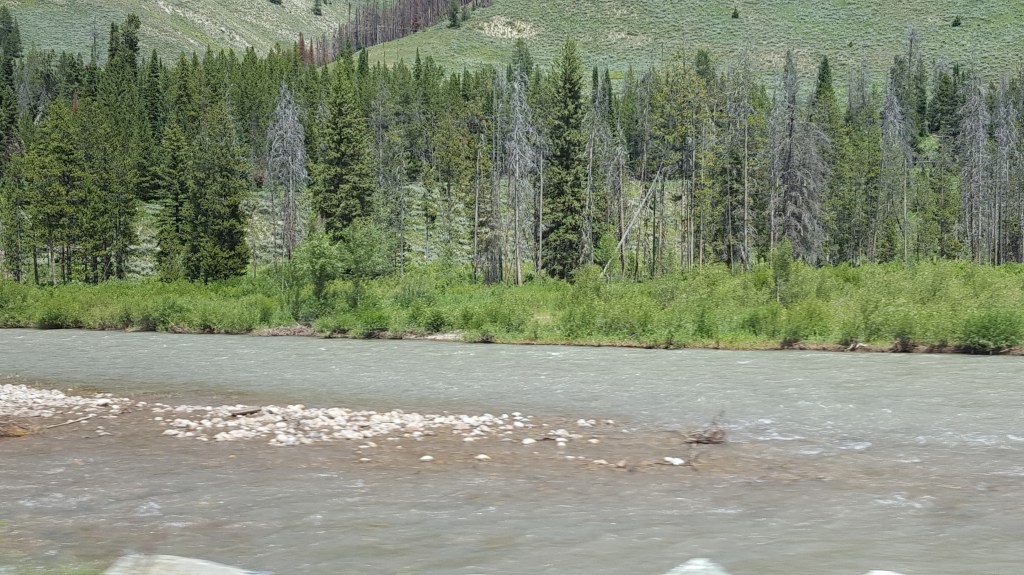
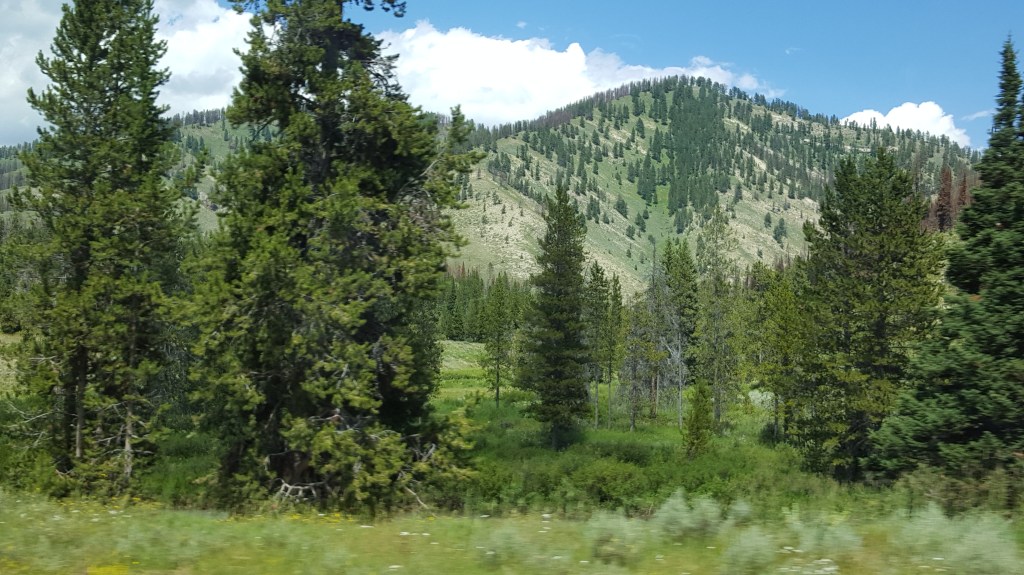
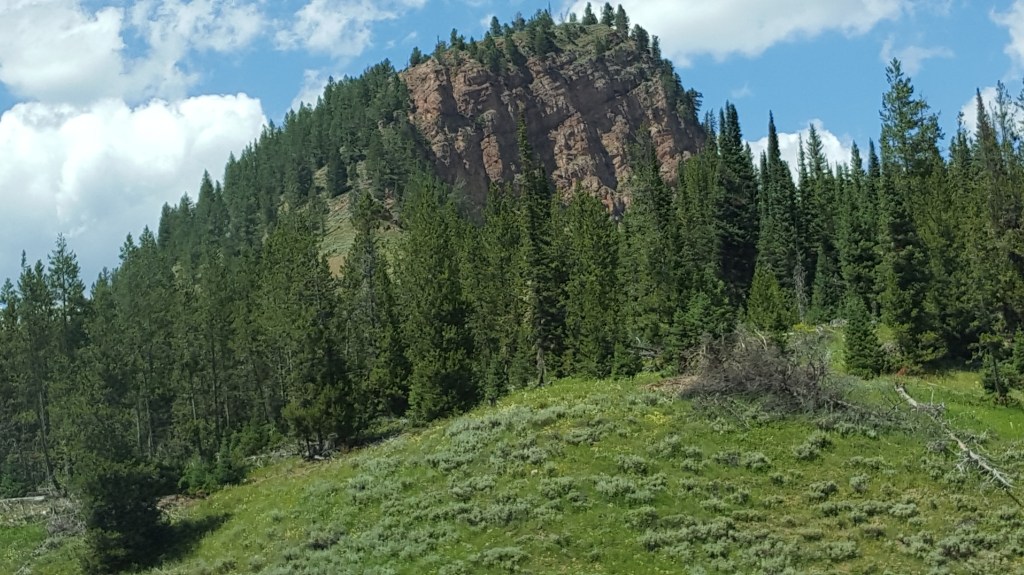
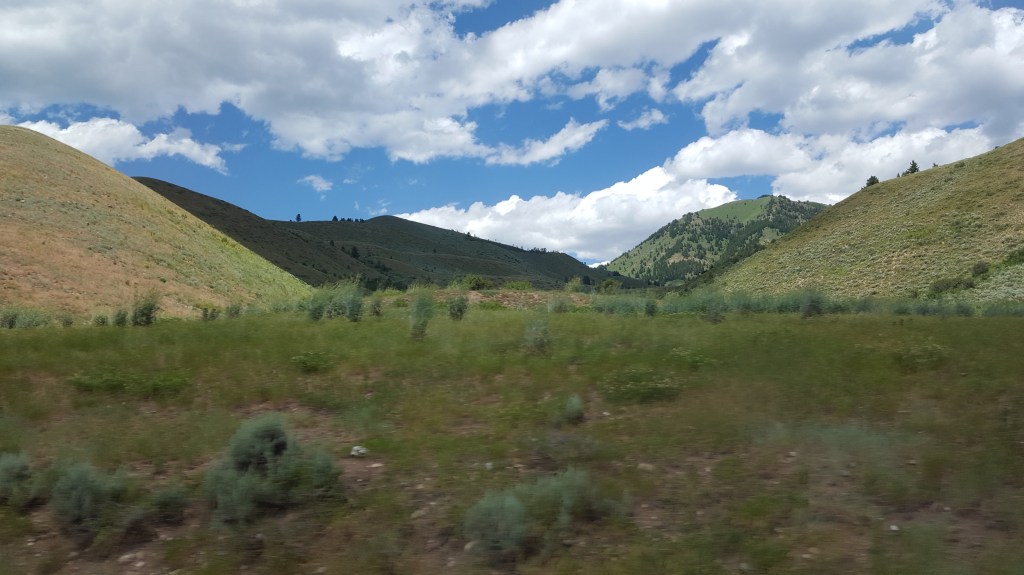
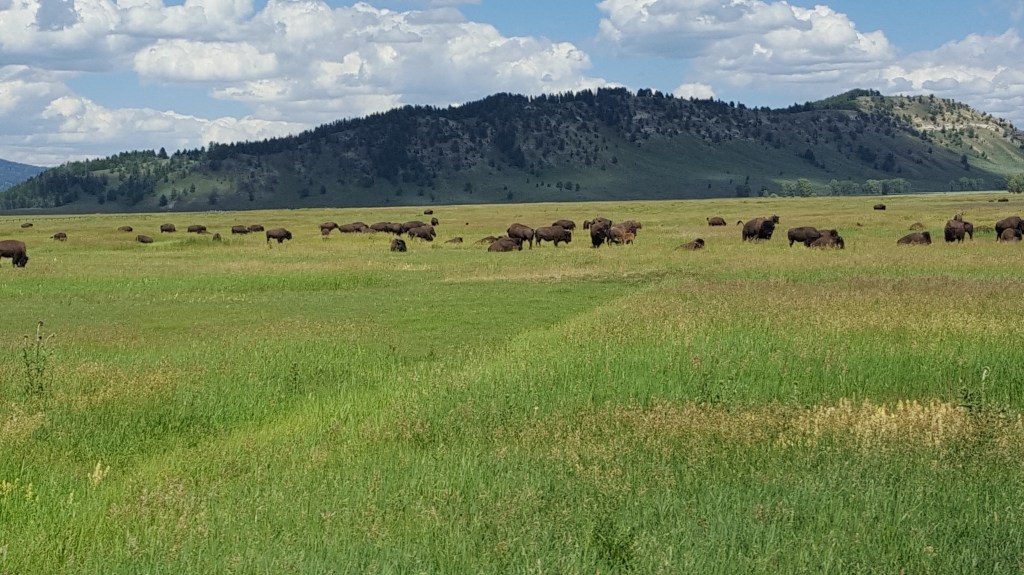
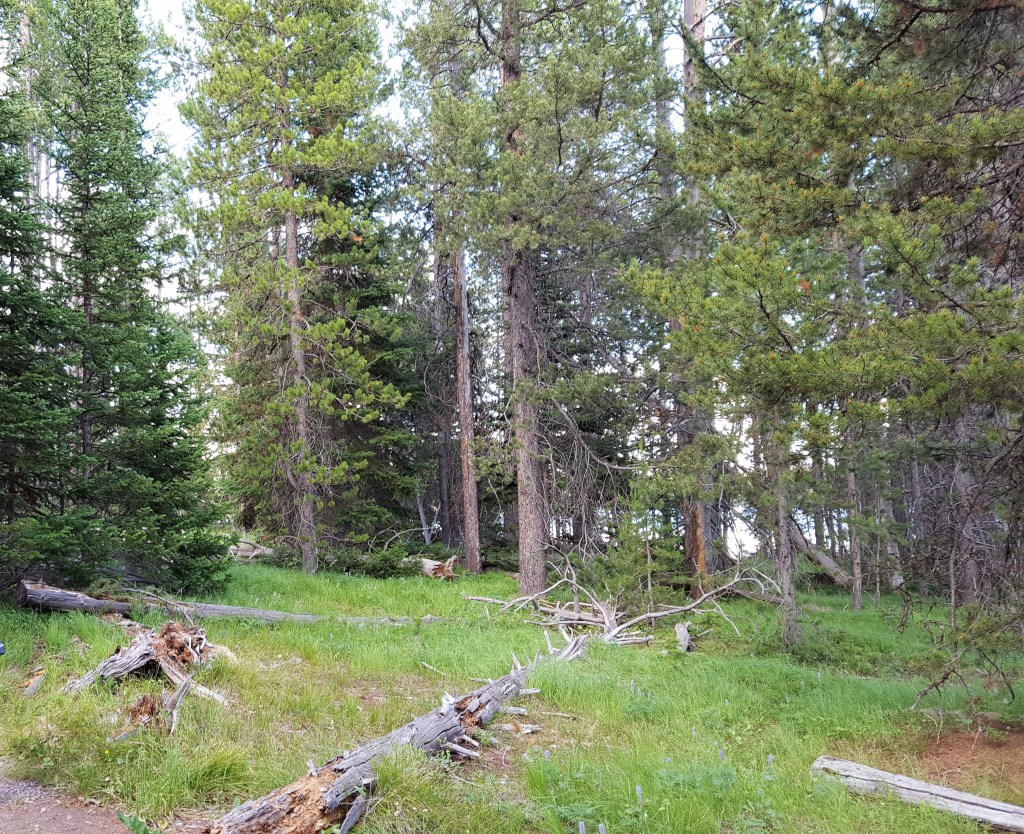
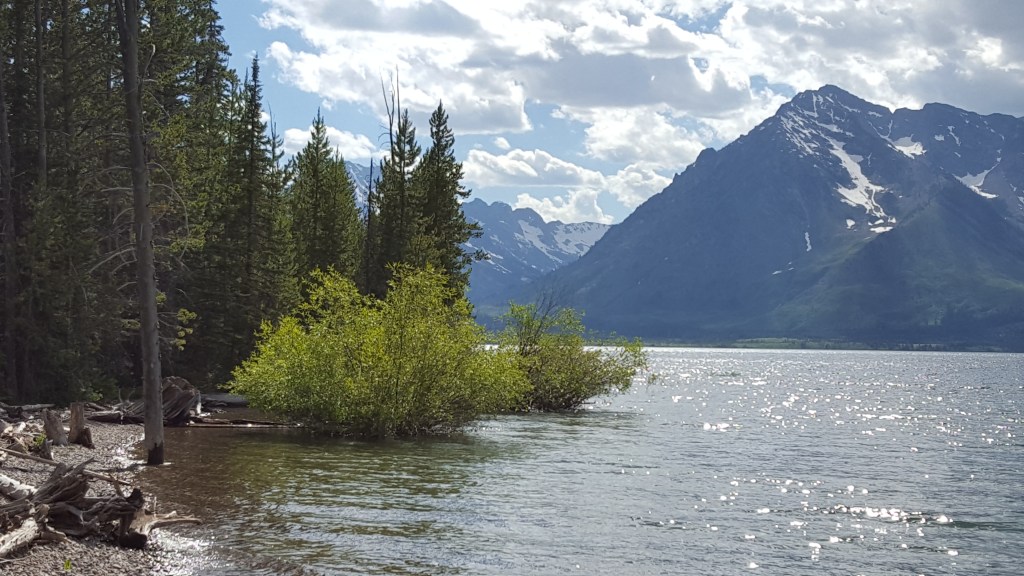
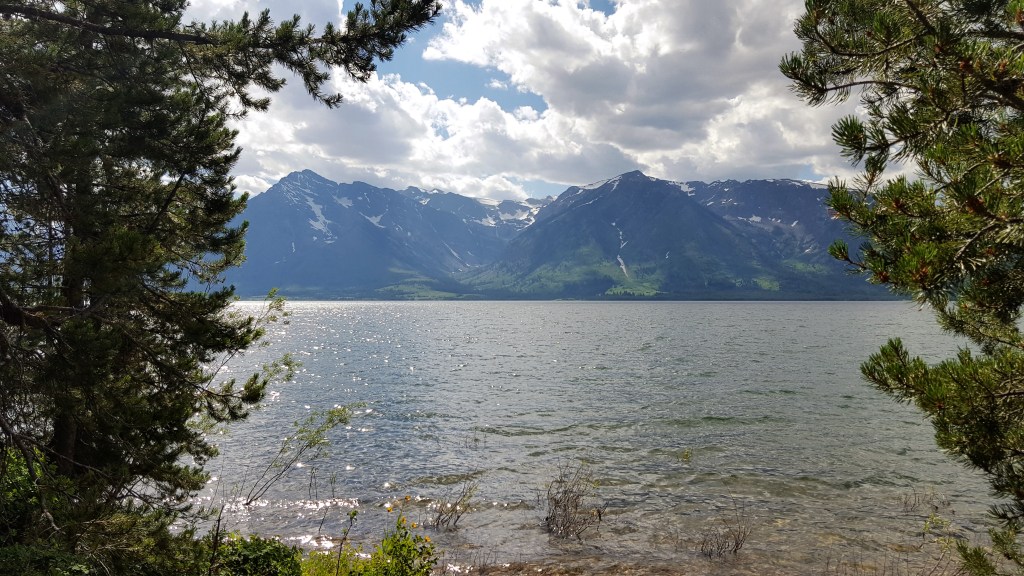
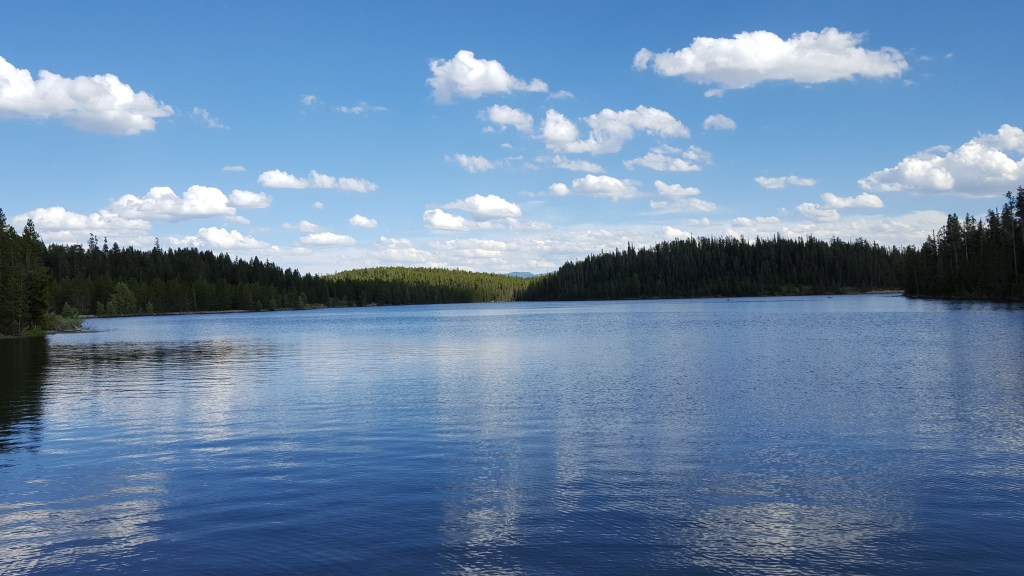
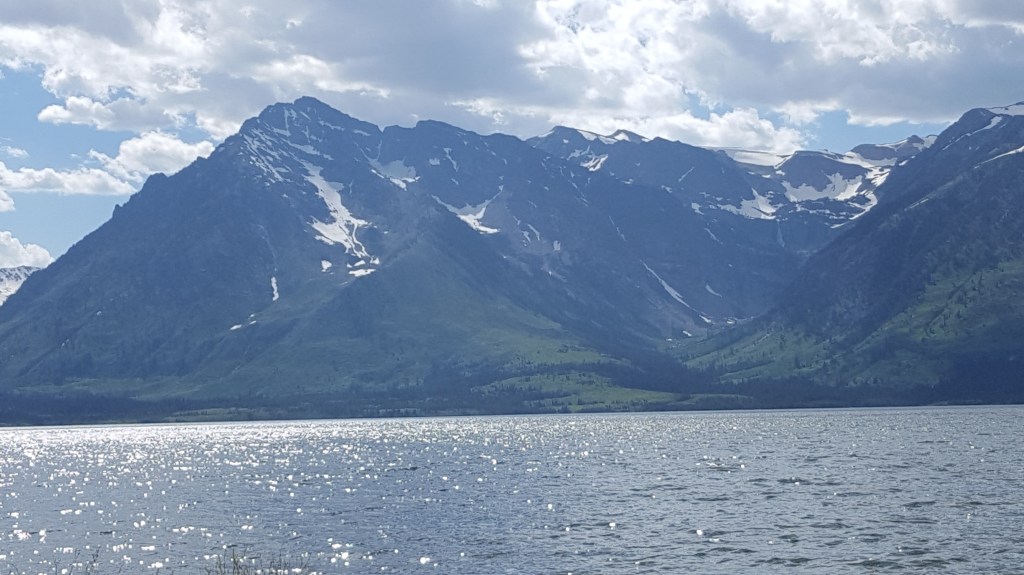
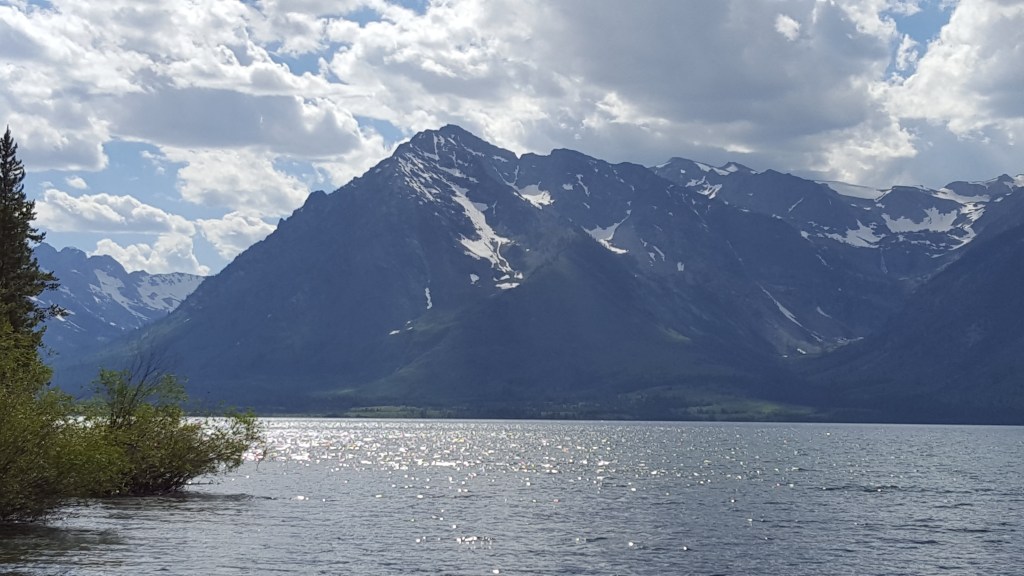
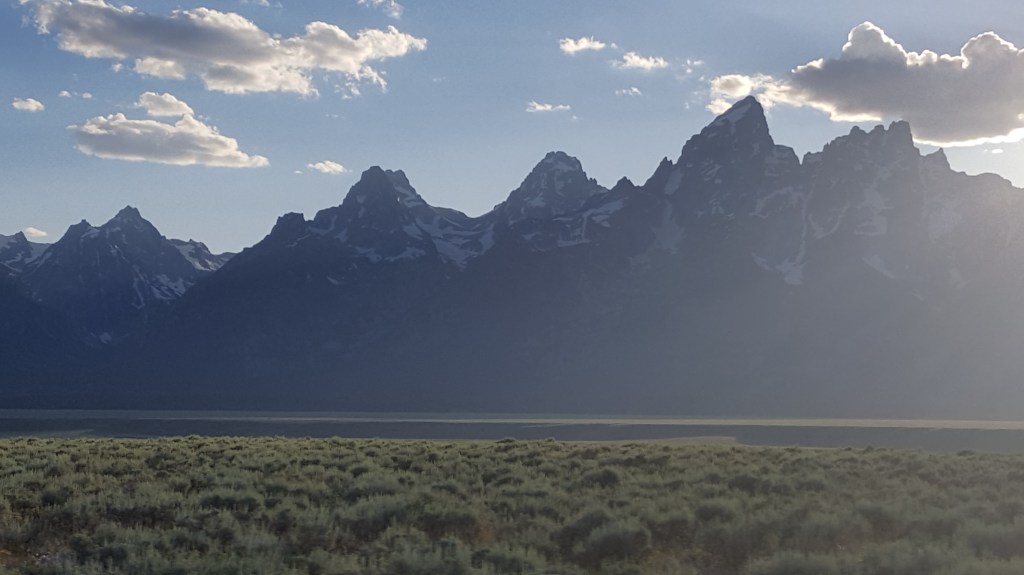
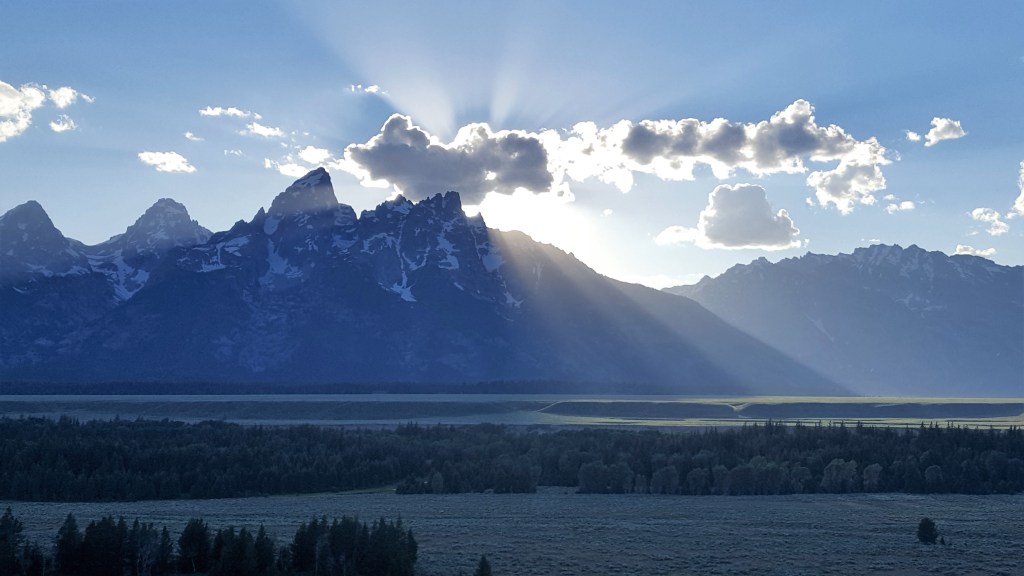
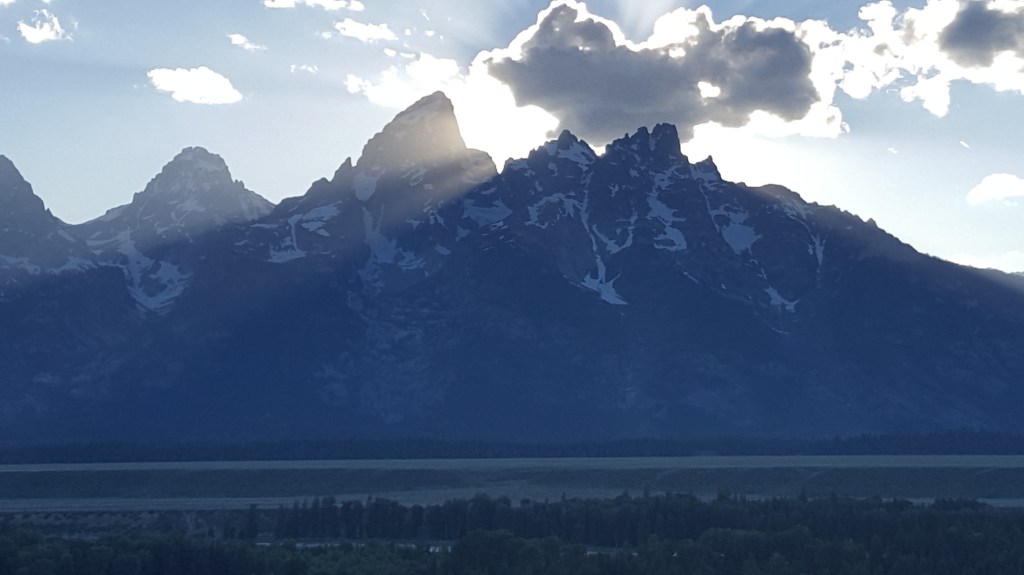
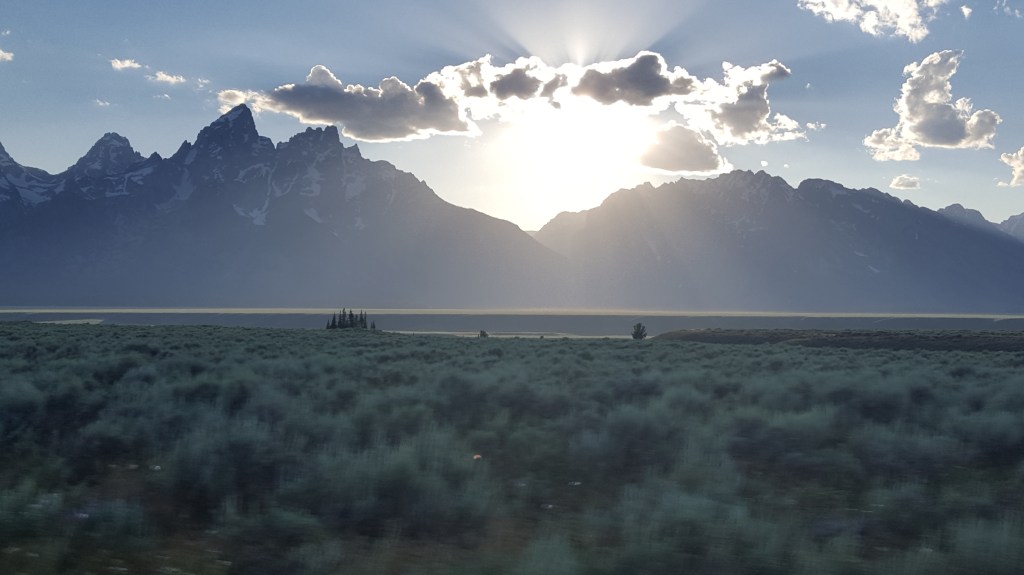
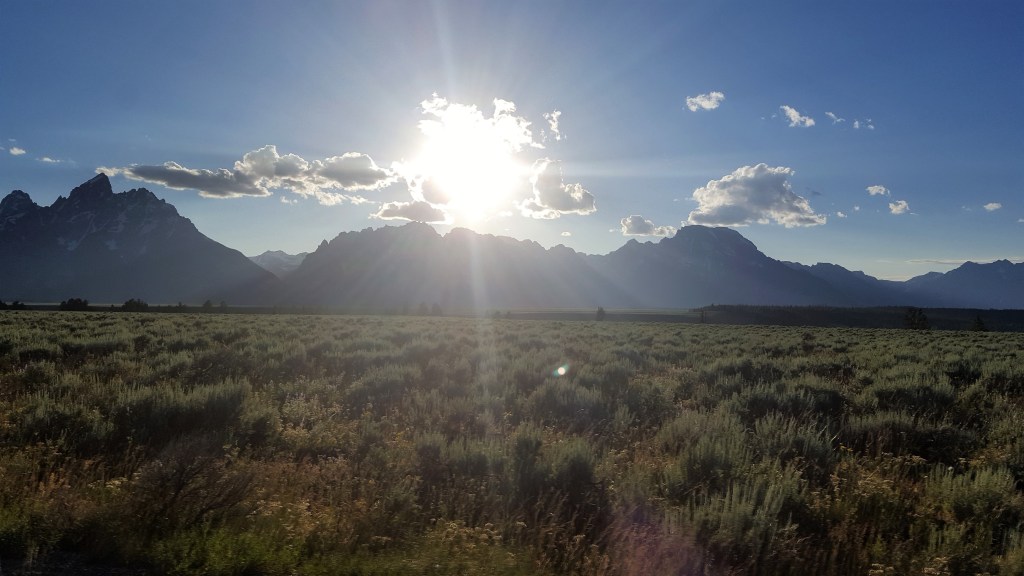
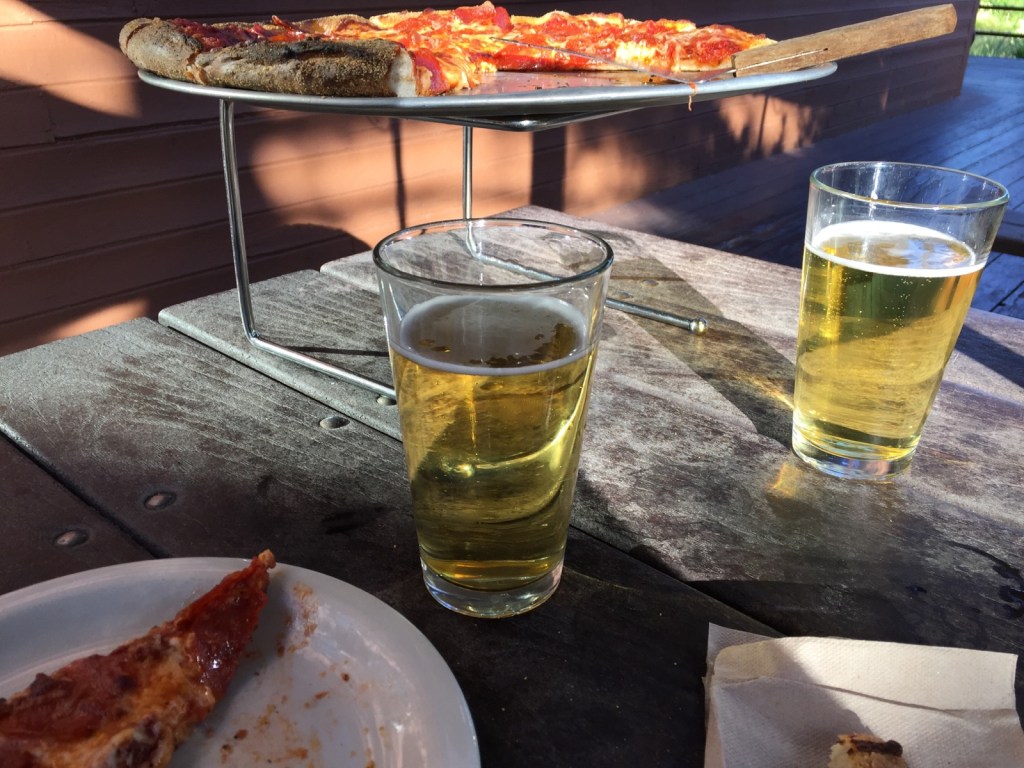
Aside from exploring the region around the lake I also enjoyed lunch at Leek’s Pizzeria located at the marina on the lake. I sat outside on the deck, the service was fast and the pizza was great, but the view was unbeatable. I really cannot stress how great Jackson Lake is (minus the hungry mosquitoes), even if you’re like me and have no desire to be on a boat out on the lake, the view from the shoreline alone is breathtaking. Certainly a highlight from my trip and ranks a close second behind Glacier. I had honestly never heard of Grand Teton National Park prior to this trip, so it was an extraordinary experience.
Grand Teton National Park is connected to Yellowstone and so exploring one park offers the opportunity to explore the other if you’re willing to keep driving north. If you plan to visit Yellowstone only to see Old Faithful, you’re wasting your time and money. Yes, it’s historical and iconic, but it’s crowded and there’s really nothing exciting about it. There are far more beautiful things to see and do. In the slideshow below are my photos of Yellowstone Lake, the largest lake in the park. Also you will see Lake Yellowstone Hotel, a massive hotel along the shoreline overlooking the lake, whose initial construction dates back to 1891.
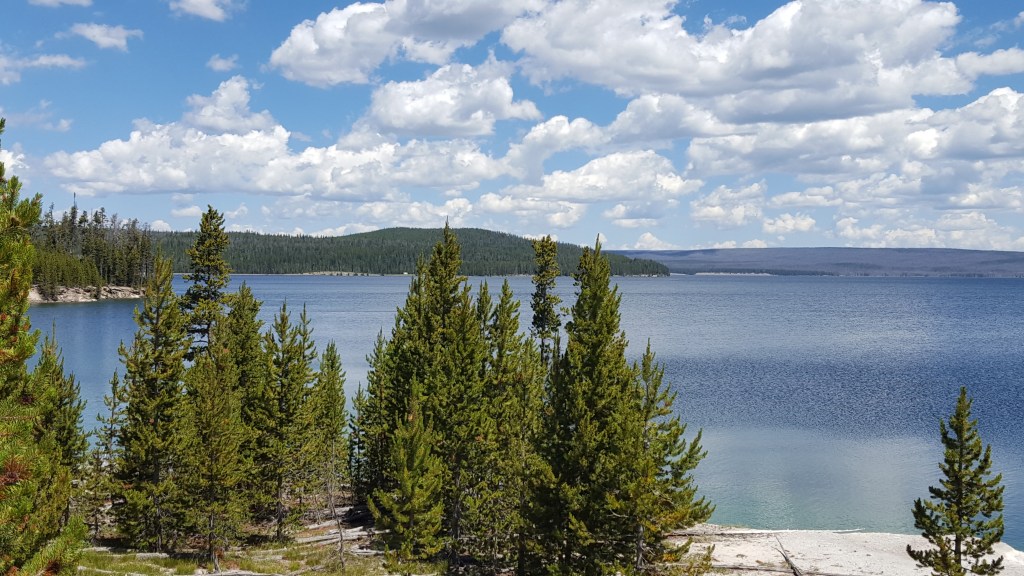
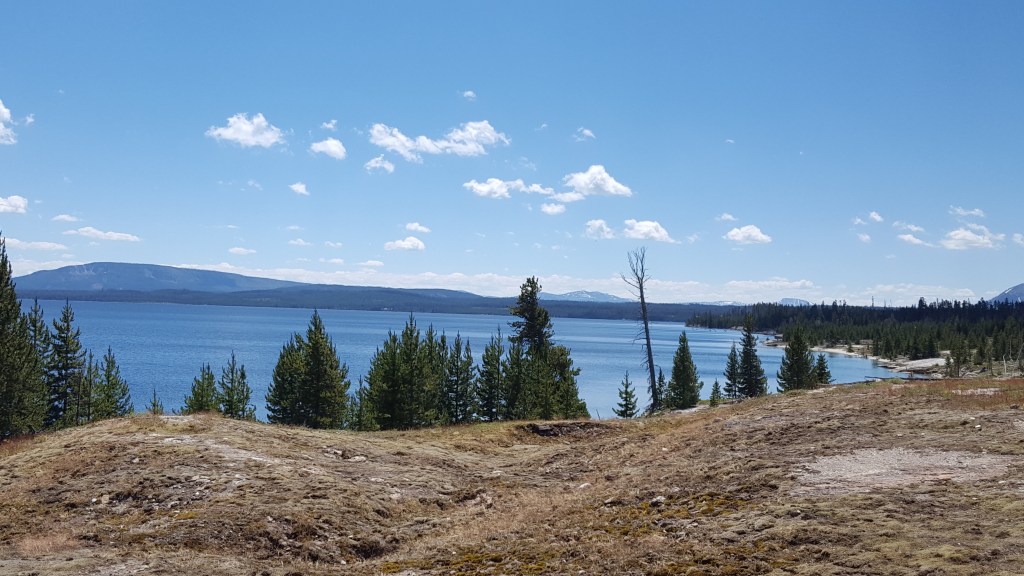
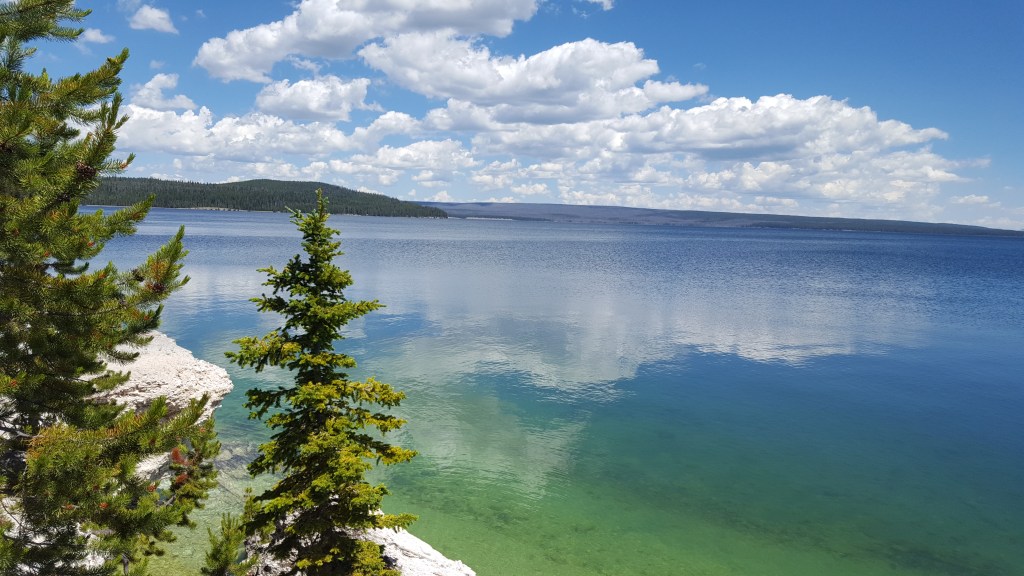
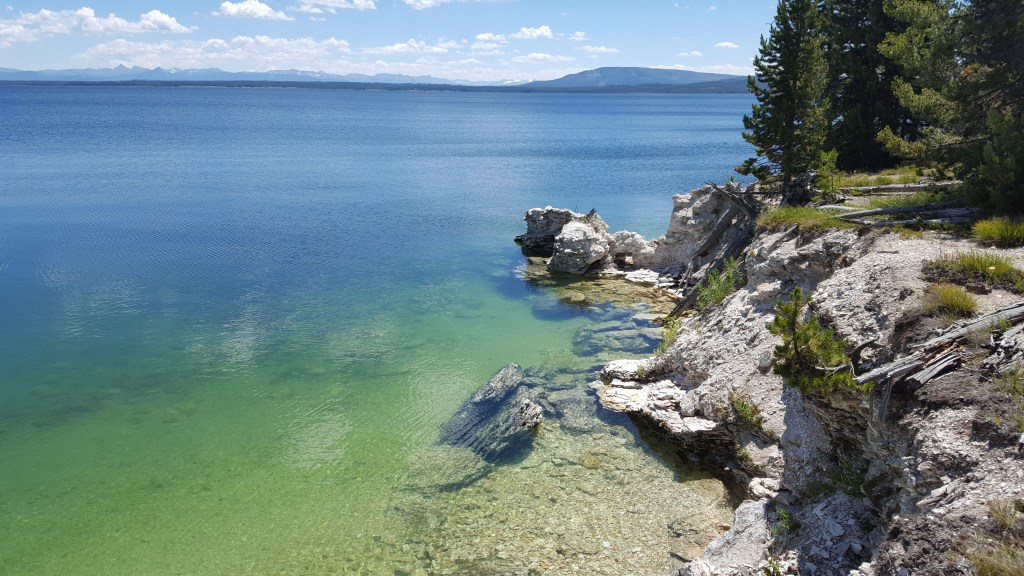
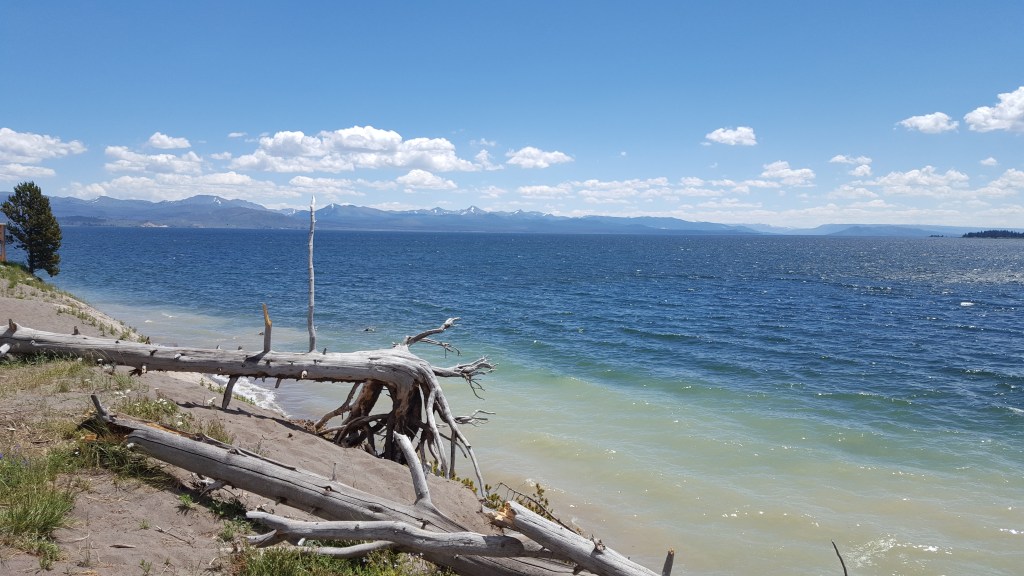
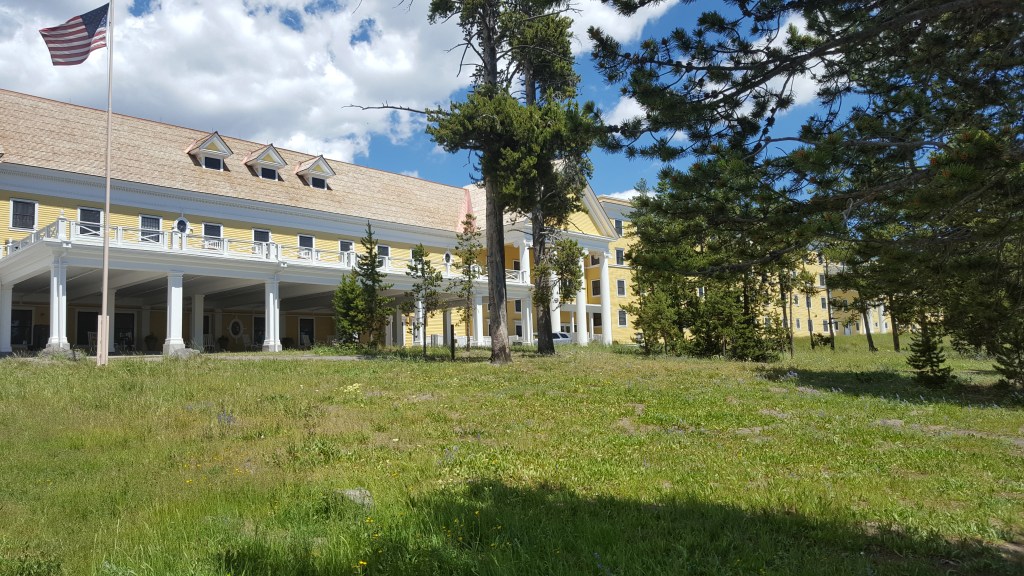
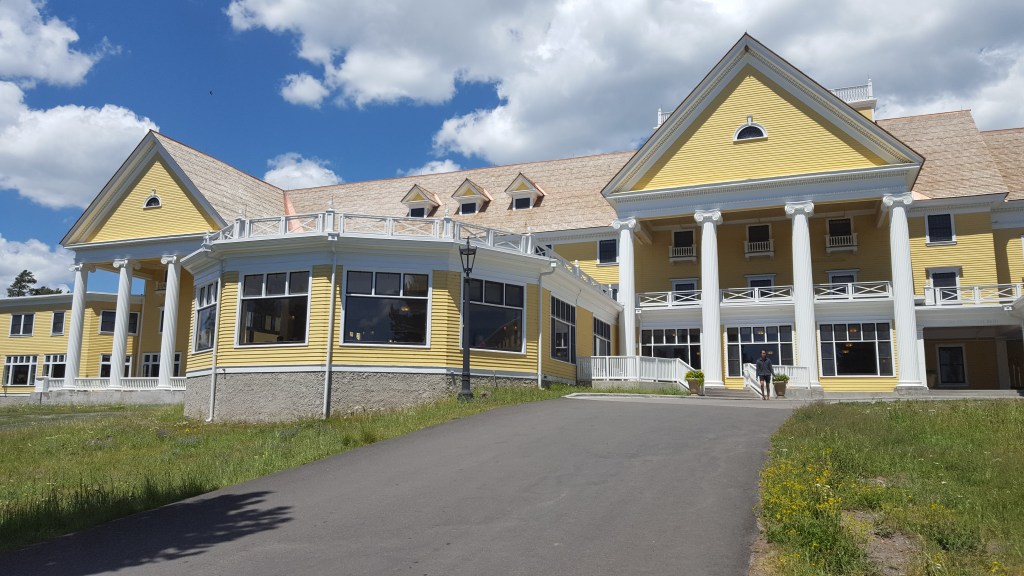
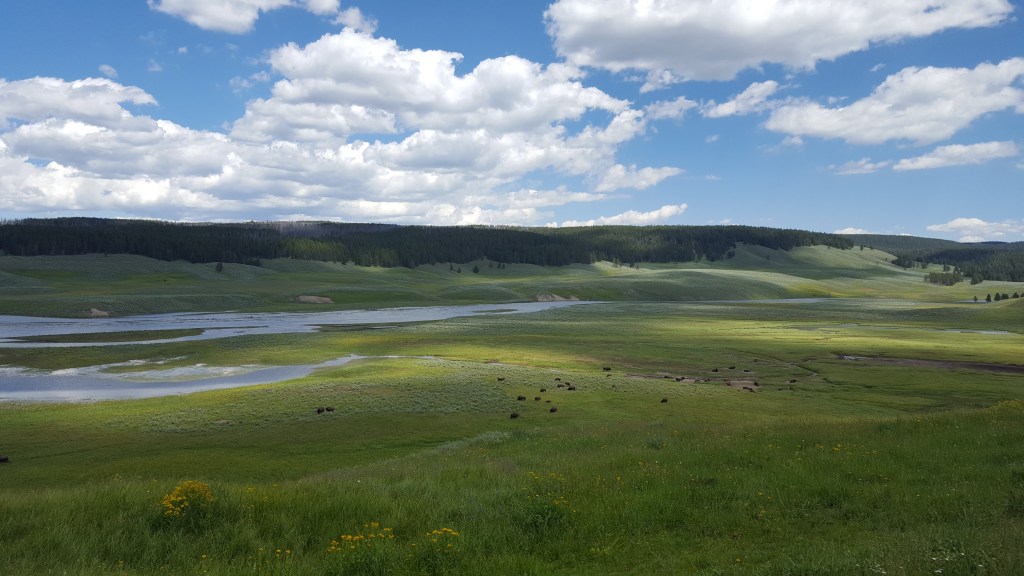
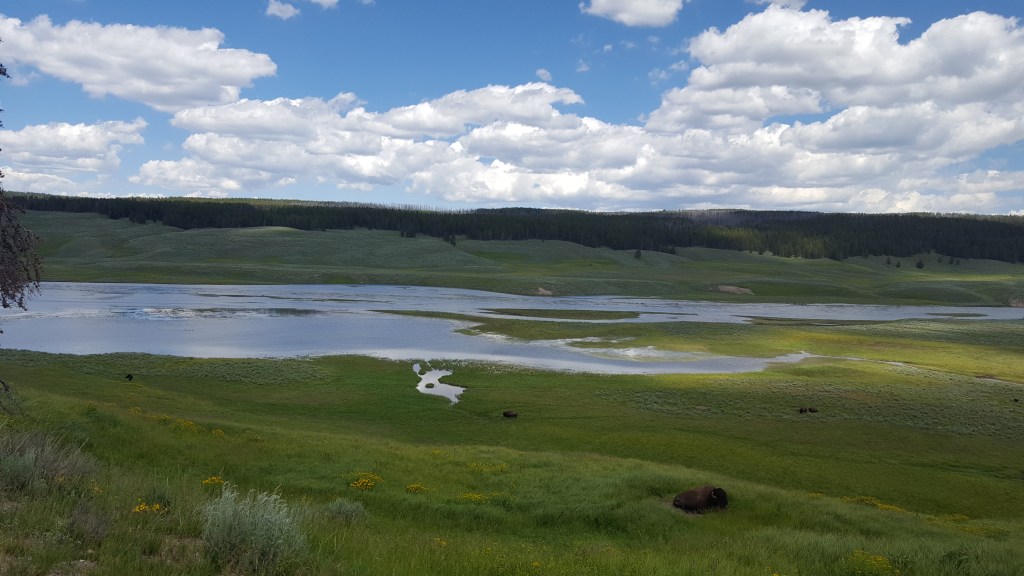
Yellowstone National Park was my third favorite place to visit and I regret that I did not spend enough time exploring the park. I only had one afternoon to spend there, which is why Yellowstone Lake was the focal point of my exploration. I also regret wasting my time at Old Faithful, it was either that or Mammoth Springs and I wish I had chosen the latter. Regardless, I had the opportunity to hike around a bit and explore. The aromatic conifer in the higher elevations was soul touching for me, there’s no better air to breath.
From Yellowstone to Montana was going to be an all-night drive. Along the way I passed through the city of Bozeman, with the town of Choteau (pronounced “show-toe”) being my destination for the night. The mountainous drive between these two points took three hours and I arrived in Choteau at 12:30 AM. It felt like the longest drive of my life as I was fighting off sleepiness and everything all around me was pitch black. Most of the time there was not even a single light in the distance from human civilization and very seldom did I ever come across another vehicle on the road. I don’t think there has been another time in my life that I felt so alone.
I’m certain that the drive during the daylight hours would have been spectacular and I kind of regret having not just spent the night in Bozeman, but I was on a schedule and I had to be in Choteau to arrive on time for my hotel reservation at the Stage Stop Inn. I spent two nights at the hotel and my experience there was very pleasant. Due to being so exhausted from the drive, my first morning in Choteau found me with no energy to drive up to Glacier, so I spent the day exploring the town and speaking to the local residents.
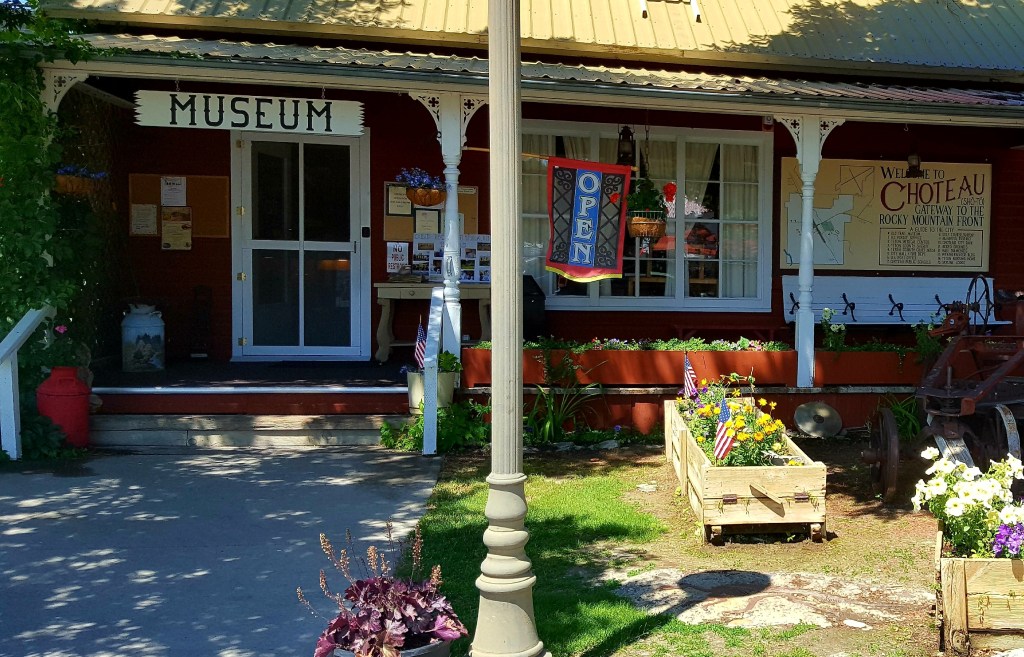
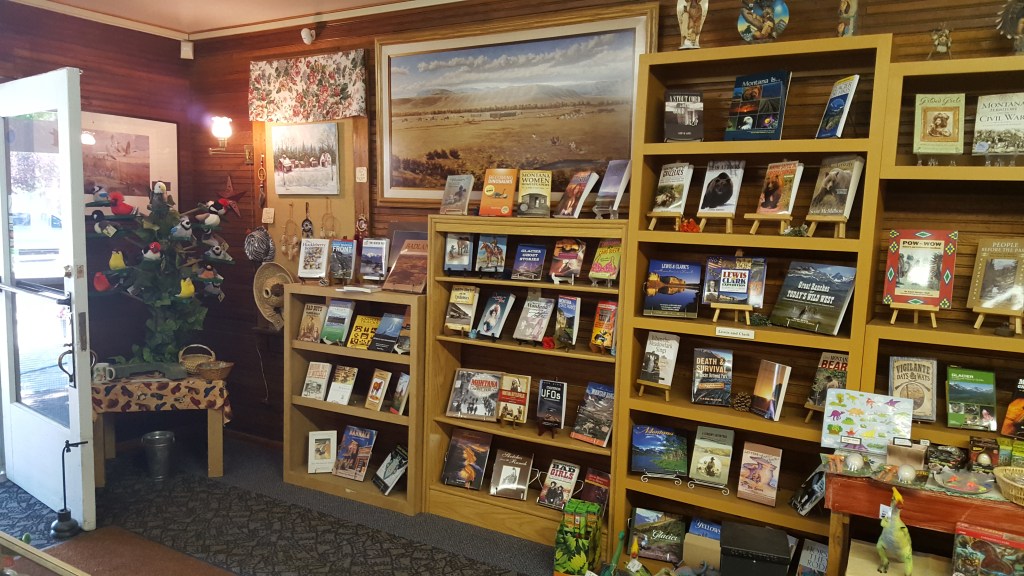
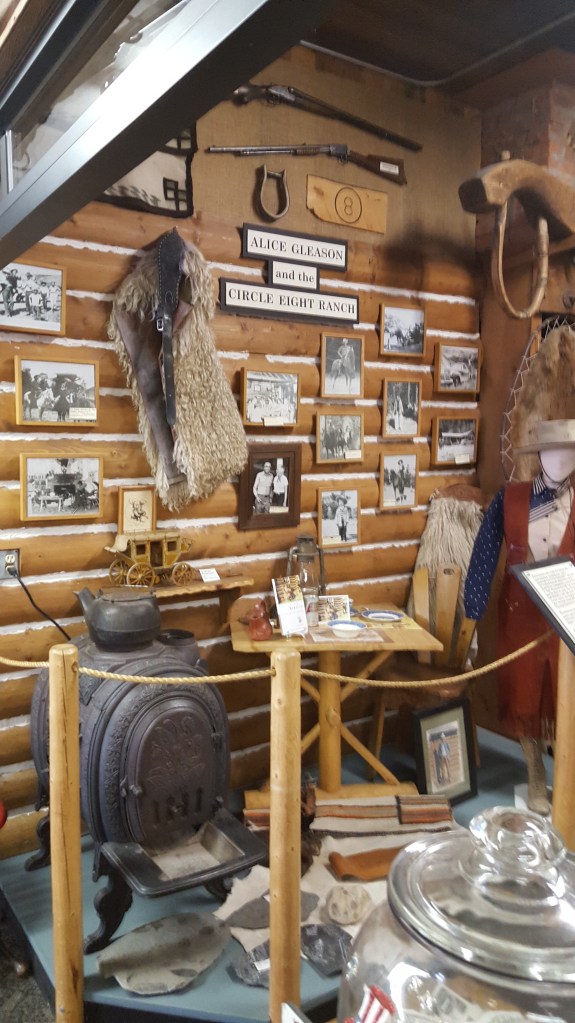
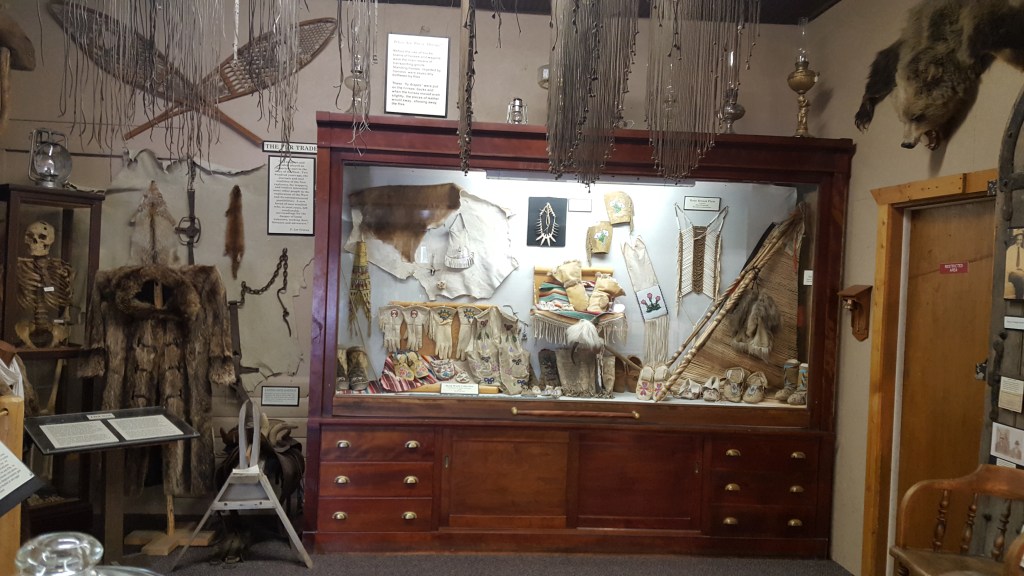
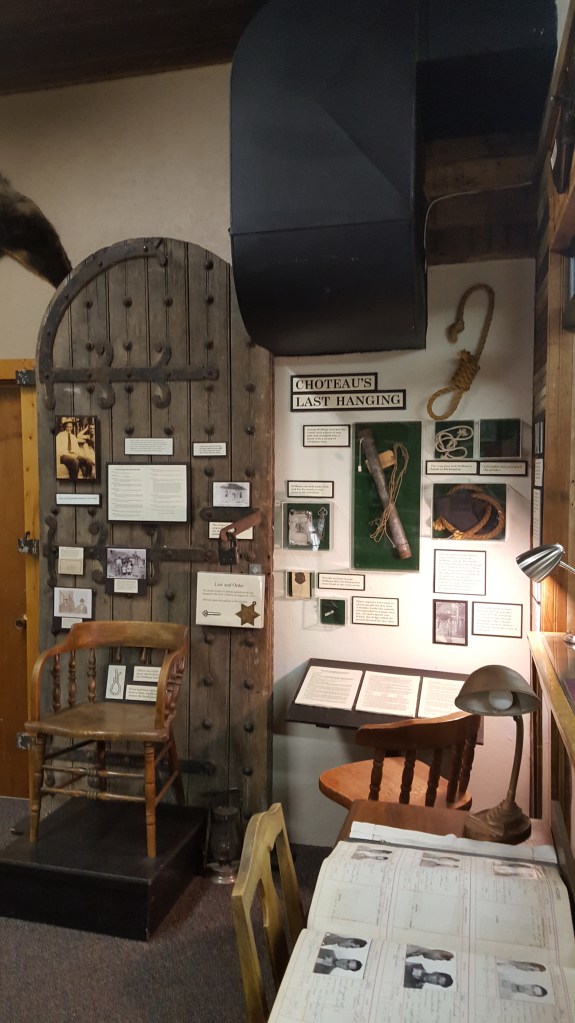
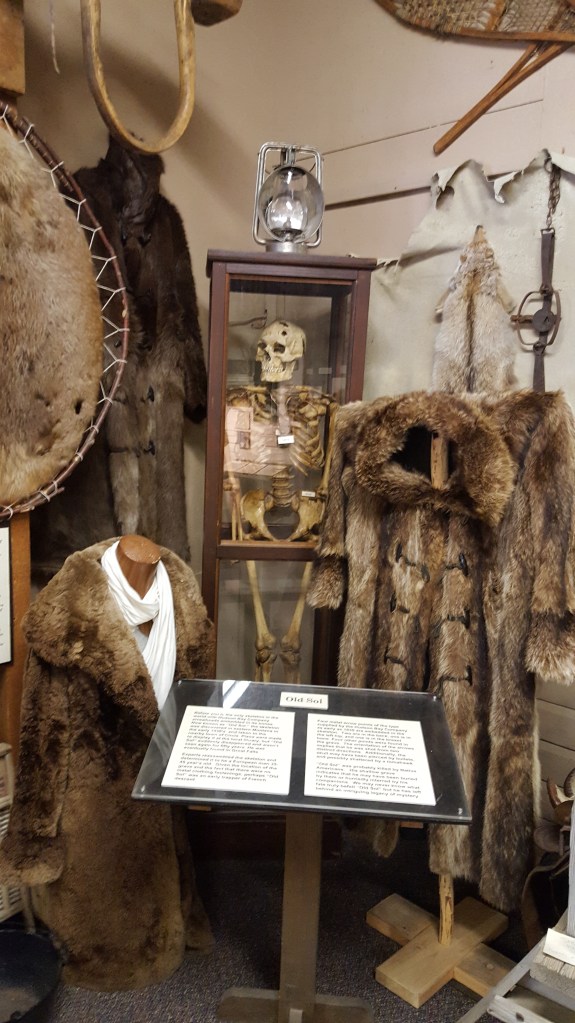
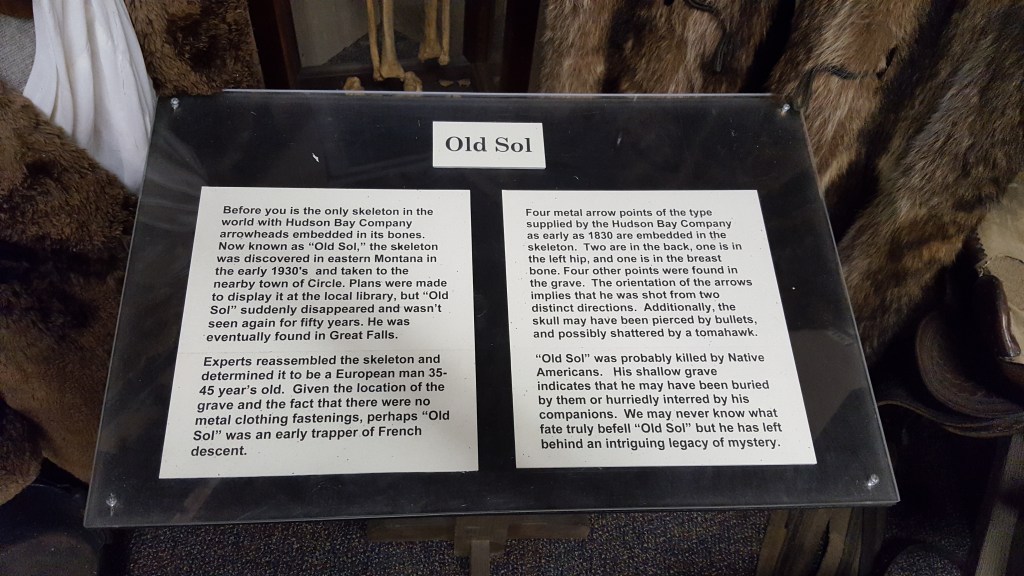
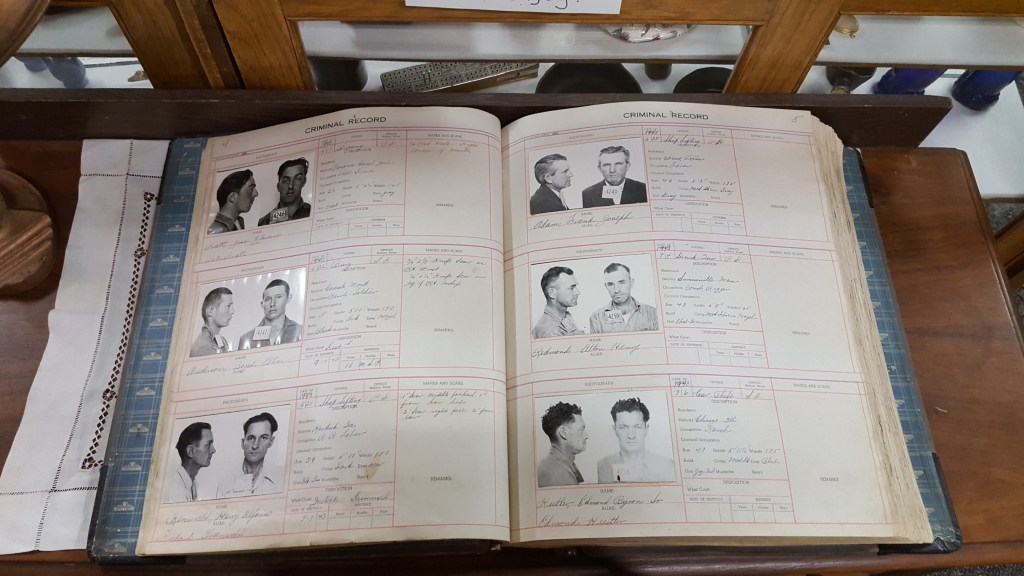
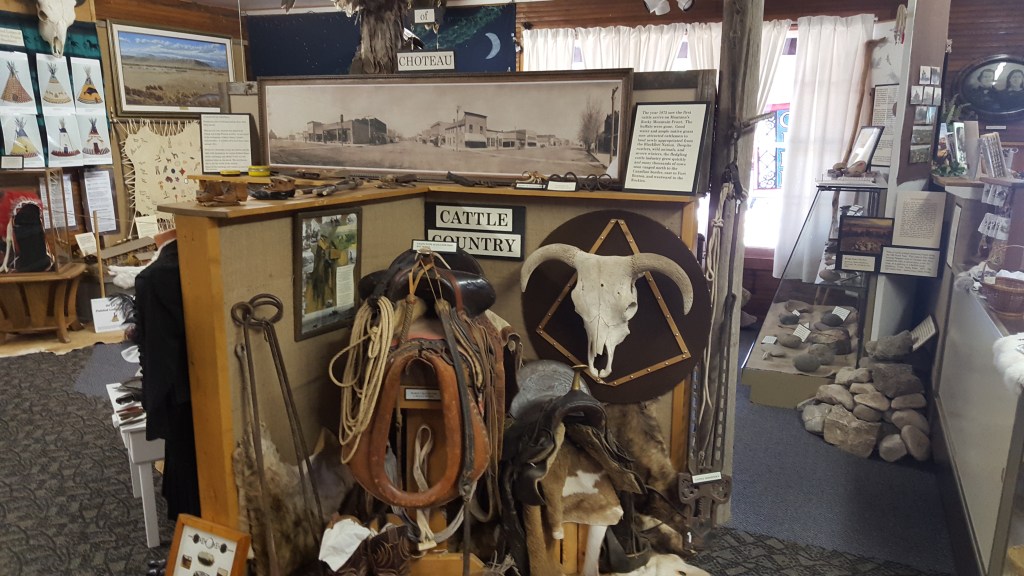
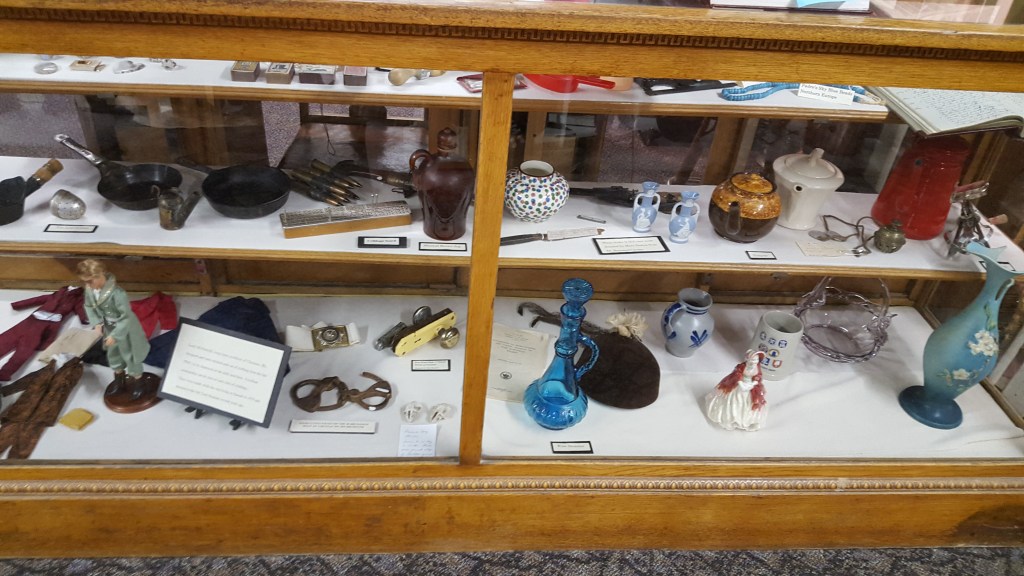
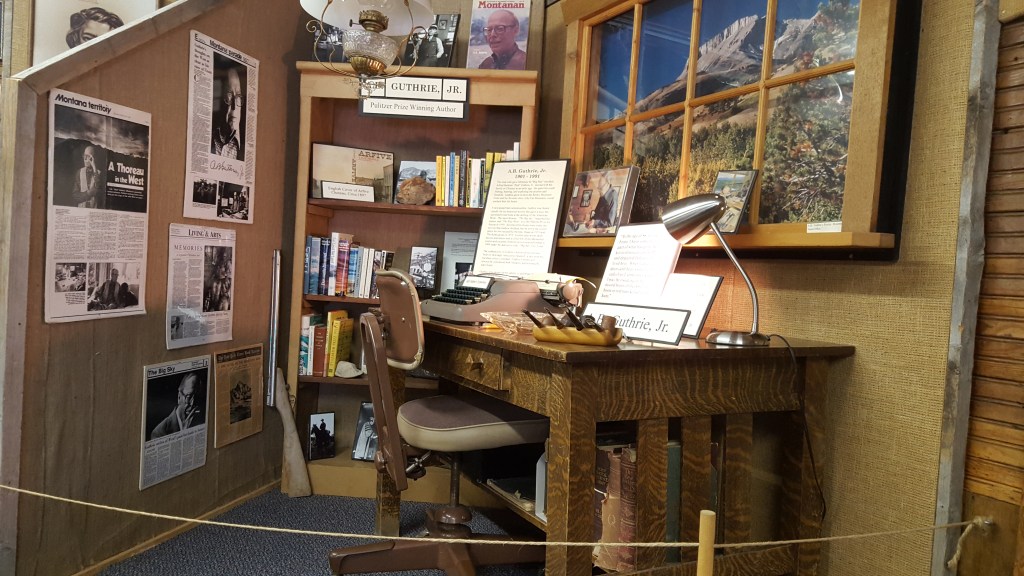
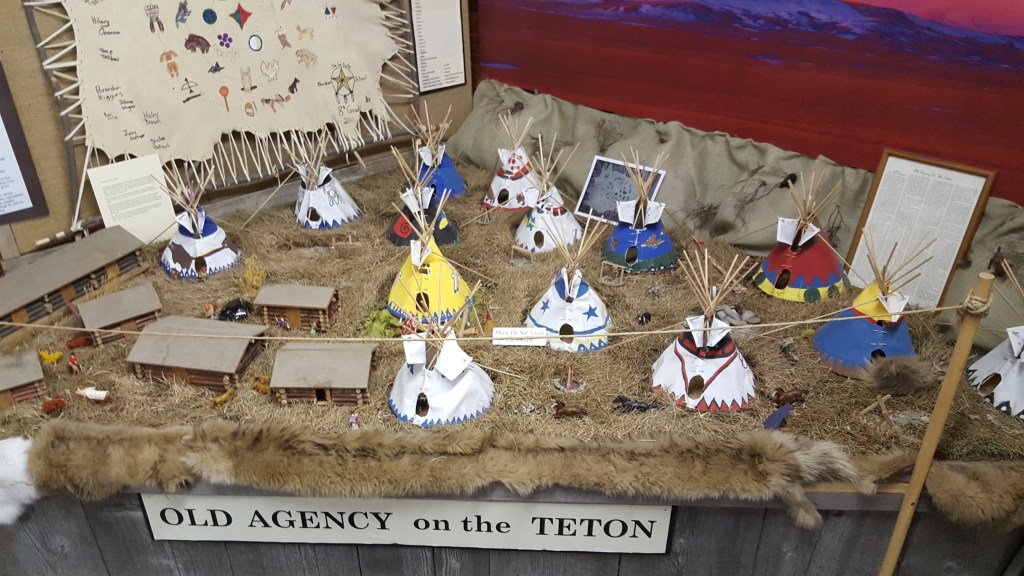
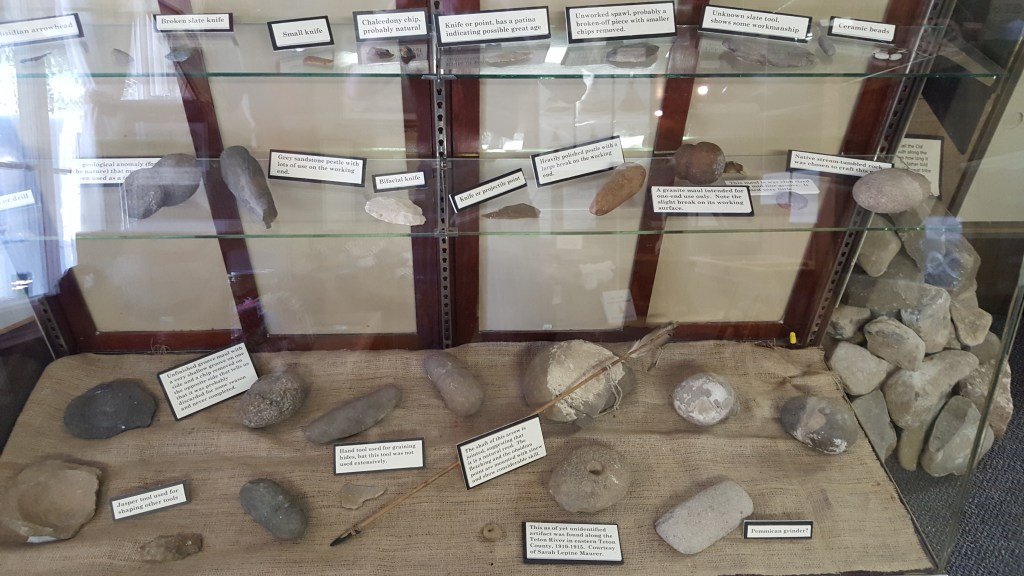
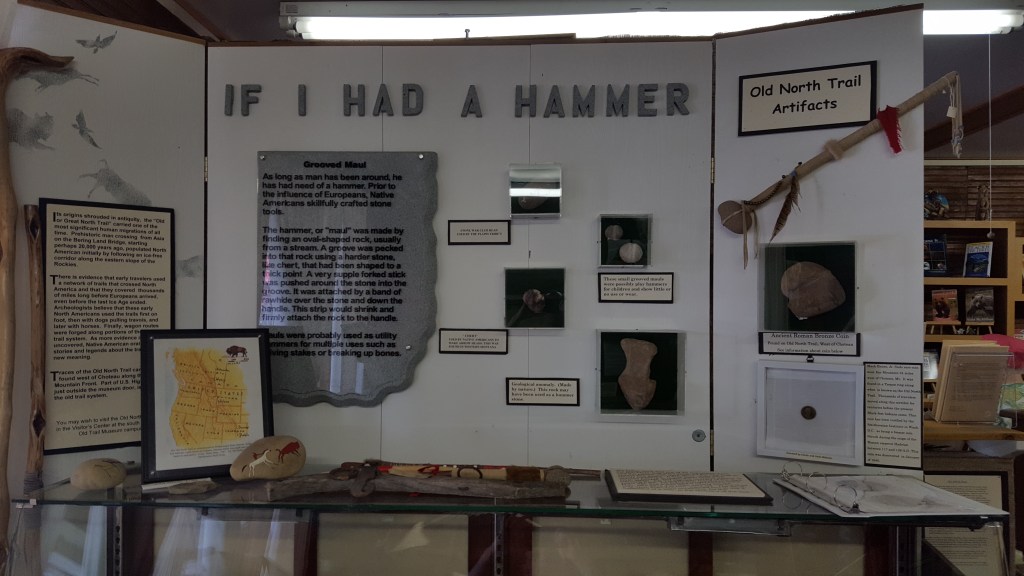
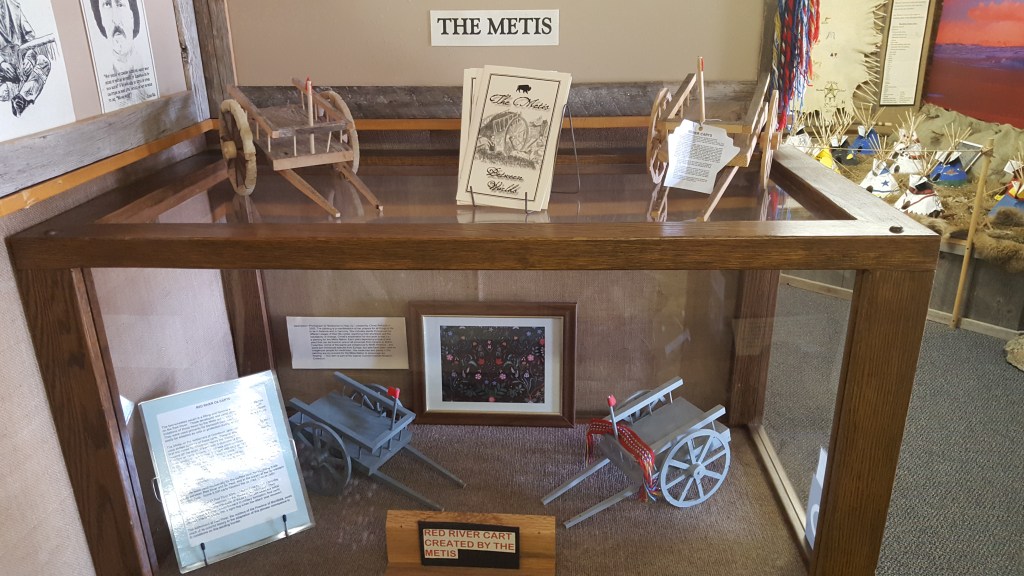
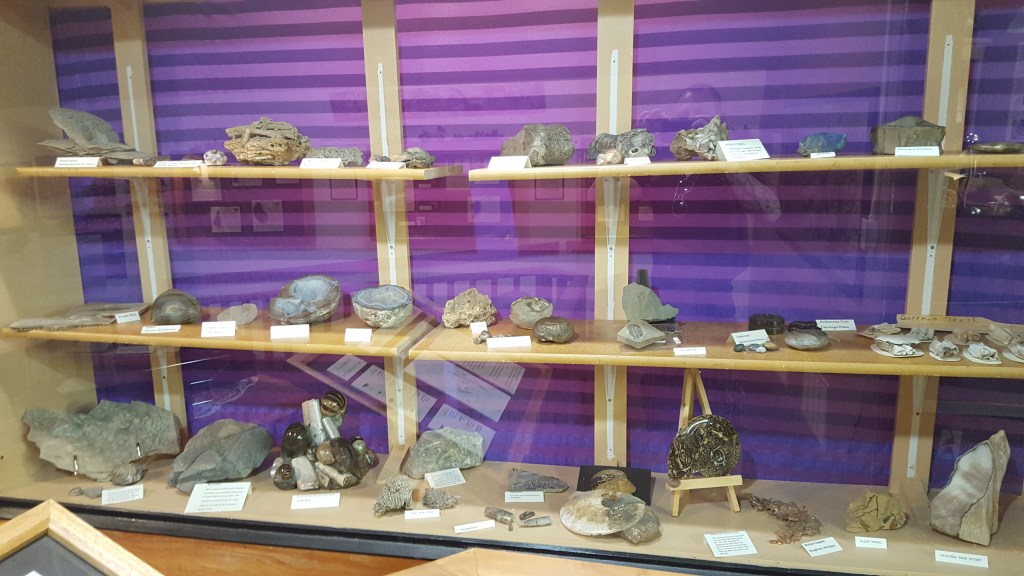
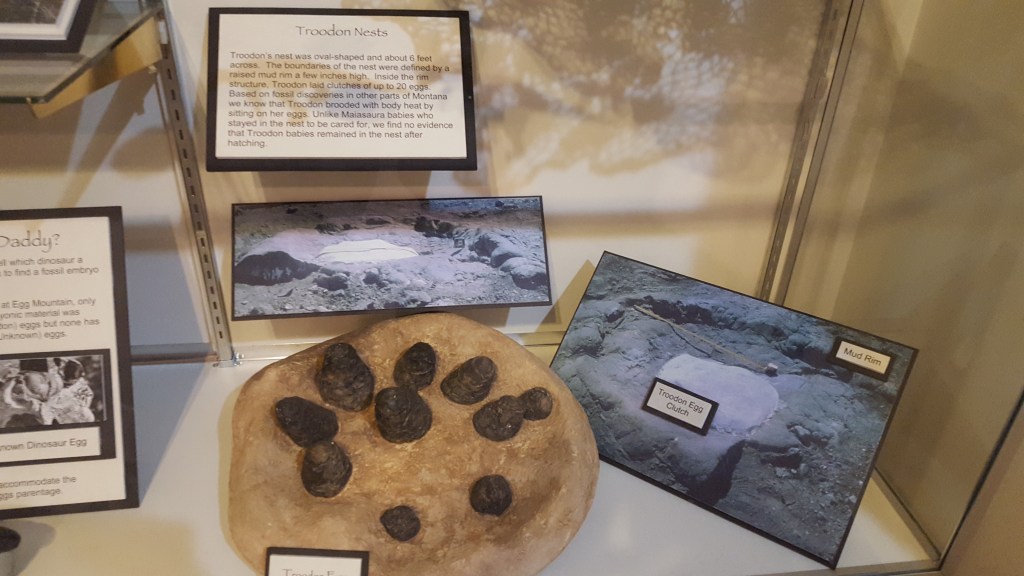
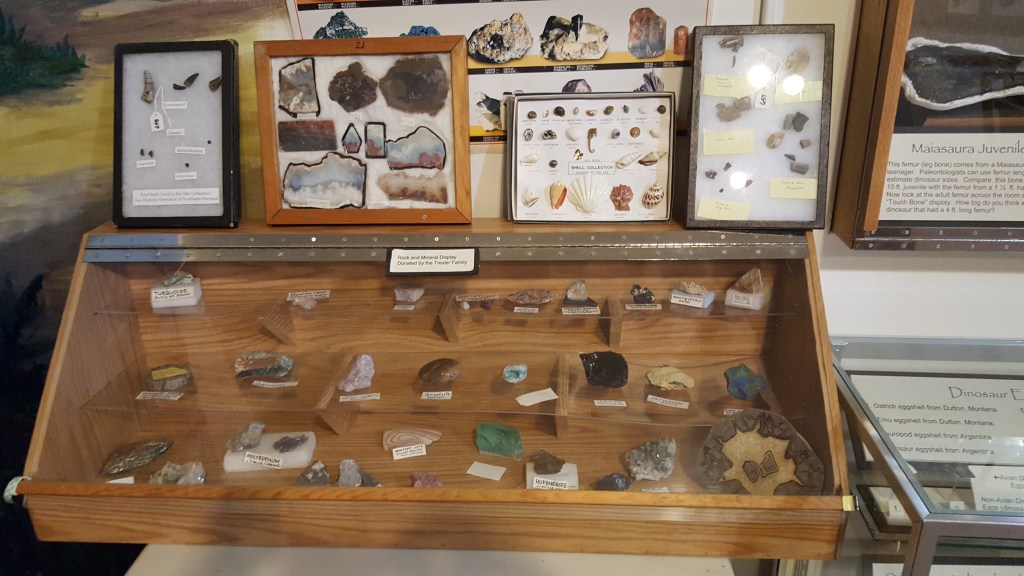
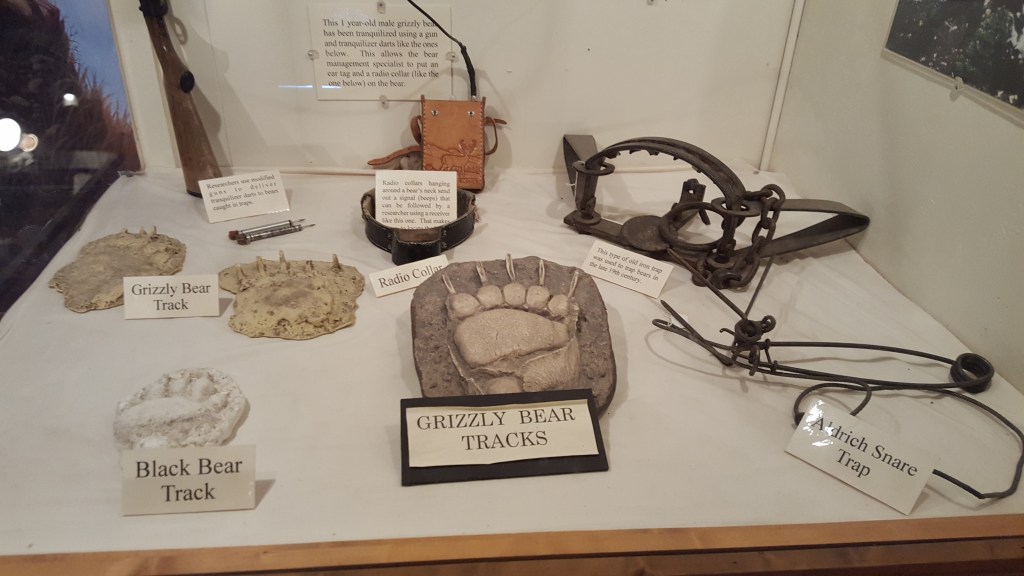
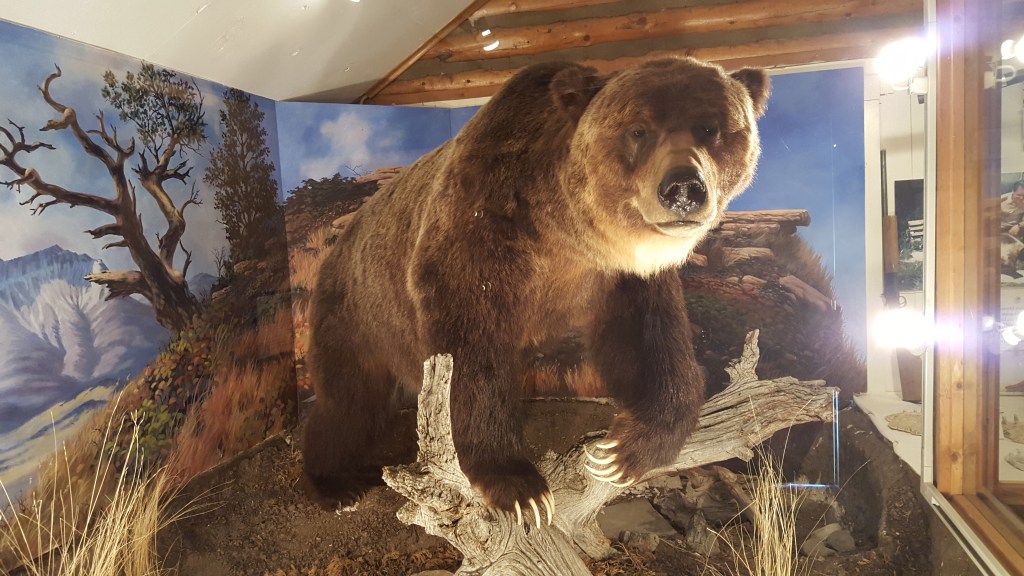
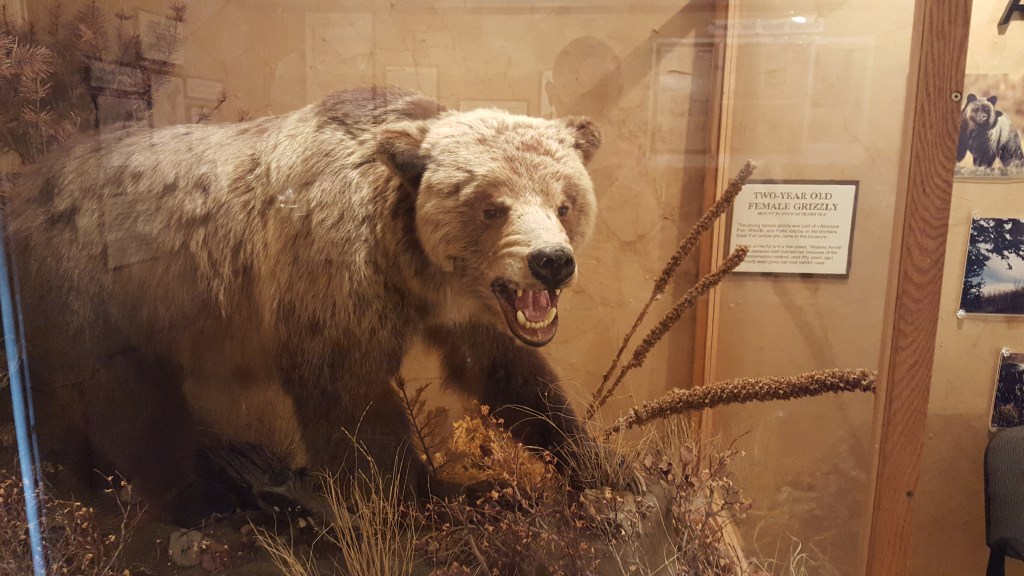
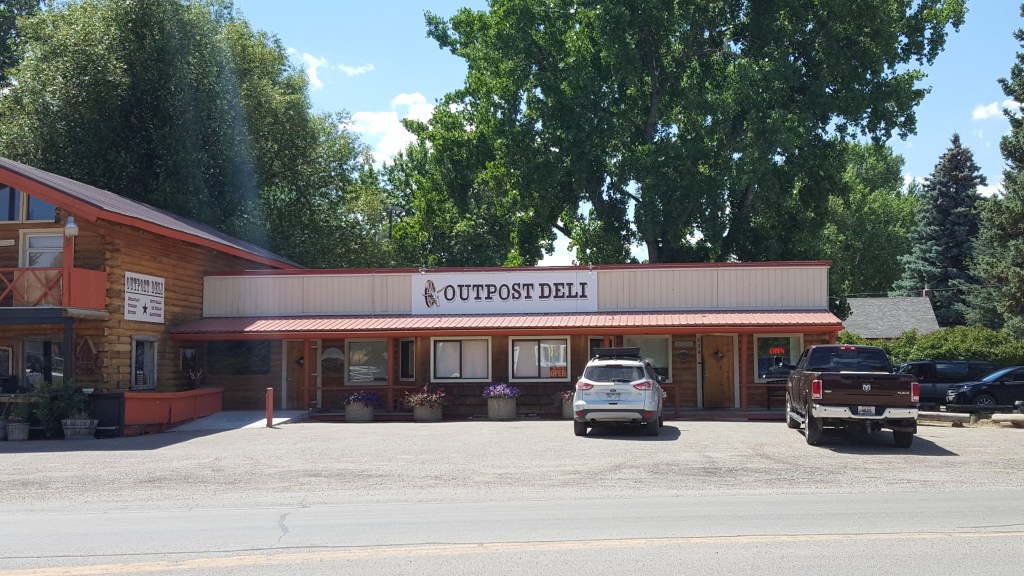
One of my stops was at the Old Trail Museum Inc., where there is a wide array of things to see in a centralized location. The exhibits here are ideal for kids as it does not require a lot of walking to be able to see everything. I’ve included several of my pictures of what the museum has to offer in the slideshow above. There is also an ice cream parlor on the complex that offers a good selection of flavors and options for how it’s served, and there’s a diner across the street called the Outpost Deli, I included a photo of the front of the building at the end of the slideshow.
Service at the diner was top-notch and the food was excellent. I was so impressed at how hard everyone was working that I tipped the young gentleman that was my waiter an extra $20. I spent some more time afterwards walking around the town. I stopped at the visitor’s center and spoke to an older gentlemen, we had a good conversation about my trip, the things he’s down around the area, places he suggested, he gave me a map and some tips about the road north to Glacier National Park. It might seem odd to say, but it felt like I was having a conversation with my grandpa.
The people I met in that town were nothing but kind and welcoming people. According to the 2000 census, the average income for households was only slightly more than $25,000, with nearly 20% of the population living below the poverty line. While driving through Montana I noticed there was still a lot of poverty throughout the state, especially among Native American populations. The best land in Montana is in the western third of the state, whereas the central and especially the eastern part are prairie and badlands. This part of the state reminded me of eastern Colorado and southern Wyoming – mostly flat, arid and unpleasant.
The morning of my second day in Choteau greeted me before the sun rose. I wanted to be in Glacier National Park before 8:00 AM and before the crowds of other visitors arrived. On my way up to St. Mary at the east entrance of the park, I came upon a hitchhiker at about 5:30 AM walking in basketball shorts and a t-shirt. For those unaware, the climate in this region of Montana at that time of morning is pretty cold. I have seldom stopped for hitchhikers in my lifetime due to the risks of being robbed or worse. However, this young man was clearly not armed and was of a physical build I was not threatened by. I wasn’t too far outside the town of Browning, which was where I was planning on topping off my gas tank before Glacier, and was also the direction this young man was walking in.
I made the choice to pullover and give him a lift. He attempted to get into the back of the car, but I told him he was welcome to sit up front and so he did. He appeared to be in his early twenties at the oldest, and had a large dip in his mouth. It only took a couple minutes before the tobacco smell permeated my entire car. He thanked me for stopping and said that other vehicles had just kept driving.
He made a comment about how cold it was that morning, so I asked him where he was headed and he told me that he had just been visiting family on the reservation and was heading back to Browning. I told him that worked well for me as I was heading there anyway. The Blackfeet Reservation makes up some 3,000 square miles and borders Glacier National Park on the park’s eastern side. There population is more than 17,000 registered members.
The young man asked me if I was headed to the casino to do some gambling, I told him that I had not been aware there was a casino in the town, but that I was actually on my way to Glacier. I asked him if he had ever been to the park, he said that he hadn’t but wanted to go some day. I contemplated on that for a moment, it seemed wild to me to be living so close to one of the most gorgeous places in this country, but to have never visited. I dropped him off in town at the location he instructed and I made my way to the nearest gas station.
By the time I got to Glacier’s east entrance and the Going-to-the-Sun Road at the St. Mary Visitor’s Center near Saint Mary Lake it was around 7:00 AM and there was barely another vehicle in sight. The sun was rising in the east and the dramatic view of the sunlight hitting the landscape was astounding. No words can truly replicate or do justice for the beauty that is Glacier National Park at sunrise. Please enjoy some of my best photos of the park during my visit in the slideshow below.
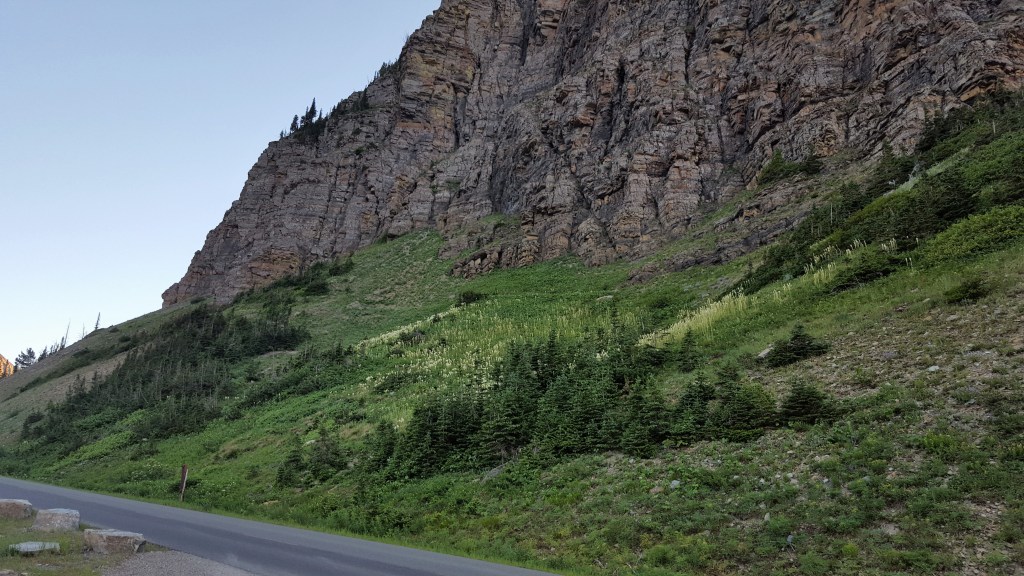
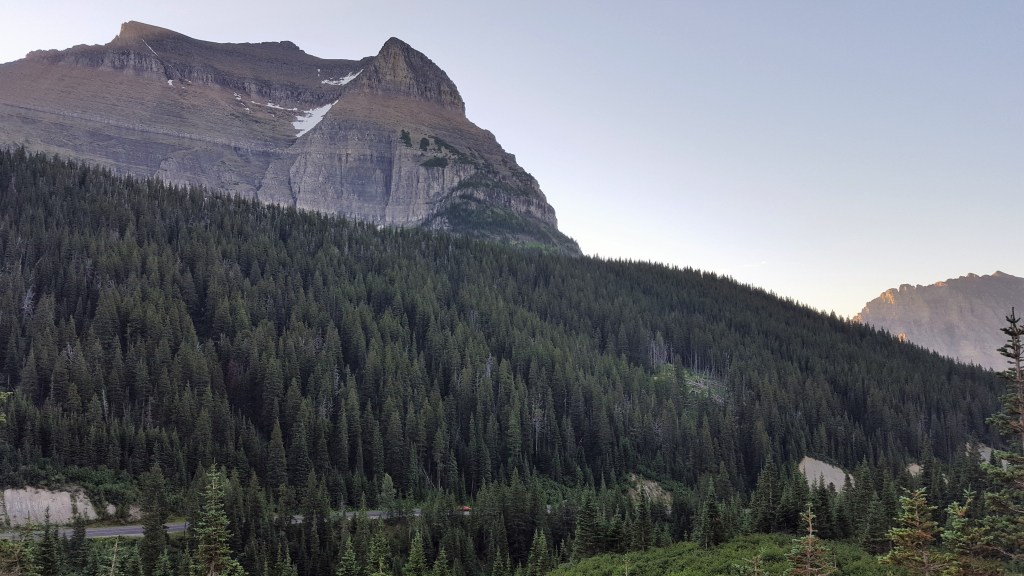
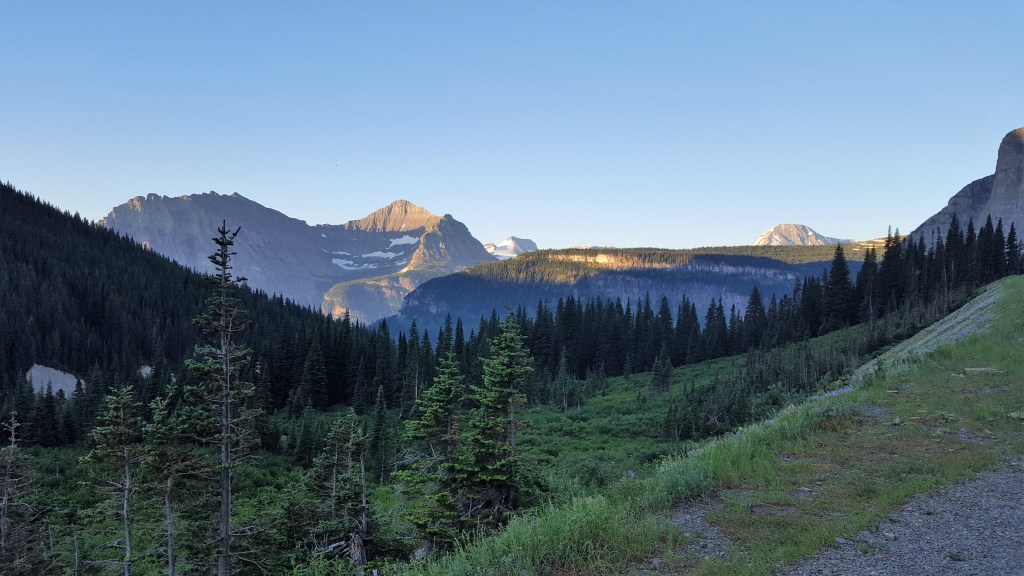
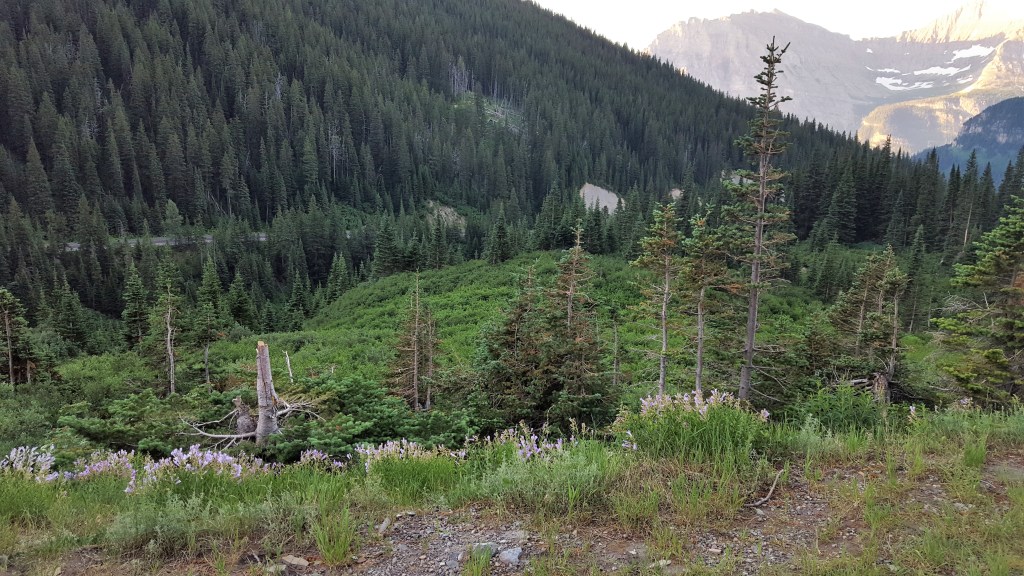
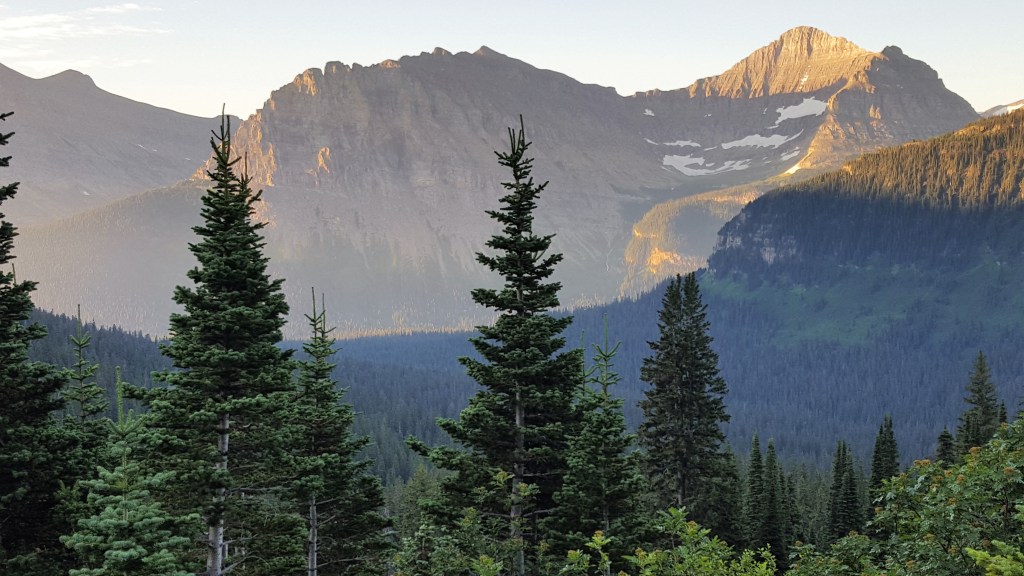
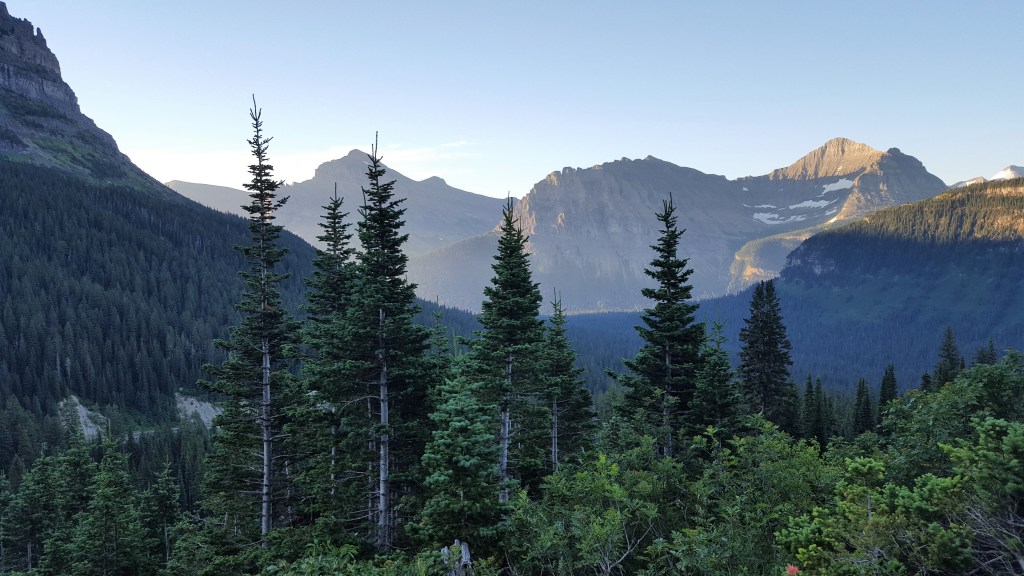
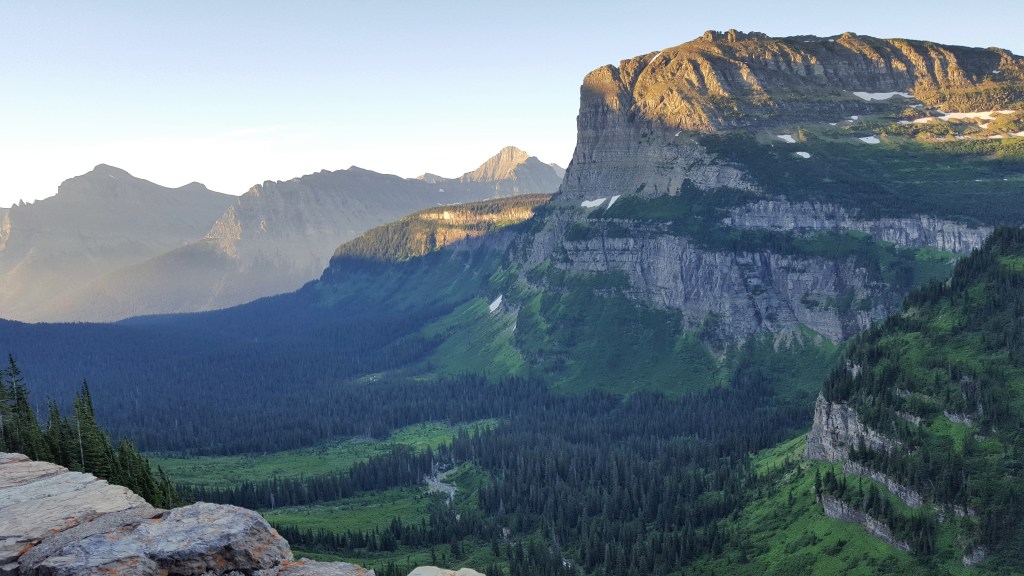
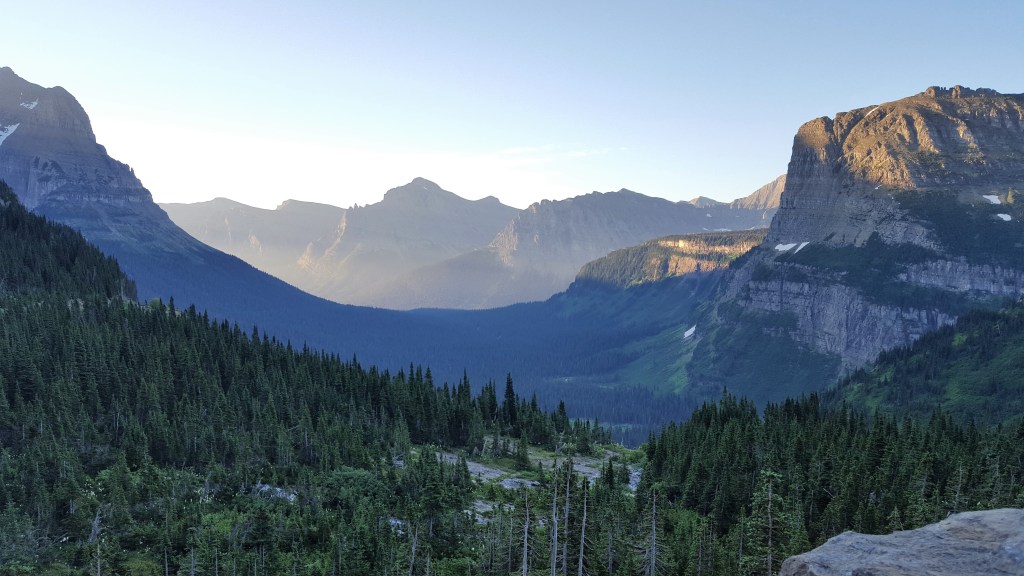
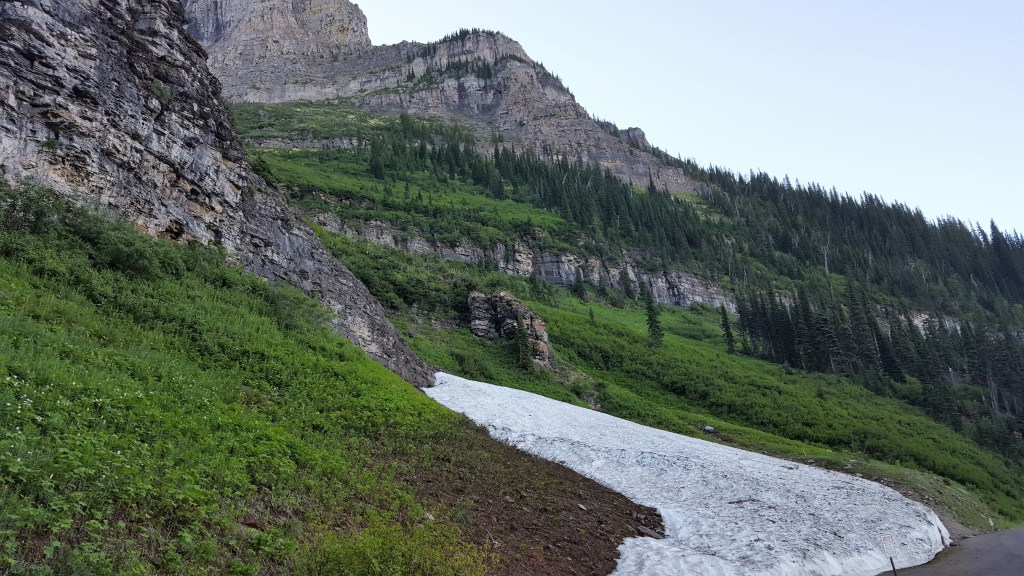
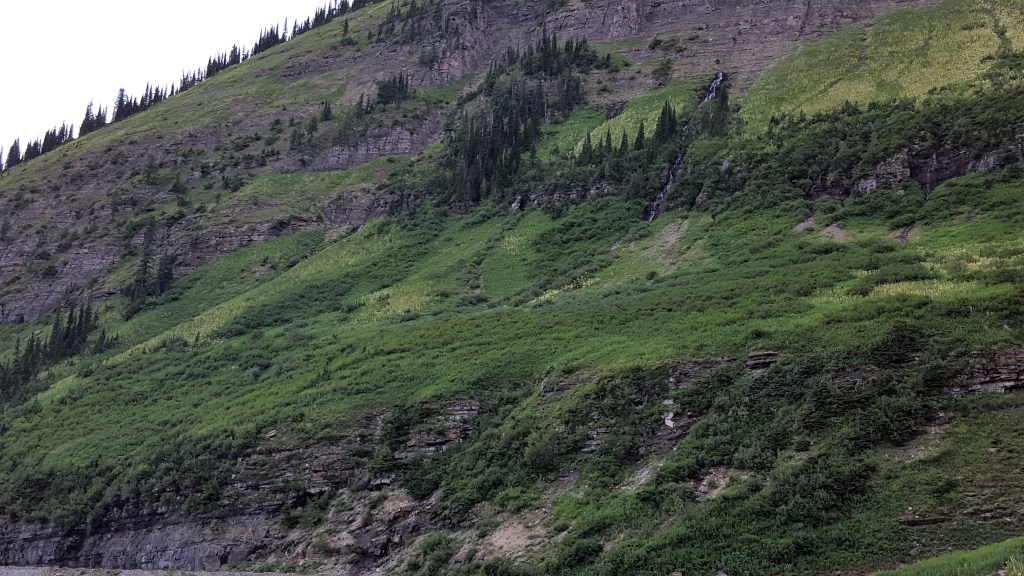
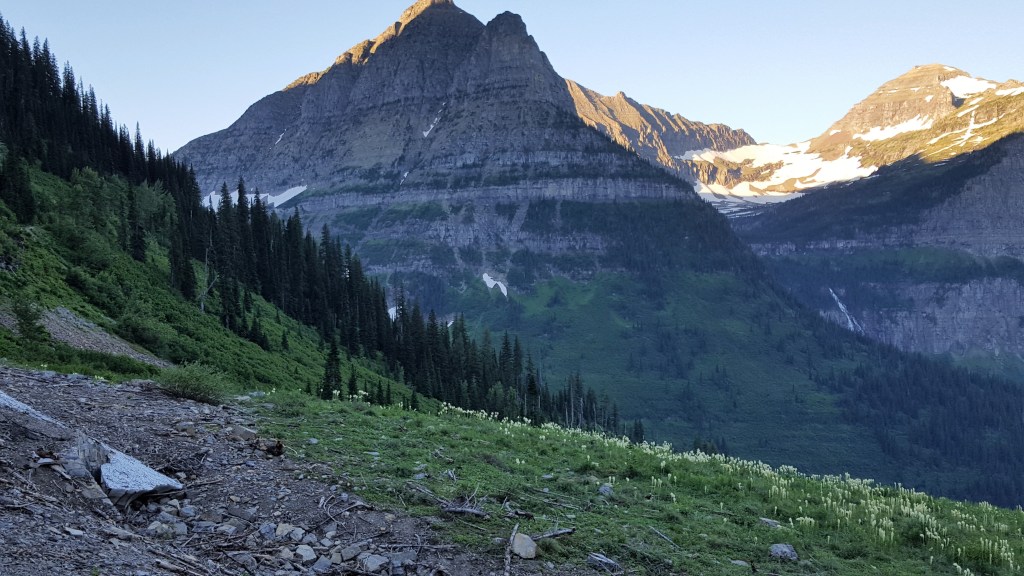
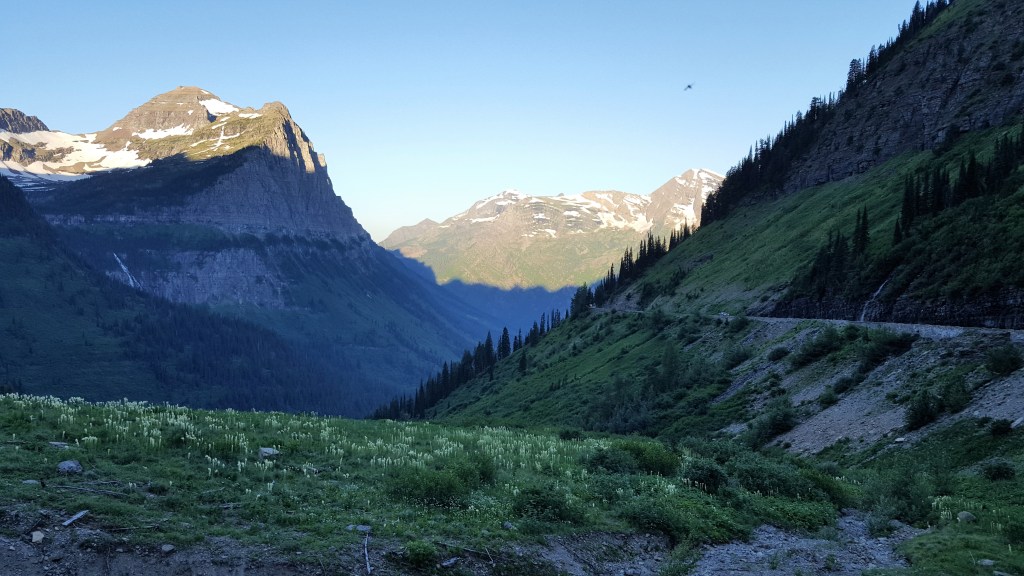
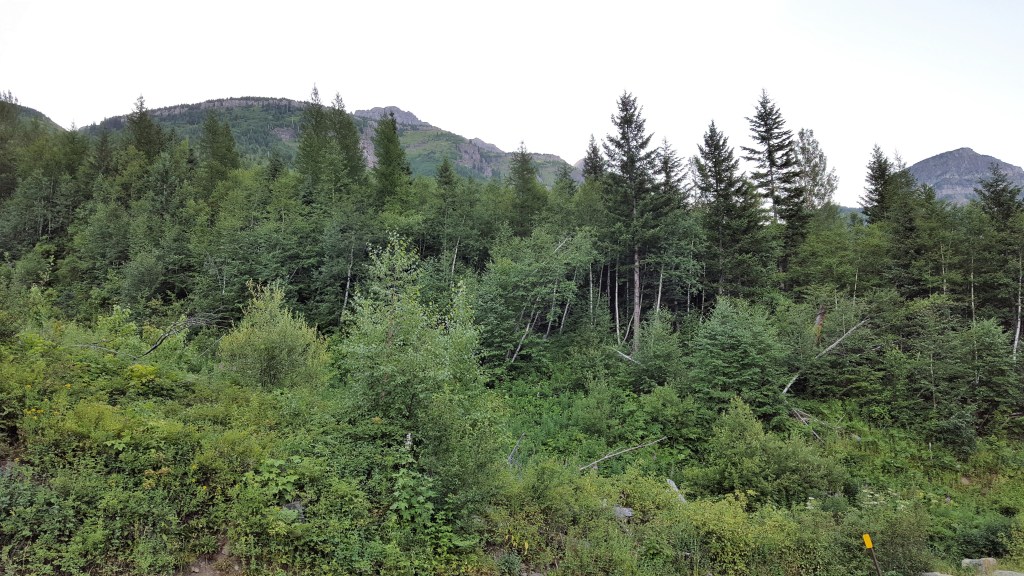
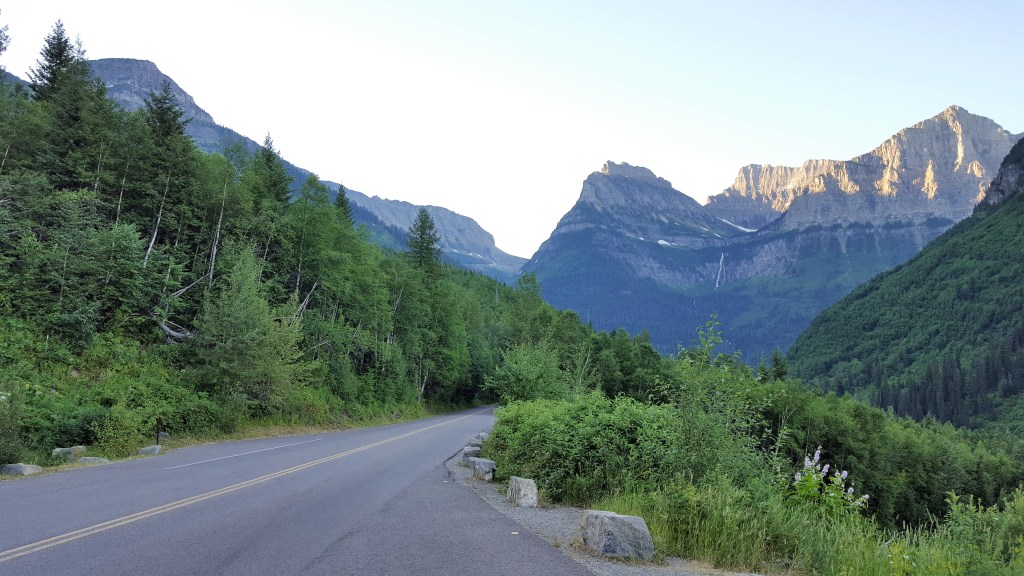
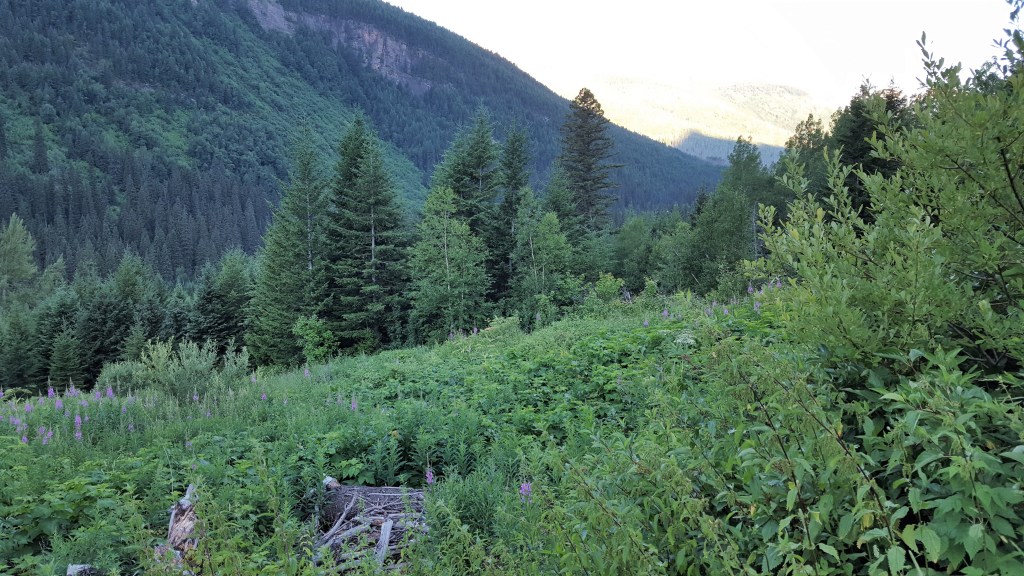
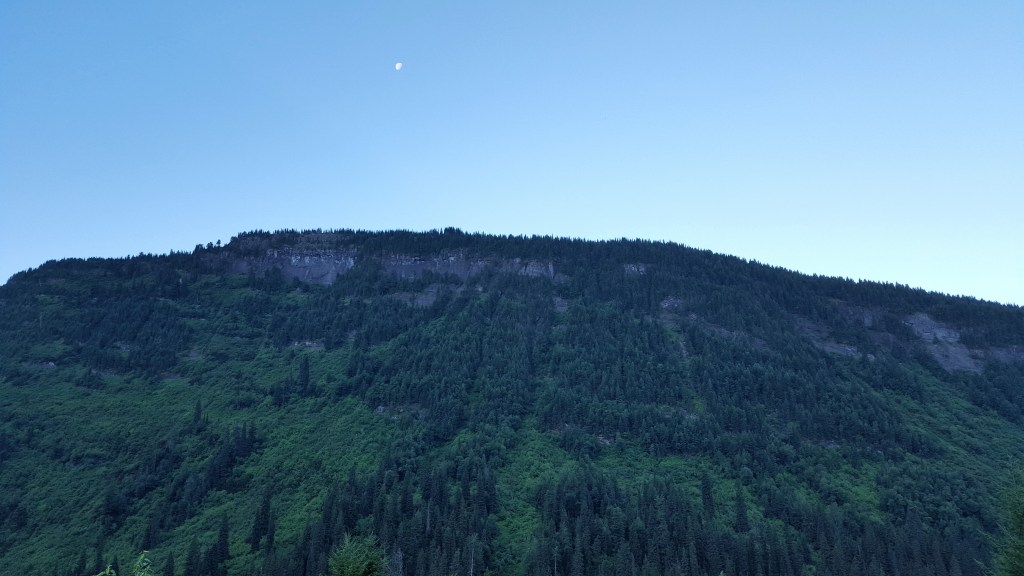
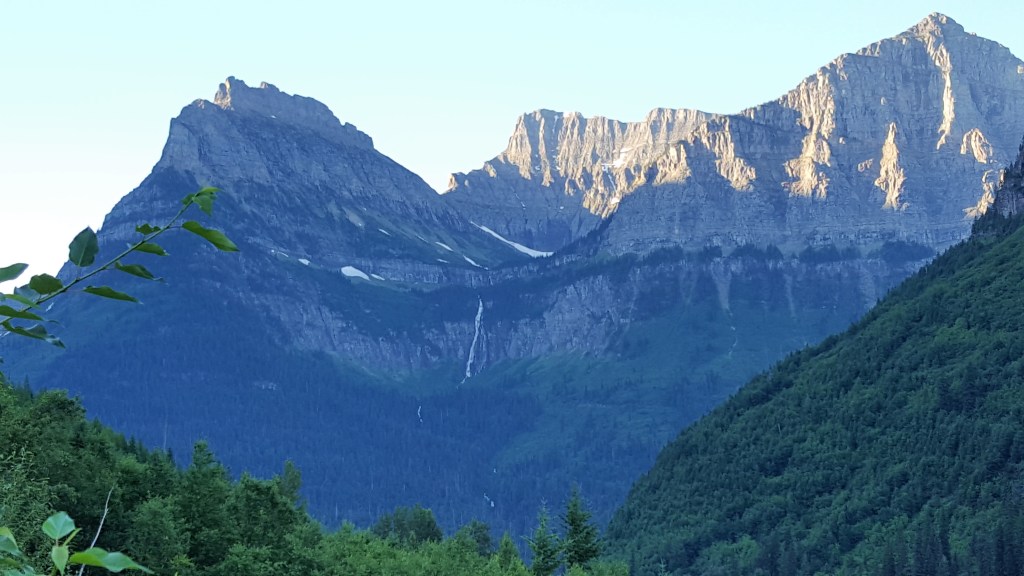
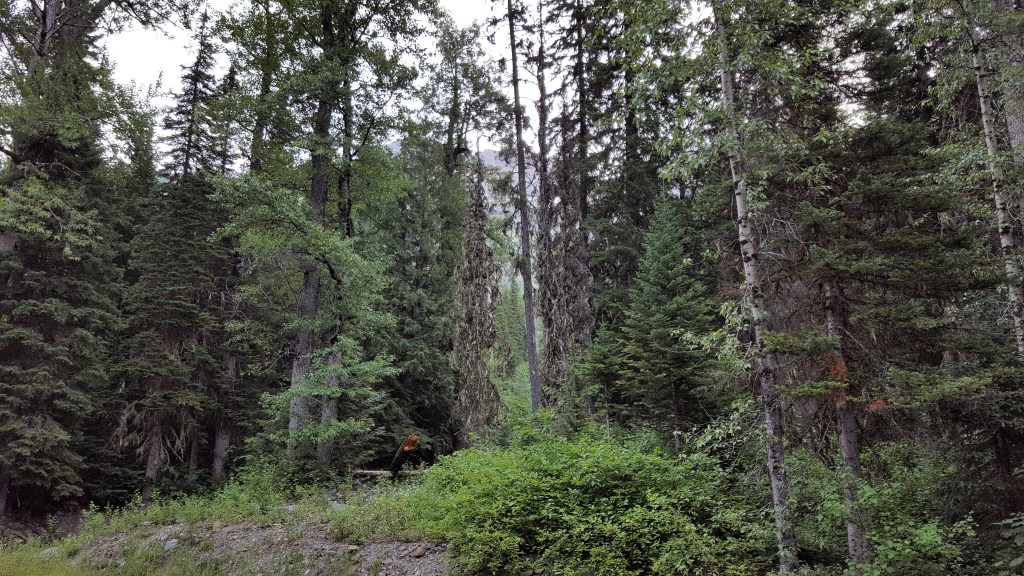
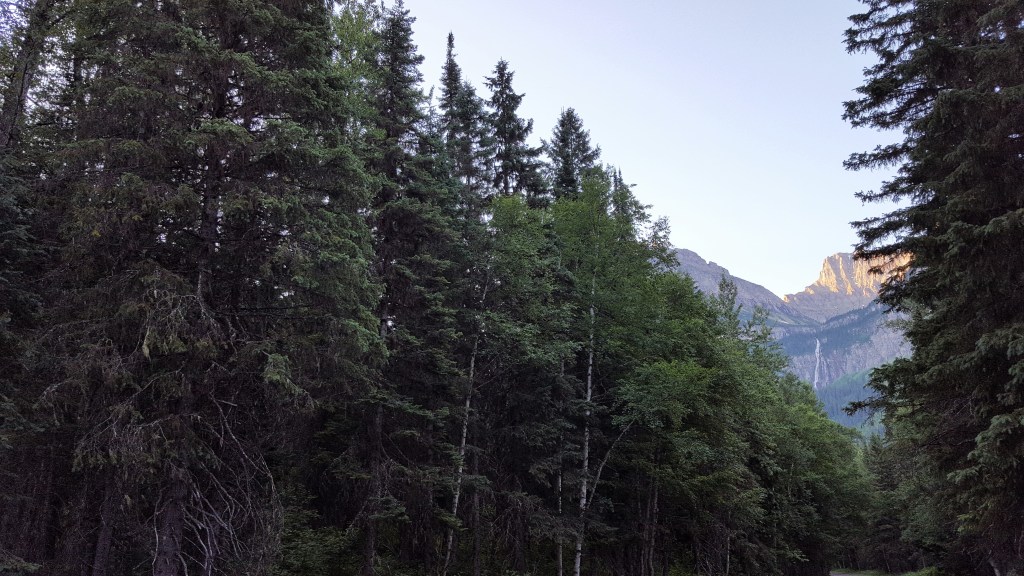
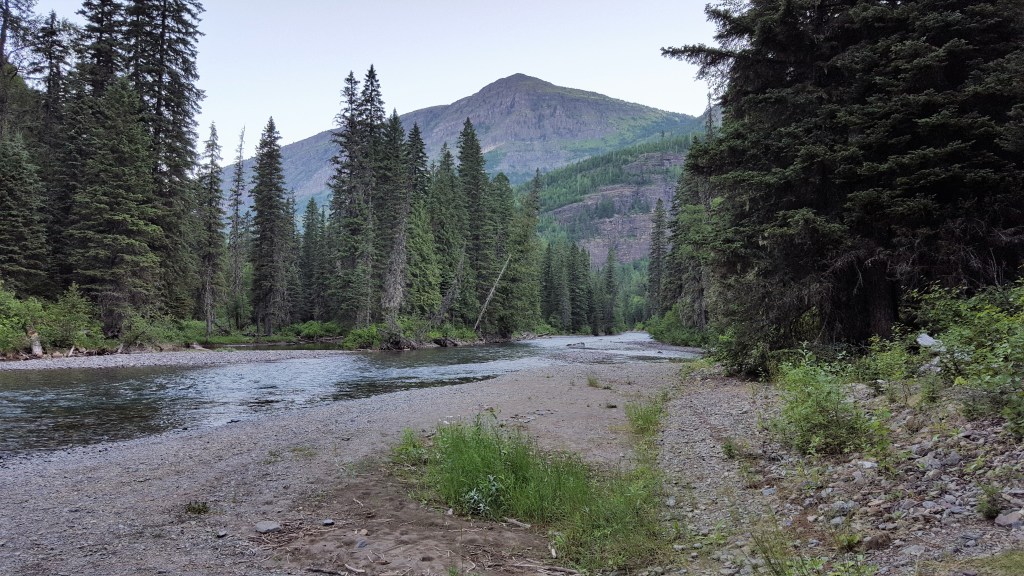
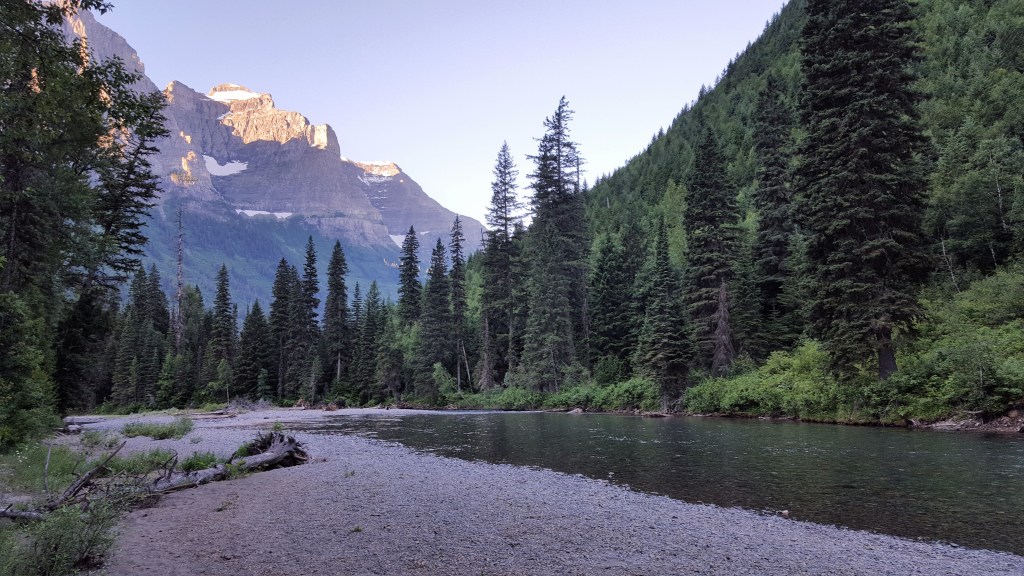
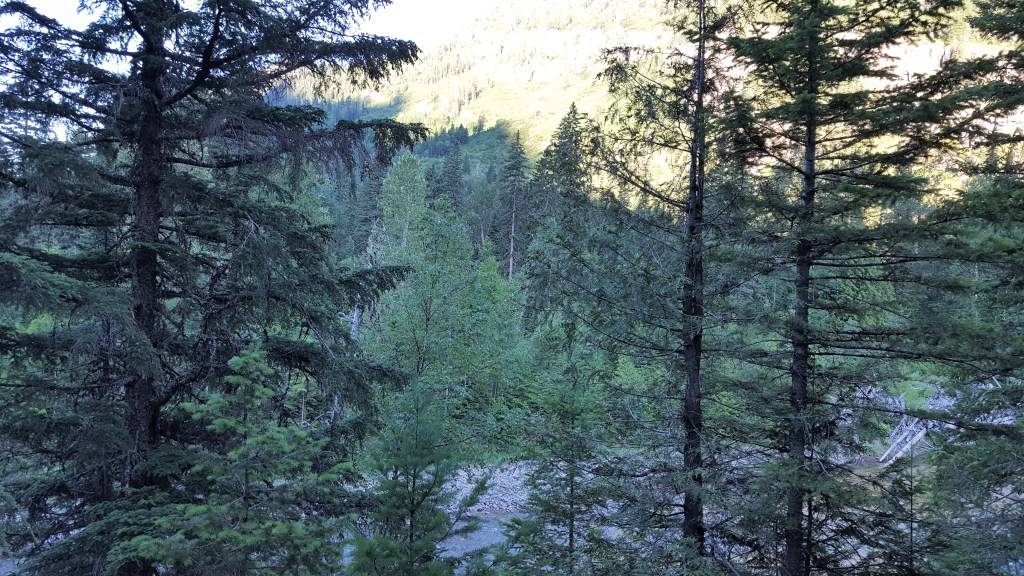
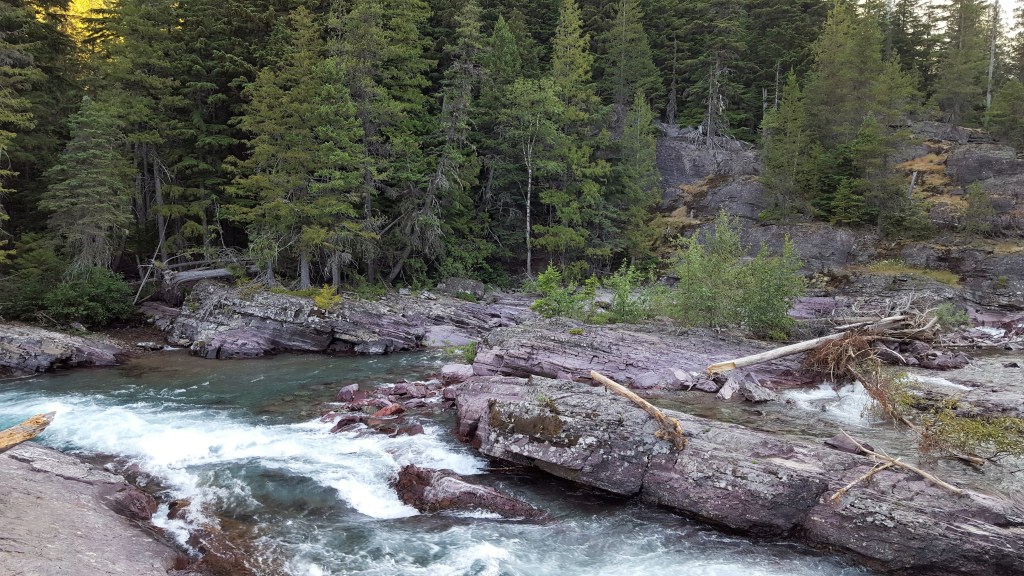
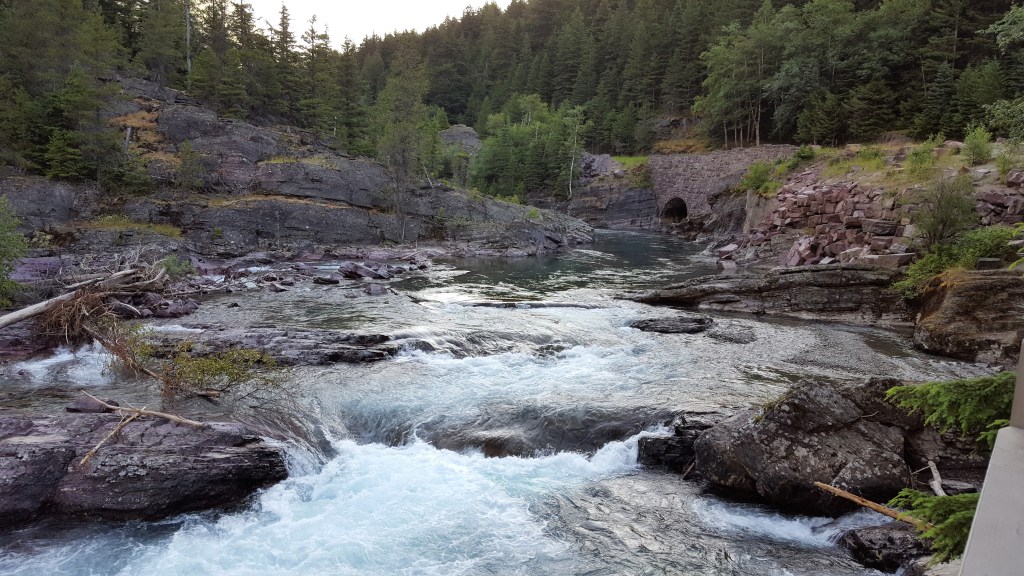
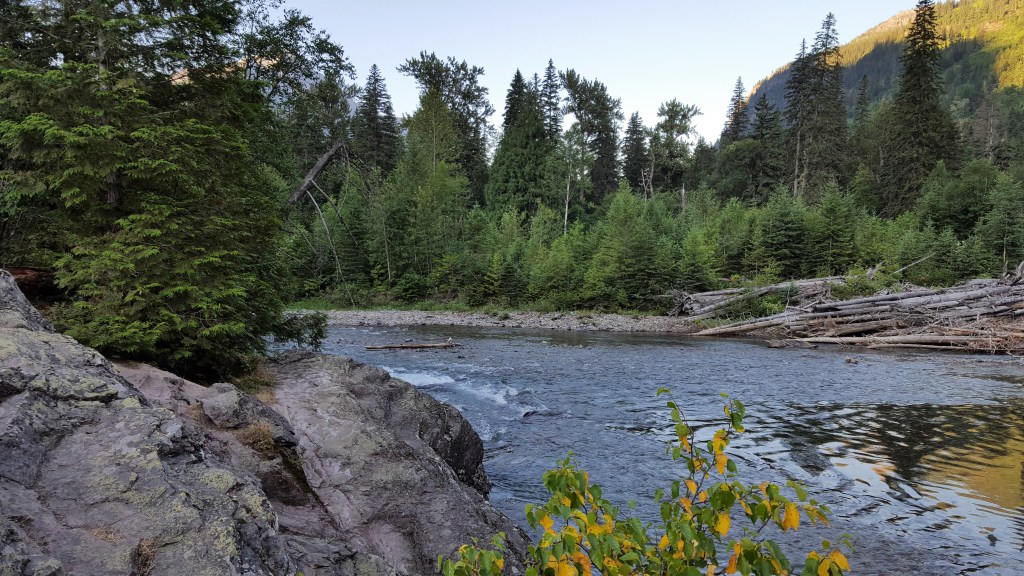
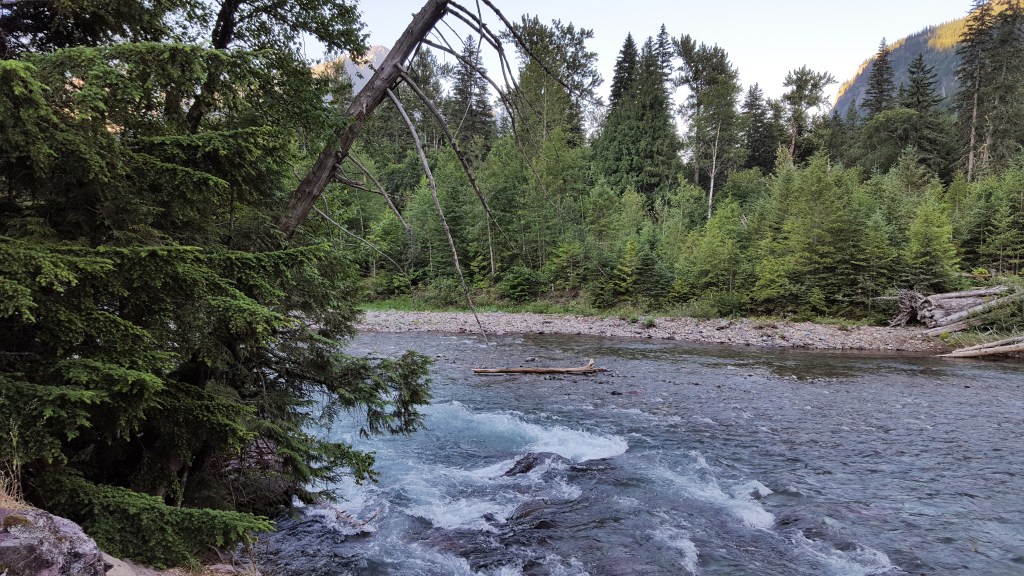
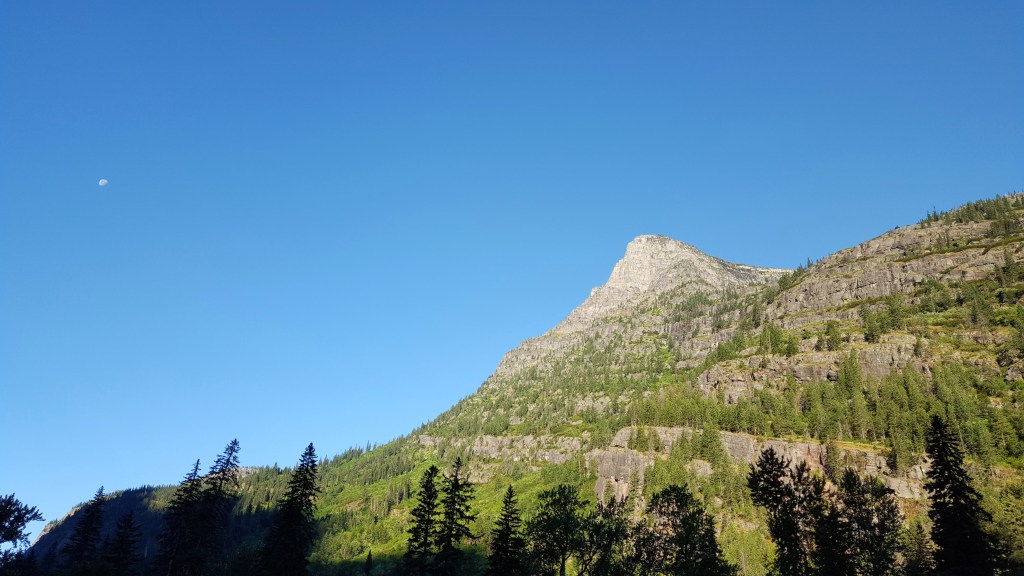
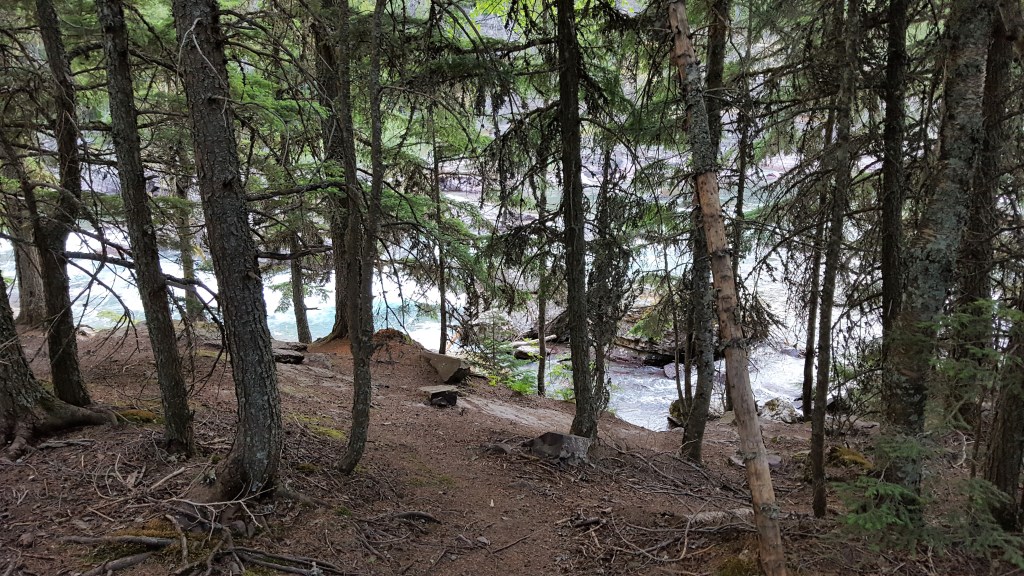
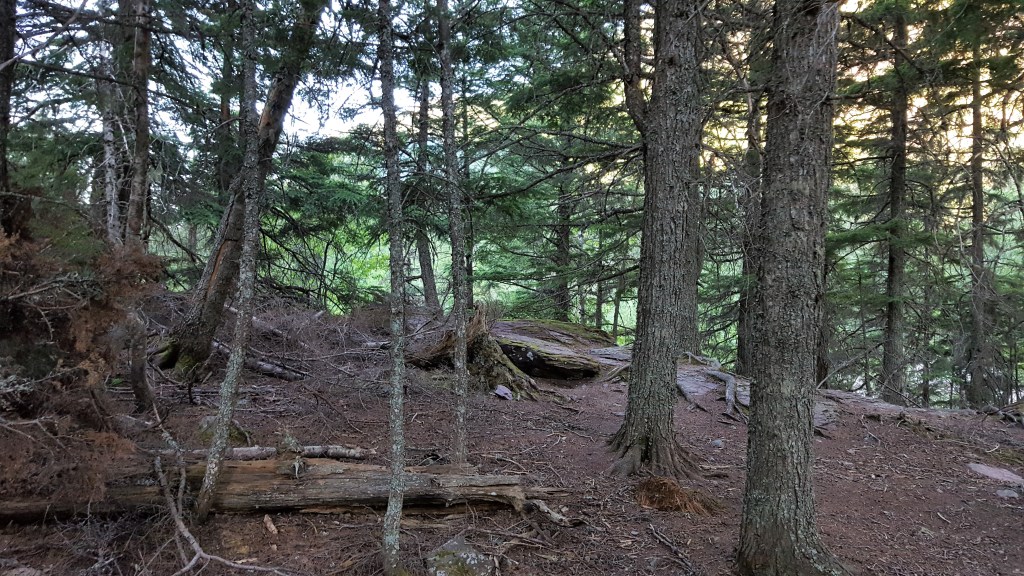
I hope to one day return to Glacier and spend more time in other parts of the park. If I had all the time I wanted, I would spend most of my time around Many Glacier, Logan Pass, Avalanche Lake, Lake McDonald, Bowman Lake, and Kintla Lake.
I also have hopes to visit other parks around the country, such as Yosemite in California. Banff and Jasper National Parks in Alberta, Canada are jaw-dropping. Incredibly these two Canadian parks are accessible from Glacier as all three lie just north of each other. Heading north from Whitefish, Montana on Highway 93 will lead you right through the other two parks. It will take you some nine hours to drive from Glacier to Banff to Jasper, but that drive cuts straight through some of the most beautiful terrain on the North American continent. Definitely on my bucket list of things to do.
Returning to the Midwest I drove east through Montana into North Dakota. Eastern Montana and western North Dakota are similar in their terrain. There’s not much to see as it’s mostly arid land. The closer you get to central and eastern North Dakota the land transforms into the plains grasslands and you begin to see more trees. My dinner that night was at the Texas Roadhouse in Fargo. Absolutely no complaints. I spent my final night on the road at the Hawthorn Suites by Wyndham. Hands-down one of the nicest hotels I’ve ever stayed in. I had a good night’s rest which was well deserved and desperately needed after the long thirteen-hour drive from Glacier.
The morning after I headed home to Missouri. Unfortunately, I didn’t have time to explore Fargo, but the city looked as though it had a lot to offer. Anyone traveling through the area looking for something to do, will surely find it in Fargo.
After my 3,500 mile week-long road trip I returned home sunburned and short one pair of ASICS sneakers, and two-grand, but it was one hell of an experience and I would highly recommend anyone else to take on the same kind of adventure. Life is short and there’s so much to see and do out there. You learn so much about life beyond your front door, about people in other parts of the country, and you learn more about yourself.
Life After

Recovery for me is a multi-faceted term. It means acknowledging my behavioral condition, understanding it and understanding that I and it are not one in the same – that I am more than my condition. It means that I recognize the signs and symptoms of episodes or relapses, or the risk of those states.
It means that I understand and practice the steps I need to take to rise above my condition and live a life that not only benefits me, but those around me who depend upon me. Finally, recovery also means I accept that it doesn’t equate perfection or panacea – there will still be struggles, but with the tools I have learned to utilize I can and will live a better life experience than the one I once knew.
For more than a decade I have been sharing my personal experiences with mental health issues with others who are also struggling, through the platform of writing and through private communication. I have also stood in front of a group and told my story and I have allowed a newspaper article to be published about my very personal experiences.
All in the belief that by sharing what I have gone through and felt, it will assist those who are in a similar situation to relate to others and understand that they are not alone in how they feel or what they are facing.
Often times our thinking leads us in a very negative direction, hindering our ability to recover. A major part of recovery is shifting our focus and training our perspective on the process of rising above the past experiences that frequently hold us down and back. My recovery heavily centered on altering that perception of myself, establishing goals that were attainable, believing that change was possible, and finding the courage and inspiration to achieve recovery.
So, every recovery begins with perception, the perception of pain, the perception of self, and perception of life beyond the obstacles and setbacks we face throughout our lives. By having this self-awareness of my thoughts and behavior, this shift in my self-perception, I have been able to focus my attention on personal wellness, the well-being of others, and my future.
Awareness, both of myself and of others has been and continues to be a key factor in living life beyond the issues I have faced. A life of service aids in one’s own recovery because it adds value and meaning to our lives. Helping others recover, helps us recover as long as we understand and maintain a healthy balance between the two.
Awareness for me involves observing my own behavior, paying attention to my thoughts, practicing meditation as I’ve learned through the study and embrace of Mahayana Buddhism, and perhaps the most important key for me has been writing. Writing about my thoughts, feelings, experiences, aspirations, this has been a very therapeutic practice for me since I was fourteen years old.
Other key factors in recovering from mental turmoil includes patience. If I’ve learned anything over the past ten years of training high school and college students and adult employees, it’s that patience can mean the difference between success and failure. The same holds true in regards to mental health.
Finding solace, establishing a network of support, getting to a point of stability through medications or therapy, all of these things take time. We all wish that we could wake up tomorrow and everything will be good or at least fine, but neither life nor mental health work like that. It’s a process and that process takes time, energy, and commitment.
As I’ve mentioned, writing has been invaluable to me. I consider the skill of writing to be a strength. Without writing I’m not sure how my life would have turned out. When I was 14, an English & math teacher convinced me to never stop writing. I believe that her advice later saved me, as writing for me was an outlet during my most difficult experiences with depression and suicidality, and it continues to be.
This release valve enabled me to let go of some of the emotions that had been bottling up inside of me, reducing my angry outbursts, reducing the risks of self-harm, and allowing me the opportunity to navigate through myself via expressive journaling and creative writing.
While I had always been physically active, I took it much more seriously when I was in my late teens. I credit exercise and weightlifting as a critical component of my recovery. My willingness to commit to this type of activity is a strength in my opinion, because not everyone has that capability or willingness to commit to physical health.
Mental health and physical health are inseparable parts of living well, and maintaining physical well-being helped carry me through some of my roughest days because it provided a way to both release built up emotions and allowed me to focus on something that didn’t revolve around the emotional pain I was burdened with.
Another major piece of my recovery was being able to bond with someone else who was experiencing a similar hardship to my own. Having support of this kind requires a willingness to open up and spend time with another person and discuss things that are immensely personal. This does create a sense of vulnerability, but what many see as an exposure of weakness is really just a statement of strength. I’ve long said that exposing our pain to others, gives them a path to emotional connection and the hope for healing – our pain can literally be someone else’s balm.
My primary trigger into relapse is stress and anxiety, but I can also relapse due to feeling as though I or my life lacks importance (meaning / purpose). Having a grip on my perception and being able to gauge what is rational thinking and what is irrational has been very helpful for me. Preparation and planning has gone a long way in mitigating the consequences of stress and anxiety, and focusing more on the things I can control and focusing less on the things that I cannot control has really saved me a lot of unnecessary suffering.
I would say the final component is knowing myself, my abilities/talents, strengths, accomplishments, it builds me up when I’m facing adversity because I know I’ve been through hard times and difficult experiences before and still came out on top in the end.
I have been training teens and adults on the skills they need to succeed in specific jobs since January 2009, this task also required me to oversee their work performance, productivity, and cohesiveness. For me it never was so much about the work, but the people I encountered during the experience that established it as an enjoyable experience.
I lived a very sheltered life as a child, I was taught to fear things and people that were different. Despite this, I was always very curious of the things that I was unfamiliar with or didn’t understand. Becoming a somewhat rebellious teenager provided me the opportunity to grow and learn beyond the bubble a small-town community attempts to keep you in.
My career of engaging with others from all walks of life (ages, religions, races, politics) has granted me a continuation of that process of personal growth. You learn a lot about yourself and others when you become part of a group, especially when you are in a leadership role.
In addition, I’d like to state that teaching teens and adults grants the opportunity to help others improve their skills. This enhanced skill-set builds a foundation upon which they can create a brighter future for themselves if they’re willing to stick with it and not give up. As someone who teaches professional development classes to adults, I know that not everyone understands things the same way, or even has the same desire to learn something new. But when they do, you can see their confidence build – they become a stronger person because of it.
Teaching is a hard job, perhaps the hardest aspect of the career I’ve had, but it’s also been the most rewarding because of the people I’ve met and the change I’ve been able to witness as they’ve learned. Helping give people the opportunity to make a better life for themselves, what could be more rewarding than that?
I’ve worked in retail, construction, data entry, legal services, and professional development. I’ve volunteered in disaster relief in Mississippi after Hurricane Katrina, and I became an advocate for behavioral health awareness and suicide prevention. I enlisted in the U.S. Marine Corps and I became an inter-faith minister. Out of all the things I’ve done or attempted to do, of all the choices I’ve made, and the experiences I’ve had, I think the common thread that runs through them all is my attempt to make a difference in other people’s lives, whether it be big or small.
It is fundamentally the most important thing we can ever hope to do with our own lives. A life of service is one of fulfillment, meaning, and purpose. I’m only 32 years old, but in my lifetime I have seen in other people a lot of suffering, a lot of loneliness, a lot of obstacles and setbacks, and a loss of hope. Understanding and compassion, these two things make the world a little less dark.
Since I was 19 years old, I learned that reaching out to people and opening up about my experiences in battling bi-polar disorder creates two responses. Either they become uncomfortable and don’t know what to say due to a lack of understanding, or they begin to tell you their own story of battling some form of a behavioral health condition. In either case, there is an opportunity for understanding and in understanding there can be compassion. Through compassion we can build emotional connections with others.
By telling others about my own experiences over the years, I have had the opportunity to meet and communicate with others who have shared in similar suffering. When I was younger, knowing that other people were hurting too and that I wasn’t alone changed everything for me. Every person that I’ve ever met and communicated with due to this process of sharing, those people are my support system and because there are so many people out there suffering, these opportunities do not end.
For about a decade, my closest friend was someone else who was battling a mental health condition. We became each other’s brace during the hard times. I fondly recall a time when she called me at 2:00 AM, waking me up and asking if we could go get breakfast from a 24-hour diner. It might seem crazy to others, but that small adventure and time talking was exactly what we both needed that night.
I want to help people who are in a similar situation to the one I’ve been in. I want to help them the same way that people once helped me. I wouldn’t be here today if someone hadn’t reached out to me and allowed me the opportunity to relate to them and their experience. Understanding and compassion, again these things make a world of difference.
My many years of sharing my own story of living with a mental health condition and my eagerness to create an opportunity to create an environment or platform where others can relate to one another, as well as my career training has all afforded me the experience and skills to lead, teach, and support others. But each of us can take or create the opportunity to make a positive impact in the lives of others.
Every small gesture and every endearing question can open the door of understanding and compassion. These things make life after a mental health crisis or prolonged suffering, a surmountable possibility. Hope is born from acts of kindness and concern, and through hope we bear witness to a better life.
If you or someone you know is experiencing a mental health or substance use crisis, please access my immediate assistance resource page. A comprehensive listing of online and phone resources and services is also available.
The Past That’s Not Forgotten
[Reader Discretion Strongly Advised: this article discusses the sexual assault of men and boys and may not be appropriate for readers under the age of thirteen, it may also be triggering for those who have experienced similar trauma. Resources and reading recommendations follow the article.]
The Past That’s Not Forgotten
This article came into being after a conversation with another man who had experienced sexual trauma during childhood. Throughout my life I have met other men who have similar stories of sexual assault and abuse, some of these men experienced their sexual trauma at the hands of men and others at the hands of women. While we should not turn our attention away from women and girls who experience the same kinds of sexual assault and abuse that is discussed in this article, we should not allow men and boys to continue to be invisible, ashamed, and unheard when it comes to this type of trauma.
When I use the term “male” in this article, I am referring to any age range, so that it includes children, adolescents, and adults. The terms “victim” and “survivor” are sometimes held in disdain by boys, teens, and adult men who have experienced sexual assault at some point during their childhood, adolescence, and adulthood. Though the connotation attached to these words is often one of sincerity, it is perceived subjectively by some who believe that through calling themselves victims or survivors, they are in fact furthering their own victimhood and empowering their attackers and abusers. I wish to acknowledge this and make clear that the terms are used in this article solely for the purpose to differentiate between attacker and the attacked for the uninformed casual reader, and that the words are not intended to perpetuate the state of victimhood nor to gauge the severity of the incident by deeming one a survivor.
I think it’s incredibly important that we understand the meaning of the terminology used in this article so that we are all of a unified mind. The terms “sexual assault” and “sexual abuse” have varying definitions depending on federal, state, and even local government interpretation. Though I will give generally accepted definitions for these terms so that we can all understand the topics discussed in this article, please understand that not all legal entities may agree with these definitions, especially in matters relating to criminal prosecution.
Sexual assault typically refers to the use of the victim’s body in a sexual manner against their will, including in situations where they cannot give permission due to age or due to their state of consciousness – being inebriated, intoxicated, or intellectually/developmentally disabled. Acts that could fall under this category include molestation such as the groping or touching of genitals and anus or forcing the victim to use their hands, feet, mouth, genitals or any other body part to grope or touch the perpetrator’s genitals, anus, other body part or other object. Sodomy, which includes oral and anal rape of the victim, also falls under the category of sexual assault, regardless of the object used in penetration. Forcing the victim to engage in sexual activity with another victim also falls under this category.
The term “sexual abuse” can include all of the things previously mentioned, but also includes behavior that does not directly involve the physical use of the victim’s body in a sexual manner. An example would include parents forcing their son to observe his parents engaging in intercourse or other sexual activity, or forcing him to view pornographic material, or the parents issuing verbal threats of sexual assault. Other behavior that can be defined as sexual abuse includes a parent forcing their son to undress in front of them or in front of other adults, or forcing the son to bathe or shower with the parent or in close proximity or view of the parent or any other adult. I keep referring to parents in these examples because 91% of all sexual abuse against children is committed by people children know and trust, primarily their parents.
According to the advocacy group Protect Our Defenders, in 2018 nearly 37% of reported sexual assault and rape victims in the U.S. military were men. According to the Centers for Disease Control and Prevention, four-million men experienced sexual violence in the year 2014 alone. In general, 1 in 4 men will experience some kind of sexual violence at some point in their lifetime, and 1 in 12 men will experience contact sexual violence by someone they identify as an intimate partner. In the United States, 1 in 6 boys will be sexually abused at some point during their childhood and 1 in 20 will be sexually assaulted before the age of 18, according to the Crimes Against Children Research Center. Of the men who have reported being raped, 1 in every 4 stated that the event occurred before the age of ten.
Most people would find these statistical data surprising as the narrative in the news and media compels us to believe that only women are victims of sexual assault and prolonged abuse, not just in the military but in the U.S. as a whole. When people learn that boys and men are sexually assaulted, the conclusion is drawn that the victims must be gay and that the perpetrators must also be gay.
This is another perpetual and cultural narrative given by society that does not reflect the data in cases of reported sexual assault against men and boys. Most cases of sexual abuse on boys and teens under the age of sixteen is perpetrated by self-identified heterosexual (straight) men, and about 15% of perpetrators are, in fact, women. If you include cases of men and boys over the age of 16 who were victims, that percentage of female perpetrators rises to nearly 40%.
In some cases the attack occurs where the victims are made to penetrate the attacker, this type of sexual assault against boys and men accounts for nearly 7% of assaults or abuse. In 2014 alone, more than 800,000 men reported being victims of this kind of sexual assault. It can be baffling for people who have never been sexually assaulted or abused to understand how men can be forced to penetrate another person, but it can be made clear when one better understands the male anatomy. Being sexually aroused is not relative to the situation or environment in which a boy or man finds himself. Even under duress, fear, or discomfort, erection and orgasm can occur against one’s will.
This may seem like a phenomenon or oddity, but unwanted or unexpected arousal is commonly experienced by most boys, especially during puberty when they can also experience unwanted ejaculation, and it also happens to some male victims of sexual assault and sodomy. This is true regardless of the gender of the attacker or the sexual orientation of the victim. Erection and orgasm are automatic physiological involuntary responses and do not occur by conscious choice. To learn more about this anatomical process, I recommend this LivingWell article.
This experience of getting an erection and even experiencing ejaculation and orgasm during a sexual assault or sodomy does not mean the victim likes it or wants it to occur. I will be returning to this topic further into my article, but I want to make it blatantly clear to readers and victims that experiencing these processes during a single attack or prolonged abuse is not uncommon and is not the victim’s fault and is not an indication that they enjoyed it.
As someone who previously worked in peer support with individuals who reported forms of sexual assault or abuse as one of their adverse childhood experiences, I can advise that it is not uncommon for these victims to later grow into adolescence and adulthood and find themselves intentionally watching films with scenes containing sexual violence or viewing rape-based pornography. This has been reported to me by male and female victims, and by persons who experienced the sexual assault or abuse at various times in their lives, such as childhood, adolescence, and young adulthood. In some situations, the individuals have reported seeking role-play scenarios with their intimate partners where they act out sexual assault and rape.
This may sound unusual to outsiders, but I have found this to be rather common among victims. I’m not sure the field of psychology has a definitive answer for why victims put themselves into situations where they relive their trauma, but it’s my personal opinion that doing so as an adult, allows them the opportunity for control. Something that was withheld from them during their traumatic experience.
I’ve had conversations with other mental health professionals about this topic and whether or not engaging in this behavior is healthy. Once again, I can’t say that psychology has a definitive answer because it really depends on the many factors at play, such as the person’s goals and whether or not they feel safe with their intimate partner and have established boundaries and identified safe words. Part of that would be having a conversation about their trauma with their partner and why they would like to have this type of role-play sexual experience. It may be the case that reliving their traumatic experiences in the safety of their home with a trusted, patient, and loving partner is a necessary step in their recovery process. It may be a pathway for them to open that door to talking about and exploring what they experienced and how they are now in control of what happens to them and their body.
Male-on-male sexual assault almost always involves a heterosexual (straight) male or group of heterosexual (straight) males attacking another male who may be gay, bisexual, or straight. According to data from various sources noted at the end of this article, anywhere from 94% to 98% of all male perpetrators of sexual assault and abuse against victims of any gender, self-identify as heterosexual (straight). What sexual orientation the victim is often depends on the environment and the circumstances surrounding the attack.
Other types of assault and abuse occur when males are congregated in large enough numbers where personalities clash and social order or hierarchy is challenged. These types of attacks are about power, dominance, and sometimes revenge. A single straight male, or a group of straight males in instances of gang rape, will attack the victim who is seen as a threat to social standing either because he’s another alpha male or due to his popularity. It can also be over such issues as loyalty or the desire for subjugation. This type of attack rarely has anything to do with sexual intimacy, but with asserting dominance and control over a perceived rival or dissident.
You may find it difficult to believe that a male or group of males who are straight could sodomize another boy, however, you have to understand that this particular type of sexual assault has nothing to do with sexual attraction to a person, it is about sexual attraction to power, dominance, and sometimes even violence itself. These males are not turned on by the physical appearance or attractiveness of the victim, or by the fact that he’s biologically male, but by their control and dehumanization of the victim who represents another male in a position of power or prestige or in some other manner feels threatening to the perpetrators or that is believed to need to be put in his place or know his role. This is why it frequently happens during hazing rituals in team sports and in fraternities.
It’s the forced removal of that power and control, the forced vulnerability and perceived weakness or inferiority and shame that they are inflicting on the victim and their perceived dominance over him that sexually arouses the perpetrators. The stripping of manhood or manliness is the intended goal in these types of crimes and it can happen at any point throughout a boy, teen, or young man’s life. These types of incidences have occurred in schools, locker rooms, on field trips, at frat houses, on college campuses, at family gatherings, and religious events. Sometimes these attacks involve anal rape wherein one or more perpetrators penetrate the victim with their penis or they use objects as replacements. Commonly used objects include broom handles, toilet plunger handles, dildos, and other penis-shaped objects. In a nationally reported 2015 high school rape case, several teenagers used a pool cue stick to sodomize a fellow team member.
This type of male sexual assault also occurs frequently in prisons for the same reasons, with an estimated 70,000 men experiencing rape in U.S. prisons each year, perpetrated by both fellow inmates and corrections staff. Accounting for almost 22% of all rapes that occur in the United States annually.
The idea that you can break another male by taking his “manhood” through sodomy is not a new concept. Tracing history back thousands of years reveals that ancient civilizations practiced this behavior regularly during conflicts. It was not unusual for prevailing combatants to sodomize their captured opponents as a way to break their will to keep fighting. This act wasn’t reserved just for the battlefield, the humiliation continued into cities and villages under siege. Any man or boy old enough to swing a sword, was subjected to the same demoralizing sexual assault to show dominance and strip away any sense of pride or will to resist. These types of same-sex rape are even discussed in the Bible.
The most common instance in which male-on-male sexual assault is practiced, includes sexual attraction, impulse, interest, or curiosity towards a resistant, unknowing, or confused victim. This sexual experience can be brought on either through manipulation and coercion or by force. When sexual advances are denied or rejected, a perpetrator may force his desires on another male, who may or may not even be interested in the same gender, or even be old enough to understand what is happening. This type of forced sexual assault may include sodomy, forced masturbation, or oral sex.
Every year some 60,000 American children are sexually abused and 91% of the abusers are family members, teachers, friends, or someone else the child knows. Of those who are sexually abused, 33% are abused by another juvenile under the age of 18.
According to the Crimes Against Children Research Center, those who are abused are 9x more likely to grow up and become involved in illegal activity:
- 30% of abused children are at risk of abusing their own children in adulthood
- 50% of inmates in prisons were abused as children
- 1 in 20 male inmates are sexually assaulted by other male inmates or corrections staff according to the U.S. Department of Justice and the Human Rights Watch
- 80% of 21-year-olds who were abused as children suffer from at least one mental illness
The resulting consequences of childhood and adulthood sexual abuse on males are staggering. Those who report having experienced sexual abuse, report long term symptoms such as:
- Anxiety / Fear / Helplessness
- Depression
- Dissociation / Loneliness
- Guilt / Shame / Self-blame
- Hostility / Irritability / Anger
- Homophobia
- Impaired Relationships
- Low Self-esteem / Self-doubt
- Masculinity Issues
- Questioning of Sexual Orientation
- Sexual Dysfunction / Impotence / Intimacy Issues
- Sexual Promiscuity
- Sleep Disturbances
- Substance Abuse
- Suicidality
These symptoms can occur immediately following a male-on-male sexual assault and last decades or for a lifetime if the victim does not seek professional help. Based on the research, it is generally accepted by the psychology industry that many victims never seek help or report the incident(s), hindering the data available on just how widespread sexual assault and abuse is on boys and men. Based on reporting statistics, men who experience sexual abuse as children will refrain from telling anyone for 20 years on average.
There are three main causes that prevent reporting of the assault/abuse and reluctance to seek professional help, these are:
- Perceived social shame or consequence of being both a male and a victim of sexual abuse or assault
- Manipulation by perpetrator that the victim became aroused or even experienced an orgasm and therefore must have liked it or is gay
- Threats by perpetrator to retaliate (such as assaulting the victim again)
- Experience of or expectation for denial
The denial mentioned here is multi-faceted. A victim may feel so strongly about the incident that they compartmentalize the event and the emotions attached to it – pretending as though it never happened. This type of denial is the result of a collection of responses, from fear of facing the incident to humiliation that it occurred in the first place.
Even when a victim reports the incident to their parents or other loved ones, there may be a denial by those he is confiding in. A denial that the event “could” have or has happened, especially when the alleged perpetrator(s) are family members or family friends, which is often the case. The perpetrator or sexual predator may have also deployed a strategy called grooming or predatory grooming, wherein they have built a relationship with the victim, this is especially common with children and teens.
This grooming process also often coincides with various circumstances the victim may be experiencing that are quickly picked up on or perceived by the perpetrator. Grooming is one of the most prominent and frequently implemented methods of attracting, seducing, or building trust with a victim and therefore is profoundly important to understand so that sexual assault and abuse can be prevented!
Sometimes children, teens, and adults suffering from or struggling with behavioral health issues, whether we are talking about a mental health condition or a substance use disorder, become victims not just of the things they are struggling with, but also of other people who take advantage of them in their vulnerable state.
Sometimes individuals with a mental health condition or a substance use disorder (formerly known as addiction), find themselves in very difficult situations where they become extremely vulnerable to outside influence, persuasion, manipulation, coercion, psychological or physical abuse, among other things. This is compounded when they are also desperate for something they want or need, particularly when that thing is an illicit substance that they have become dependent upon.
Grooming is a process by which a person says and does things to attract another person to them, which heavily revolves around building trust, favor, and gratitude, but eventually leads to manipulation, coercion, and even threats and blackmail if the victim attempts to separate themselves from the “groomer.”
Part of this grooming process often includes money, gifts, favors, and other methods of flattery. Not everyone who finds themselves on the receiving end of this grooming process is oblivious to what is taking place. Some have even purposefully put themselves onto the groomers radar because they like the attention, not realizing the attention will eventually lead to their sexual assault and abuse.
However, the majority of people who find themselves being groomed are often unaware, especially in the beginning. Typically they are looking for belonging, direction, support, attention, connection, a change or a new start. Victims of grooming are often young, likely due to the fact they are less guarded, less cautious, less experienced, and less likely to perceive themselves as potential victims. Though plenty of adults can be the victims of grooming, most are usually under the age of 21 and unfortunately can even be very young children in cases of pedophilia.
Those who are groomers are almost always older than the victim, most of the time drastically older, which they use to their advantage. They are typically financially better off than the victim, can provide a financially stable support system, give them shelter, guidance, employment, food, expensive gifts, the list goes on and on.
Due to the fact that grooming victims are young and often troubled or struggling with their mental and emotional states, they can be easily manipulated, especially if the manipulative behavior includes money, objects, or substances the victim wants or believes he needs. The more the victim wants or believes he needs what the groomer is offering him, the more easily and deeply manipulated he will become.
Unlike power-predators who often seek victims they hate or are jealous of, groomers almost always target individuals they are sexually attracted to, but the victims sexuality is less important as the groomer still gets what they want through the control of manipulation, coercion, and above all else making the victim feel as though they are indebted to the groomer. Groomers are attention seekers and love to feel wanted/needed.
Aside from physical attraction or substance use, they may also look for boys or young men who appear to be poor, less educated, rebellious, reckless, socially rejected, troubled and struggling, abandoned, lonely, without purpose or direction in life, or are homeless.
This grooming process almost always culminates in requests for sexual favors. These sexual favors are rarely divulged early in the grooming process, but are withheld until the victim has built a sense of trust and dependence on the groomer. Long enough to where the groomer feels as though the victim will not say “no” to the groomer’s request, even if the request makes the victim uncomfortable.
For example, the victim may be a 14-year-old heterosexual boy and the groomer a 44-year-old homosexual man, and after a few months the groomer may make a request for photos of a sexual nature if he believes the “relationship” has been built strongly enough that the victim would reluctantly oblige with some reassurance and encouragement. Remember that at this point the groomer has already likely spent significant amounts of money on the victim, has gone through great lengths to build a bond with them, and so the victim will likely feel indebted to the groomer, becoming far more likely to oblige his requests – even if they feel weird to the victim.
If the victim does deny the request, the groomer may resort to guilt or even blackmail, especially if the groomer aided the victim in any kind of illegal act, such as manufacturing, distributing, or using controlled substances. From this point forward things can take a very dark turn, culminating in sexual extortion and exploitation. This behavior is very similar to what’s known as “baiting,” but may also be referred to as “fishing” or “hooking.” This strategy is more akin to catfishing than it is to grooming.
Instead of building a relationship with the victim in person, baiters will catfish victims online, getting victims to send text messages of a sexual nature, nude photos of themselves, and videos of the victim performing sexual acts. Concealing themselves behind a screen and creating fake profiles on social media and communication apps, these “baiters” trick victims into believing they are someone else – someone the victim is not threatened by and even sexually attracted to. This method rarely ends in physical sexual assault, but is still sexually abusive and leads to a very traumatic experience for the victim. You can learn more about this type of online threat by reading my article on the topic, The Darkest Corners of the Cyber World: Sexual Predation and Exploitation.
For male children and adults who have experienced sexual assault or prolonged sexual abuse, therapy is recommended and encouraged. This treatment may include talk therapy, medication, and it may even include group therapy or support groups if the victim is a teen or adult, but the process of opening up for victims will not be easy and may take time. In some cases, post-traumatic stress disorder (PTSD) or other forms of mental health conditions and substance use disorders may play a role and additional treatment options or specialized therapy may be required to work through the trauma.
If you or someone you know is experiencing sexual violence of any kind:
RAINN National Sexual Assault Hotline: 1-800-656-4673
Additional assistance can be attained from the National Sexual Violence Resource Center
For more information on the prevention of child sexual abuse, the Children’s Bureau of the Administration for Children and Families of the U.S. Department of Health and Human Services produced a short PDF with important tips for parents.
Additional resources for this article and the data it contains were collected from:
- Male Survivor
- The National Center for Victims of Crime
- Sexual Assault on Men and Boys – Rape, Abuse & Incest National Network (RAINN)
- Clinical Psychologist Jim Hopper, Ph.D. – A prominent voice on the topic of sexual abuse
- Male Rape in America – Slate
- Sexual Assault Against Boys is a Crisis – Washington Post
- The Prevention of Childhood Sexual Abuse – David Finkelhor / Crimes Against Children Research Center
Reading Recommendations
Victims No Longer: The Classic Guide for Men Recovering from Sexual Child Abuse
by Mike Lew
The Truth That No One Tells Teenagers: Ten Facts Every Teen Victim Has the Right to Know
by Matthew McVarish
Abused Boys: The Neglected Victims of Sexual Abuse
by Mic Hunter
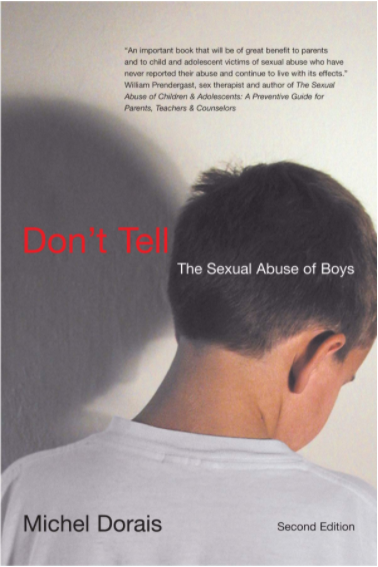
Don’t Tell: The Sexual Abuse of Boys, Second Edition
by Michel Dorais
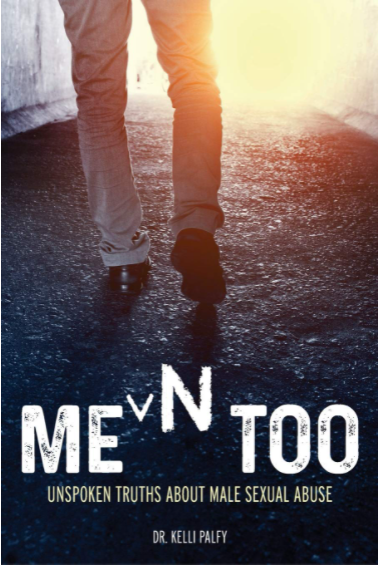
Men Too: Unspoken Truths About Male Sexual Abuse
by Dr. Kelli Palfy
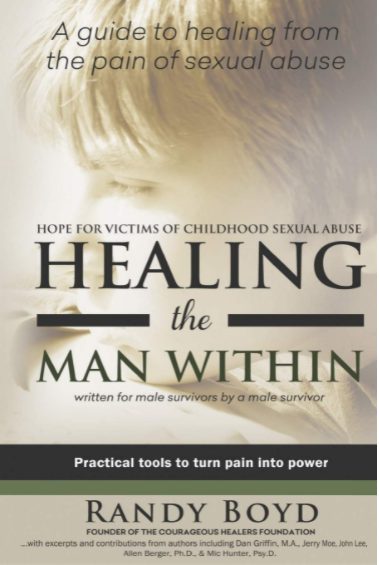
Healing the Man Within: Hope For Victims of Childhood Sexual Abuse
by Randy Boyd
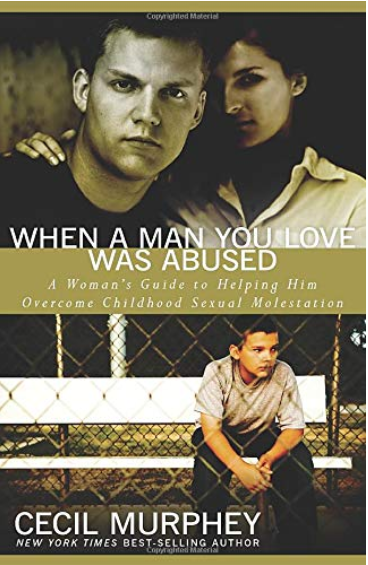
When a Man You Love Was Abused: A Woman’s Guide to Helping Him Overcome Childhood Sexual Molestation
by Cecil Murphey
[Disclaimer: this article is not intended to treat or diagnose any mental or behavioral health condition, nor is it a replacement for the advice or treatment from medical or psychological professionals, this article has been provided for the sole purpose of bringing attention to a topic that is far too often invisible]
Updated August 5, 2021
If you or someone you know is experiencing a mental health or substance use crisis, please access my immediate assistance resource page. A comprehensive listing of online and phone resources and services is also available.
In the Twilight of Memory
In the Twilight of Memory
Calling to me in the distance, I can hear them all say my name. Reaching out from the past, from moments that used to be. I drift beyond the precipice of wakefulness, I let go of my consciousness and slip behind the veil.
There is a brisk coldness in here, the pitch black swallows the light that broke through behind me, and I am left to walk blindly through the dark. Events and people of yesteryear play out in the distance, auditory memories of joy and pain.
I can hear laughter, a voice that is young and vibrant, I think it’s me, the old me when I was still innocent. There are other voices, repeating themselves like a recording, replaying conversations I once heard and once had.
I remember them, I remember those walks, those car rides, those late-night heart-to-hearts. These memories have smells, scents of summer, autumn, winter, and spring.
They smell like apple crisp, of coffee and cigarettes. They smell strong like perfume and hairspray, but also soft and sweet like angel food cake baking in the oven. They smell like fresh cut hay, cattle and pigs, manure, damp clay, and feed sacks of grain. They taste like cream soda and trail mix, like hard candy, and fruit punch. They smell like fish and taste like DQ milkshakes, and feel like car rides home in a 69 Chevelle.
I follow them to remember, to feel them again, I reach out into the darkness, I want to feel them all again…
The pitch black is transcendent, taking me to places illuminated in memories, projected like film strips, holograms of what once was my life, now lost to a time and a place I cannot return to, too faraway to go back to.
Other smells permeate, triggering flashes of days gone by, sensations of sun and heat, the touch of soil and grass, the humming of cicadas, the taste of french toast, of curly fries and homemade BBQ sauce, of dry spaghetti and parmesan cheese, and Lipton instant iced tea.
I can feel objects in my hands, things that have now claimed meaning they never had before, things made of plastic, things with colorful buttons and cords, of toy animals, trucks, and tractors. Action figures with swords and bows, cups and dishes, and a yellow brush with frazzled bristles.
Voices call out louder and I leave behind these memories in search of others, my senses invaded with triggers, I can smell burritos, chili and dinner rolls, I can taste chocolate milk, nasty carrots and old peanut butter, I can feel tiny pieces of gravel between my finger tips, I can hear the ping of an aluminum bat making contact with a softball, I can smell the leather of worn out baseball gloves, the smell of incense, the taste of wine, and the sight of flickering candles.
I can feel cold wood on my palms, the hexagonal shape of No.2 pencils, the smell of chalk, a used rubber eraser, of markers, I can hear the bell ring at recess, and I can smell the awful odors of a school bus ride home.
I hear voices here too, young voices I once knew, from a girl on the school bus who once made me listen to that Faith Hill song “This Kiss” while we literally kissed in the backseat, I can taste our shared McDonald’s McFlurry the one with the tiny M&Ms, I can taste purple Skittles – her favorite, and see Zero brand candy bars – also her favorite, I can hear her speak, I can see into her blue eyes, those beautiful blue eyes that would close for the last time just a few years later.
I can hear the swishing sound of track pants that everyone seemed to own, and I can feel the soft cotton of those blue sweat pants I wore every week because I hated the feel of denim jeans, I can smell sweat and deodorant, I can see him, that guy I had a crush on before I even knew that sort of thing could happen, I can remember what it felt like when neither of us were watching where we were going and bumped into each other in the cafeteria, turning just in time to make face-to-face contact. I pretended like our lips touching was the grossest thing ever, but actually I liked it.
In another direction I can hear the scuffling of dried leaves caught in autumn’s wind, I can smell them rotting, I can smell walnuts, acorns, and baking pecan pie. I feel the slimy insides of pumpkins on my hands and I can see flickering lights inside Jack-o-lanterns. I can hear high-pitched voices shout “Trick-or-treat” and the sound of candy being tossed into colorful plastic buckets.
I can smell doe pee and dirt, frying bacon, eggs, and deep fried fish and potato slices. I can smell beer and cigarettes, I can see people shuffling playing cards and wearing orange hats and vests, camo and flannel, I can feel early morning walks in the cold, I can hear birds chirping while watching the sunrise. I can taste chili with saltine crackers, I can smell chicken nuggets, and taste birthday cake.
Attracting my attention further in, is the sight of a table cloth with plates and silverware, the smell of baking turkey tempts me closer, I can hear the sounds of a parade on the television, the sounds of an electric carving knife. I can taste mashed sweet potatoes with melted marshmallows on top – my favorite, and I can see stuffing in a large dark green bowl. I can see white and dark orange bowls across the table with many other things like corn, buttery mashed Russet potatoes, gravy in a pitcher, and canned gelatin cranberry sauce cut into slices, I can smell dinner rolls baking, smell pumpkin pie baking, and I can see red Jello jiggling in a square container.
Wafting from elsewhere in the dark I can smell candles of spruce, fir, cedar, and pine. I can see twinkling lights of red, blue, green, and yellow. I can hear cassette tapes playing Christmas carols sang by the Chipmunks, I can taste green-dyed wreaths made of corn flakes and melted marshmallows, I can taste sugar cookies shaped like bells, stars, Santas and snowmen. I can taste balls of peanut butter mixed with crushed graham crackers covered in chocolate, and squares of fudge with a walnut on top.
I can hear “Silent Night” and “Joy to the World” in the echoing walls of a church, I can hear wrapping paper being torn asunder in the living room of my childhood home, I can see the flashes of cameras, I can taste egg nog, I can see outside the dining room window where snow is falling so heavily and piling up so deep that I could jump into it and just disappear.
Glistening like stars twinkling far away, my eyes are seduced by tin foil covered chocolates in the distance, nestled inside colorful baskets with shredded slips of green plastic. I can see colorfully dyed hardboiled eggs, I can smell baked ham and pineapple, I can taste potato salad, candy coated malted balls in blue, yellow, pink, and white, and I can taste pineapple upside-down cake.
These are only a few of the things hidden away here in the twilight of memory, they are mental photos and recordings of a place that still exists along the arrow of time, but is too far behind for me to return to. A version of me is still back there though, living in each of those moments, frozen along the filmstrip of my childhood, forever young and forever innocent.
Prajñāpāramitā Part II: The Heart of Insight
Prajñāpāramitā
Part II: The Heart Sutra
The second sutra that I will be explaining from the Prajñāpāramitā is the Heart Sutra. If you have not already read Prajñāpāramitā Part I: The Diamond Sutra, I encourage you to start there before continuing with this article on the Heart Sutra.
The Heart Sutra is one of the shortest sutras known to exist, but in its lines it holds the entirety of Siddhartha’s teachings. Think of it as a bud on a flowering plant, within it exists a bloom far larger than the tiny bud would lead you to believe.
Much like the Diamond Sutra, the Heart Sutra is all about breaking through our veiled perceptions of ourselves and the world in which we exist. This sutra is sometimes known as the “Insight Sutra” that can bring the student to the other shore of understanding.
Therefore, if the Diamond Sutra is the diamond-bladed sword that cuts through the illusions of our perceptions, the Heart Sutra is the opening of our eyes or the awakening of our minds so that we may know the truth. In less analogous terms, it gives us the insight we need to better understand life in a way that will liberate us from our narrow mindedness of what is and what is not.
The emptiness that is described in the Heart Sutra is more an explanation of the inter-being of both being and non-being, than it is some kind of suggestion that all is nothingness.
Everything we perceive with our senses is exactly that, a perception of something. But our perceptions of what is, attempts to define these things as solely those perceptions. When in reality, they are far more than even our senses can define. Zen Master Thich Nhat Hanh describes this perfectly when he explains that a tangerine is more than the tangerine we see with our eyes, smell with our noses, taste with our tongues, feel within our hands, or hear with our ears when we tear them open to eat.
A tangerine is the sun, the rain, and soil that went into its formation. When you eat a tangerine, you are eating the sun, the rain, the Earth. A tangerine is what the sun, the rain, the Earth looks like, smells, tastes, feels, and sounds like. This same understanding should be applied to all other things as well.
The Heart Sutra is the teaching that awakens us to the understanding that everything is a part of everything else, and in that interconnectedness there is a loss of individuality. Not one that we should fear or anguish in, but one that we should celebrate.
There is no life without death, no death without life, and there is no joy without sadness, and no sadness without joy. Everything is interconnected and there is no separateness.
The Heart Sutra as a mantra in Sanskrit: Om gate gate pāragate pārasamgate bodhi svāhā
In English: Om, gone, gone, gone to the other shore, gone altogether to the other shore, enlightenment, hail!
Moments in Time
Moments in Time
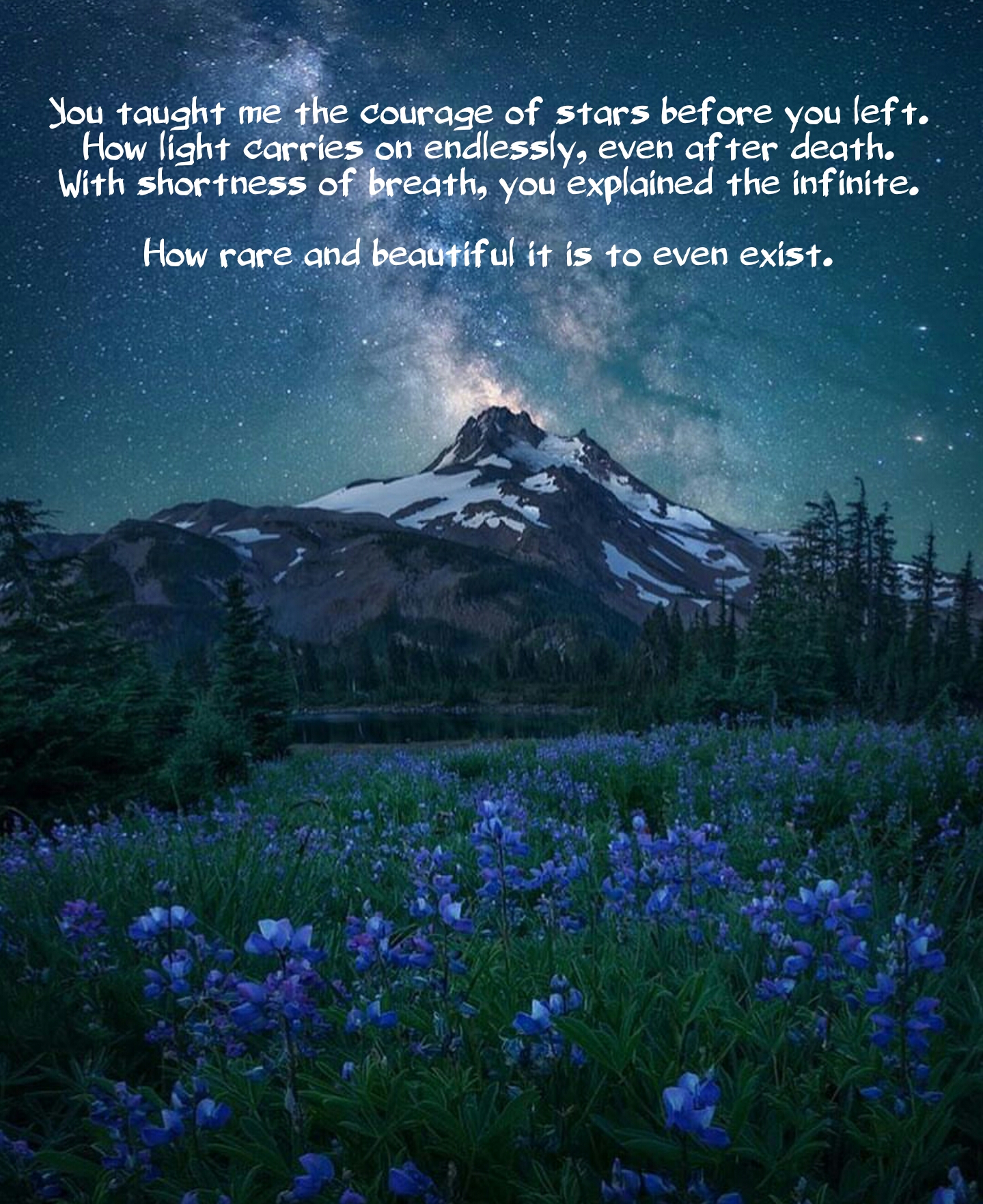
A moment is more than a measurement and more than a memory, it is a place in time. A static point in the timeline of the Universe, never lost and never changing. Every moment that has ever come to be and has passed, still exists – just in a different place in time.
Think of life as a movie, each moment is represented by a frame in that movie reel. Each frame marks a different moment in the film, just as events mark different moments in our lives. Just because a frame in a film has passed while you watch it, doesn’t mean that the frame has ceased to exist. It still exists, just in a different place in time.
It is equally true that every person we have ever loved and lost still lives, just in a different place in time.
When we turn our eyes towards the sky at night, we see all of those little twinkling lights, each a planet reflecting light or a star producing that light.
These objects are light-years away from us. The closest star, Proxima Centauri, is 4 light-years away. Meaning it would take four years while traveling at the speed of light to get there.
As incredibly far away as that may seem, the next largest galaxy nearest to our own Milky Way is the Andromeda Galaxy, some 2.5 million light-years away. The Universe is massive, near unfathomable.
When we look through our telescopes at these objects in space, we are looking into the past. Some of the stars out there no longer exist, we only still see them from here because it takes so long for their last light to travel here.
Our own star, the Sun, is so far away that it takes sunlight about 8 minutes to get here. If our sun suddenly vanished, we wouldn’t notice for about 8 minutes.
The distance between us and these objects in space is more than just the space in between, it’s time too. To travel through space, is to travel through time, that’s why it’s called space-time.
Think of someone you have lost, think of a moment you shared with them that you cherished. If you got into a spaceship and traveled away from the Earth through space-time at the speed of light for as many months or years ago the moment occurred, and you turned that ship around to face Earth and if you had a telescope powerful enough that you could see people on the Earth, that person you lost would be there still living in that moment in time you experienced together.
They are still there, right now, in those moments, still alive right now. Just in a different place in time. They will always be there in those moments. For as long as the Universe exists so too will they.
If your loved one ever looked up at the moon, at the planet Venus, or at any one of the stars overhead during their lifetime, then look up at them tonight because the two of you will be looking at them together, just from different places in time.
This profound understanding is the most beautiful thing that astronomy has ever taught me. It has given me a great sense of peace and comfort. I hope it brings you that same feeling.
To Be Acknowledged As Existing

To be Acknowledged as Existing
7,432 Americans will wake up today to what will be their last day alive, most of whom will not know this ahead of time.
According to the American mortality rate published in 2016 by the National Center for Health Statistics, that many Americans die each day due to various causes. There will come a day, perhaps even today, where you or I will be one of these Americans.
Ask yourself, are you living the best possible life that you could live? Are you making the best possible choices? Are the actions you are taking the best possible? If today was your last, would you be at ease with the legacy you’d be leaving behind?
We live out our lives in the false belief that we are each rowing our little boats alone, lost in this sea of life, paddling this direction and that, just hoping to one day reach the shore. In our frantic paddling we lose sight of what is closest to us, and that’s the people around us, each in their own little boat, fighting against the waves of joy and pain, the kind that we often cannot know about without acknowledging the person.
Behind even the brightest of smiles there can be the greatest of pain, and every interaction with another person can be the difference between them holding onto hope and letting it go.
We don’t always get to know where people come from, we don’t always get to know what kind of darkness they have to return to when they leave our presence, but what we can be certain of is that we have the power to control their experience while in our company.
Thich Nhat Hanh once said, “To be loved is to be acknowledged as existing.” If people know that we care about them, they will feel like they matter, and when they feel like they matter they can leave their worries and hardships behind for at least some small amount of time.
Over the years I have met people who have experienced abuse at home, who were suicidal, depressed, bullied at school, who hated themselves, and those who hated the world because they didn’t think anyone cared about them. In our presence these people are more than a story, more than a tragedy, even more than just some person we know. They are a part of our lives and therefore part of who we are.
Every day and in every moment we get to choose what we say and to whom we say it. We have countless opportunities to reach out and acknowledge the people in our lives, to let them know how much they mean to us, how positively they have impacted our lives.
I challenge you to do exactly that right after reading this. Shout it out so that everyone hears it, call them on the phone, send it to them privately in a long message, send them a card with a hand written note, pen them a letter and mail it to their home as a surprise.
For as connected as we are through our phones and the internet, it seems to me that we are further apart than we have ever been to other human beings.
I think that we are so used to people always being there, that we become blind to the fact that they are there, their presence begins to lose its perceived value and only when they are gone forever do we realize the opportunity and value of their presence.
Learn to express gratitude to the living – tell them that they matter, say good things about them, commit acts of kindness for and in the name of the living, go and visit them, learn to acknowledge and appreciate those who yet live and who make your own life worth living.
If you or someone you know is experiencing a mental health or substance use crisis, please access my immediate assistance resource page. A comprehensive listing of online and phone resources and services is also available.
Choose To Live
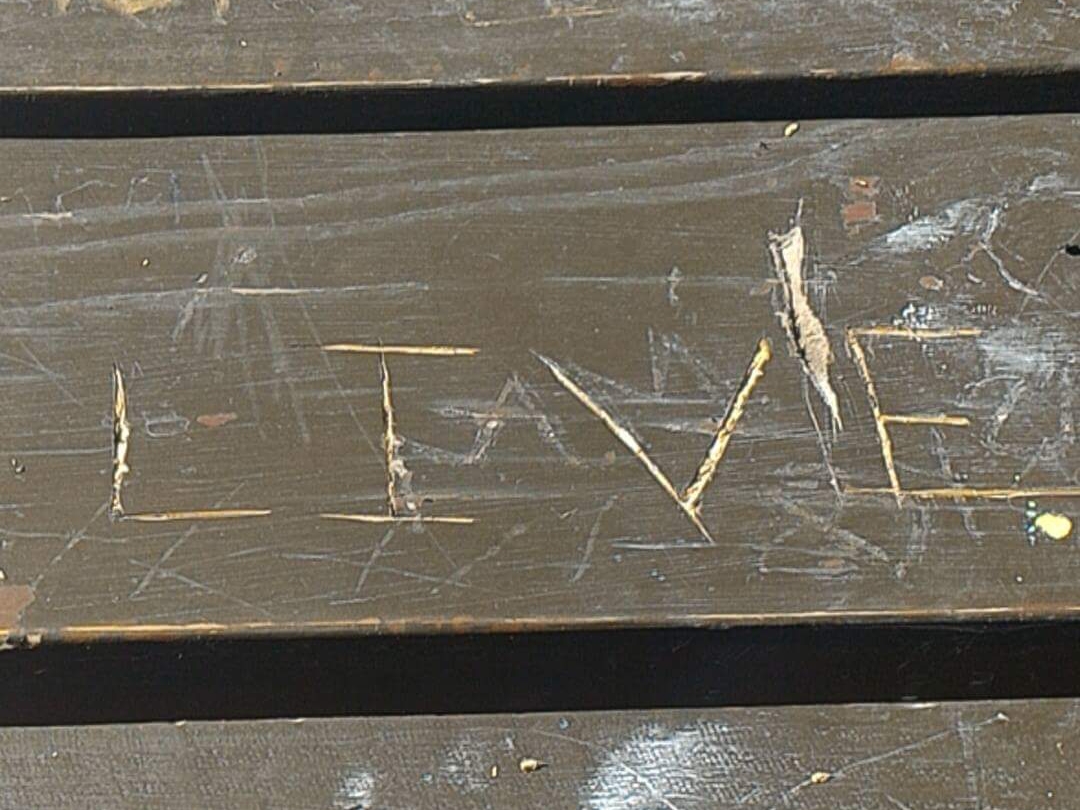
Following an extended period of depression, a friend of mine carved this into a park bench after contemplating suicide. He sent me the photo and I’ve kept it because I think it holds a powerful message.
Choose To Live
Do something that scares you. Go places you’ve never been before. Become the person you wish other people would be.
Ever since my mom died almost two years ago, I have constantly faced the mortality of my own existence. Too many people fail to see the fragility of life, the shortness of life. There are many dangers out there, but sometimes your greatest danger is becoming complacent and indolent.
By that I mean, too many of us fall into the trap of trying to make a living and failing to ever actually live. After her death, I felt like I needed to live. To get out beyond the familiar. To make up for lost time and missed experiences.
To not just be alive, but to feel alive. To see, to smell, to taste, to hear, to feel new things. To make choices that scared the hell out of me, to consider anything a possibility. To jump at opportunities, to get out of my comfort zone and try new things.
The most tragic thing about becoming an adult is losing that sense of wonder we have as kids. I’ve been trying to get back to that, trying to learn, trying to challenge myself, trying to explore, trying to feel alive.
I encourage you to do the same before it’s too late. Death, while tragic and finite, can be a powerful tool in changing your life. Death is a gift. I don’t mean just the act of dying, but the awareness of our own mortality. When weighed against death, so many things we give attention to are stripped of their falsely perceived importance.
In that moment our awareness transcends the veil of meaninglessness and for some small amount of time we see how lucky we truly are to be alive.
It’s a truth easily lost to the mundane comings and goings of daily life, which is why we must constantly remind ourselves that death is real and that it may be just around the corner.
For more on the value of existence, I suggest my article, The Inexplicable.
If you or someone you know is experiencing a mental health or substance use crisis, please access my immediate assistance resource page. A comprehensive listing of online and phone resources and services is also available.
The Power of Belief

The Power of Belief
I was born into and raised within a Christian community, more specifically a Catholic parish. This article will discuss how I went from attending a private Catholic school and Catholic Mass every weekend, to feeling a lot of doubt in faith during high school, to becoming a born-again Christian in my early twenties, and then finally becoming a non-believer. Seeing as today is Easter, one of the most important Christian days of observation, it couldn’t be a more suitable time to reflect on the power of belief and all that it entails.
Growing up, my family was fairly religious. We were not the Evangelist type that tends to go about proselytizing to non-believers in an attempt to get them to convert, but we were certainly a part of the Christian conservative ranks of Midwestern Americans. From attending a private Catholic school, to observing Catholic holidays and participating in parish community events and various religious sacraments throughout different stages of life, much of our lives pivoted around religion.
Throughout my childhood, the idea of questioning anything that I was being taught never once entered my mind. My family, my school, my community, everything all around me was immersed in Catholicism. It wasn’t just one small aspect of our lives, it was an integral part of everyday life. From the words we used, to the way in which we conducted ourselves and how we saw the world, faith was the lens through which we experienced life.
Belief, the tenants of faith, this wasn’t just ideas in our heads, it was action. How we interacted with those around us, whether they were family or stranger, belief was something that was always with you and in the things that you did. Of course in being a kid, however, religion was still something that I was not fully capable of grasping. It is not unlike learning to ride a bike. You can watch others do it, attempt to mimic them, but for the most part you still need a guiding hand when starting out. In time and through practice you gain a much deeper understanding of what you’re doing, the mechanics of the bike, how to control and navigate your way while keeping yourself upright.
Faith is very similar in that it requires due diligence, constant reflection, sometimes a guiding hand, and continued practice in order to understand all that a religion encompasses. As kids, we’re all easily distracted or led astray, adult things typically do not engross us the same way that humor or entertainment does.
The things that were likely to catch my attention as a kid were the lives and actions of the various saints, more than the salvation of my own soul, a concept I could not actually contemplate at such a young age. Transubstantiation was certainly not a concept I fully grasped. Even though the Catholic church teaches that during the sacrament of the Eucharist, the wine and the unleavened bread offered are literally turned into the blood and body of Jesus Christ, inexperienced children and even those who have already undergone the sacrament of First Communion, still have no understanding of what the priest or the adult congregation is uttering about. They look at the wafers of pressed bread and the wine for what they are and not what they are allegedly transformed into.
As an adult, I look back at such a ritual and realize how cult-like many of the sacraments of Catholicism truly are. Eating flesh and drinking blood are very pagan in origin, no doubt a concept adapted from old world belief systems when Christianity was subjugating non-Christians while it swept across Europe, absorbing many of the beliefs and figures of religions in other civilizations.
I continued to attend a private Catholic school, spending eight years of my life as a student there. Once I entered into high school, I found myself no longer surround by other Catholics. There were various types of Christians and some who had no religion at all. Public school was a very different place than what I was used to and most of the students I had grown up with all went to a different high school. Only one other student came with me to this public school and so I went through a bit of culture shock. I attended mass at church less frequently during these years, but I did fulfill my last sacrament, that of Confirmation, when a young person who was previously baptized becomes a full member of the Catholic Church.
It was during high school that I spent a lot of time thinking about what I believed in. Witnessing others who were not Catholic and hearing them talk about what they did or did not believe in, set in motion my own self-reflection. Things that I was once told to stay away from and that were considered a sin or the workings of Satan seemed less scary to me. I was less afraid of other religions and belief systems and slowly started to grow less interested in my own childhood religion. The world, in my tiny corner of it anyway, seemed to be expanding beyond what I once knew.
Throughout high school and two years afterwards I spent a substantial amount of time reading articles about other religions, watching documentaries about their history and belief systems, buying books about them, and looking for information online. I was immensely curious about the things that other people believed, especially people on the other side of the world, with their cultures and customs so different from my own. I acquired a thirst that could not be quenched by the religion that I had spent the entirety of my life, up to that point, steeped in and devoted to. I was tired of Catholicism, bored with it, uninterested in it, and above all else beginning to doubt what I had been taught was absolute truth.
When I learned that millions of other people believed in religions that were not my own, that they had their own views of a creator or in some instances creators, I was mind blown. I had been living under a rock of Catholicism and had no idea there were so many other belief systems out there, all with their own stories and figures, laws and codes of conduct. It fascinated me that my own religion was supposed to be the one true religion and yet here were all of these others, with millions to hundreds of millions of followers, all convinced that their religion was the one true religion. I wondered to myself how so many people could all think their religion was the right one while everyone else was wrong.
After spending some years learning about other world religions, I eventually made my way back to Catholicism. But the religion of my childhood was not the religion of my young adulthood. I no longer saw my childhood religion the same way, not necessarily because I was then in my early twenties, but because I had learned so much about the world, about cultures, about faith in a much more general sense, grasped more of an understanding of what it meant to believe and the power such a thing can have. In essence I both physically grew up and spiritually grew up.
I rejected the old way that I was taught to view various elements of my religion. I tossed aside outdated and irrational ideas and teachings, such as those about sacrificing animals, killing non-believers, beating women who had sex outside of marriage, and the list goes on and on. These things to me were not the Word of God, but were instead the trappings of impure minds who had attempted to use my religion to push their own beliefs. They were heresy in my mind and not what my perception of God would have wanted his followers to engage themselves in. Therefore, when I read the Bible, I skipped over the verses that I believed were penned from minds of weak men and not the true Word of God.
Other elements of my religion that were once distant or unknown to me became very close, exposed and available in a way that removed the obscure nature that once blinded me to what it meant to believe. It was in my early twenties that I became a born-again Christian, or to be more accurate a born-again Catholic. I returned to attending Mass on a weekly basis. I became much more vocal about my beliefs than I had ever been before, suddenly it became not just something that I believed, but it also became part of who I was, my identity. I didn’t just want people to know that I was Catholic, I wanted them to see me and the joy I found and then consider their own beliefs, to nonchalantly encourage others to convert.
I would even wear Catholic themed t-shirts in the hopes that people would point it out to me and start up a conversation. And this worked, people did often comment on my shirts, asking about it. Whether I was at work, at the movie theater, or that one time in a hospital elevator, men and women, young and old, would either comment on my shirt or ask me about its message. During this time I also wore a Cross around my neck, and in an act of penance branded a cross on my forearm, to act as a constant symbol of my faith in Jesus Christ. I did this believing that I should in some way make my own physical sacrifice for the ultimate sacrifice He made for me, a constant reminder to never again wander astray from following my Lord and Savior.
All of these outward things came into existence because of what I felt inside. A lot of people who come from backgrounds that are not religious, have a hard time understanding the power of belief. Without the experience of feeling it for themselves they cannot fathom why people hold so tightly to it. Rediscovering my faith changed not only the way I saw everything outside of me, but everything that I saw inside of me. I was literally born-anew, I believed that I had been touched by the Holy Spirit. I felt this swelling of love inside of me, a love for life and for others, a sincere belief that my soul had been saved and that I must live my life in such a way that reflected the teachings of Jesus Christ, for I was a living vessel of God, my Father.
In addition to the other things I’ve mentioned, I also started listening to Christian Rock. I favored bands such as Casting Crowns, Jars of Clay, Third Day, Jonah33, Red, Fighting Instinct, Decyfer Down, among others. Listening to songs of worship filled me with a sensation that I would assume many others feel when they listen to songs of worship. A sense of joy, like I was somehow in-tune with God, that His Holy Spirit was entering into me, and I felt strong, I felt safe and that any sadness I had went away, I felt healed, empowered, fearless, somehow invincible, like I could do anything. These are the types of feelings other people claim to have at certain religious gatherings, it is the power of belief.
Through these experiences I began to believe that I needed to reach out to other people through more legitimate ways. Naturally, I turned to ministry. When I was much younger, I had contemplated the priesthood, but it was not something that I ever pursued seriously. I had a cousin who had chosen that path and so I spoke with my mom about the idea. I didn’t want to take the time to go to seminary school, which all Catholic priests must do. Because I rejected some of the views of Catholicism, I did not feel as though I belonged in such a place, despite having the desire to change the Catholic church and bring it into a more modern ideology. Instead I decided to look for a Christian ministry that was seeking a younger generation of leaders.
I found this ministry with the Interfaith Church, which sought to bring people of various religions together. At this point I had gained very unitarian views of world religions, believing that the world would be a far better place if these systems of belief unified with common goals. I applied for ordination through this church and was asked to take a test and write an essay about my beliefs and why I was seeking ordination. I passed the test and was celebrated for my essay, and so the church offered to ordain me as a young leader of their ministry.
I graciously accepted and in 2010 I officially became a minister of the Interfaith Church, receiving a certificate of ordination and an identification badge. Soon after, I traveled to the local court house to make sure that my paperwork was legal and that I could legally perform marriages within the community. The county clerk took my paperwork to the attending judge who was not in session at the time and brought it back stating I was good to go. The judge came out to meet me and shook my hand, welcoming me to the community as a minister.
Not long after this took place, the doubt that had once been vanquished from my mind came back to haunt me. Just as my faith had returned with a certain vigor, my doubt equally came back with a virulent power that changed everything for me. Not only did I eventually stop believing in Catholicism or even Christianity, but in time I would stop believing in the existence of a creator god. During this process I stepped down from the church and informed them that I no longer wished to be a minister, realizing that I was no longer fit to act as such. They seemed baffled and did not know what to think, since I had previously discussed with them about establishing a new church in my local community. And now there I was surrendering my ordination and walking away from it all.
I stopped wearing anything that reflected Christianity, I stopped attending Mass, the world seemed to come crashing down as though it had all been a dream, a fantasy, a constructed set on a stage. For the next several years I plunged back into my own soul to search for answers, to ask questions I had never before dared to ask, particularly on the existence of any sentient god at all. In time I became an atheist, someone who does not believe in the existence of a creator god, realizing that I did not believe any type of omnipotent being existed, no such being could exist in this part of the Universe with the types of things that take place here. No being must exist unless he or she be evil. The process of course was not this simple, the questions and answers not so easy, it took years to go from being a believer to being a non-believer.
Science soon replaced the metaphysical way in which I saw the Universe and humankind. From physics to neuroscience, my understanding shifted from believing in the supernatural to looking toward the natural for answers about the questions I had on birth and death and everything in between. I looked towards people like Richard Dawkins and Sam Harris for guidance and information. While they certainly helped on the subjects of science and psychology, they could not assist me in life after faith, as neither of them were particularly religious in their youth. Instead, I had to find my own way through and writing down my thoughts became for me a torchlight showing me the way through that darkness.
Being a spiritual person, however, means that the road cannot just simply end there, and it has not ended there. In more recent years I have spent my time going back to the old belief systems that once interested me in my late teens, particularly Buddhism as there is no creator god in this way of life. I have spent quite a bit of time studying the various Buddhist scriptures including the Tripitaka and the Prajna Paramita. For the most part, I do now identify as a Buddhist student of the Mahayana tradition, but certain aspects of the Theravada monastic tradition do interest me and I find it rather commendable to give up one’s personal life to pursue a life of study, service, and practice. I do practice meditation, but I am not interested in the esoteric beliefs of Vajrayana Buddhism, such as deities and the more mystical ideologies.
Apart from a structured belief system, or way of life to put it more correctly, I do also hold a high reverence for nature and the greater Universe, a very spiritual perspective of it and physics. I incorporate these views into my practice and carry on with my life without feeling as though anything is missing. One would think that the huge jump from ordination to atheism would leave someone wanting, but I have not found anything missing from my spiritual life. In fact, I look back now and stand in amazement at how I ever believed the things I used to believe. It’s as if I am looking back at a completely different person, as if the memories are not mine, but someone else’s. Perhaps in some sense I am, for the lenses I once wore have been removed from my eyes and I can now see the world more clearly, without prejudice, ill-judgement or preconceived notions.
The power of belief can do great things for you, but it can also do great harm. One must always be aware of what they believe and how it impacts not only their own life, but the lives of those around them. Anyone can believe in anything, the world religions are truly no different than the fictional tales we often cherish. Stories such as those on Middle Earth by John R.R. Tolkien, where the lore and tales are so well-thought-out that one could easily mistaken it for a real world religion. In fact, I would go so far as to say that his lore is certainly far more interesting and enjoyable than anything the writers of modern or ancient religions offer. Even though such lore is known to be fictional, many people enthrall themselves with it in a way that is almost spiritual, making it a very important part of their childhood and adulthood.
Beyond J.R.R. Tolkien’s legendarium, other fictional works inspire the same kind of love and loyalty. The Star Wars Universe, the Marvel Universe, the Elder Scrolls series, all of these offer a rich history of fascinating belief systems and stories of legendary figures that often out perform world religions in what they teach. The difference again being that people know these collections to be fictional and most people don’t even pretend to believe in them. Yet, in religions we have people believing equally outlandish tales of astounding feats and omnipotent beings and legendary figures, but all of these things written in scrolls, pamphlets, and books are considered true stories and are believed by followers as real. Except that followers of one religion will declare the religion of another to be false, while failing to see that his own is equally unbelievable.
Imagine a world where people believed J.R.R. Tolkien’s characters and stories were true, that his books and the films were considered sacred, and that other people believed that George Lucas’ Star Wars Universe was real and the films and books considered sacred. Each side believed the other was wrong and not only did they argue over who was right and condemn one another in the error of their ways, but that they went so far as to kill each other over it. Well guess what, that is the world we live in, it just doesn’t involve modern systems of lore that people are dying over, it’s ancient systems of lore people are dying over. This too is the power and the danger of belief.
How startling it is to realize that there is absolutely no more credence to believing in any one of the world’s religions than there is in believing in Tolkien’s legendarium. Neither can be proven to exist, but neither can be proven to not exist. You would be just as well off worshiping Tolkien’s created god Eru Ilúvatar as you would any of the other thousands of created gods among the world’s religions.


Out of the Darkness: My Experience with a Mental Health Condition
Posted on September 20, 2018 by Kēphen
Leave a Comment
My name is Kephen Merancis and there’s really no easy way to start the conversation that we need to have. It takes a lot of courage to break the wall of silence that stigma builds. It takes at least a little bit of hope to begin the process of walking out of the darkness. And it takes support to rise above the pain caused by mental health conditions and substance use disorders.
In the following three thousand words or so I will be painfully honest with you, I will be vulnerable about my own personal life experiences with a mental health condition.
From my willingness to be open about this, I hope that you will feel an emotional connection, perhaps even to your own story. If you are experiencing depression right now, I hope that by learning of my story that it plants that small seed of hope inside of you if you don’t currently have it, and I hope that by telling my story it encourages you to reach out for help.
To begin, I want to share with you a journal entry I wrote when I was 25 years old, it will help you begin to form an idea of what I experienced.
I wrote those words on September 18, 2011. It was one of many writings I did while I was experiencing the ups and downs of my mental health condition.
You see, I have bi-polar disorder, and the first time I became suicidal I was a teenager. When I was 14, I started venting troubled thoughts in a private journal. I started opening up about my feelings in this journal because a teacher encouraged me to keep writing after enjoying something poetic I wrote during a class project.
Little did she know that one day in the future, writing would help save my life. But not yet, because the first time it could have saved me, the words were overlooked.
My parents found that journal when I was 15 and asked me about it, but I pretended like it was nothing and so my parents never asked about it again. Those words in that journal were the first warning sign that something was wrong, a sign they chose to ignore because they wanted to believe that I was just being a moody teenager and that everything was fine.
Like most parents, mine were not well versed on the signs and symptoms of depression, let alone a more serious mental health condition like bi-polar disorder.
My first experience with attempting suicide happened three months before my 17th birthday. I waited until my parents left the house to go to the grocery store, and when they did I placed my letter of apology on their bed, it was a suicide note that I had written in advance.
I then walked out of my house for what I believed was the last time. I can remember how different everything felt. I felt lighter, like the burden of choosing to live and suffer, or to die and be free, had been lifted from my shoulders. I felt as though I was ready to let go of my struggle and my life, which to me were synonymous.
I was acutely aware of everything around me for the first time in a long time. The colors of things looked brighter and crisper, the sounds more sharp, the smells were stronger. Some seventeen years later I can still remember what the yellow grass at my feet and the humid air from the overcast sky smelled like that August evening.
I walked down the hill behind my fathers shed, far enough to be away from the house, but not so far that someone wouldn’t find my body.
In my hand I carried a small off-white colored cup the size of a pill bottle. Inside of it were a mix of ingredients that I had put together myself. In my poetic mind I felt like dying by poison seemed appropriate, and was inspired by the Greek philosopher Socrates who was forced by religious authorities to take his own life by hemlock.
I felt like I was being forced to take mine in order to be free of the mental pain I was experiencing.
I remember holding that small cream colored cup to my lips, just holding it there as the murky liquid touched my mouth. Many thoughts raced through my mind.
Thoughts of people, of events, of feelings. Of anger and pain, of regret and guilt, of shame and loneliness, feeling as though I didn’t belong anywhere nor deserved to belong anywhere, so many emotions that tears started streaming down my face. And in that moment the land around me fell silent, as though I and nature both held our breath together.
As that little cup slipped out of my hand and away from my face, I watched it in slow motion fall to the ground. I watched its contents spill out into the grass.
I didn’t drink it though. I never allowed it beyond my lips. No matter how much that voice in my head told me to do it, I couldn’t drink it.
I remember falling to my knees behind my father’s shed in defeat, while the overcast sky began to release a soft rain. I yelled out in tearful anger that I was too weak to end my own life. I blamed myself, I blamed god, for I was angry that I was stopped by my fear of death.
My fear… it was stronger than my pain in the beginning, but my fight had only just begun. When I was 18, I once again became suicidal and began having impulsive desires to take my life.
After realizing that suicide by poison would be too slow, too painful, and not likely to be successful, I began contemplating more efficient methods. I started thinking about more violent things like intentionally crashing my truck on my way to or from work. Other times I’d think about shooting myself.
The thoughts would even rush into my head sporadically without my control. I’d just be driving when all of a sudden I would feel this immense desire come over me to just swerve to the right and flip my truck into the ditch. Or while eating lunch, the thought of holding a gun to my head would just creep in. Even if I wanted to I couldn’t make these thoughts stop.
In January of 2005, two months after my 19th birthday, I reached my next breaking point. The feelings inside, the desire to end my life, were so strong that on the morning of the 28th I knew I would never see the sunrise again. After an argument at work, it became apparent that I needed help, my coworkers offered to take me somewhere, but I decided to go home to tell my parents they could either listen and save me or they could keep pretending everything was fine and let me go forever.
This time, they listened and I spent a few days in St. Mary’s hospital in their psychiatric ward on the 4th floor, while my father removed the firearms from our house.
I spent the next two years seeing counselors, psychiatrists, social workers, and taking a half dozen different kinds of pills. Some of those pills helped, some hurt, some caused hallucinations, some did nothing but make me sleep a lot.
Eventually I found one that worked well and I stabilized, and like many people do after feeling better, I was convinced I was fine and stopped taking my medications.
For six months I remained well, in fact I had not been that well for years. In 2007, I enlisted in the United States Marine Corps.
After a few weeks at bootcamp, the shin splints I that I had been developing before I left home had begun affecting my training. As the rigors of training wore down my body, that new found resilience of my mind collapsed and awakened once more was the power of my disorder and it returned with all of its previous influence.
I became suicidal while in San Diego, California as the belief that I was weak, a failure, a burden, became embedded in my every waking thought. The scissors they gave us to keep our uniforms free of loose threads suddenly found their way into my thoughts with a different purpose.
One night, I cut myself on the thumb to see how much it would hurt, but it didn’t hurt as much as I thought it would. There was more blood than I expected so I wrapped it up and when one of my Drill Instructors saw it during inspection, I told him that I had just cut myself with a shaving razor by accident. Little did he know, I was having impulsive thoughts of where else I could stab or cut myself.
In my letters home, I tried to not mention these things, but I was being swallowed by the darkness of my own mind. I knew I needed help, but I was caught between feeling ashamed and embarrassed of my mental health condition and feeling like a failure and a weakling.
While I was at boot camp, I met other young men like me, who didn’t respond the way we were supposed to. Instead of our DI’s being able to break us down to be rebuilt stronger than before, we were broken in so small of pieces that we could not be rebuilt without serious professional help.
While posted in the barracks of another platoon, I was ordered to watch over a recruit who was deemed a flight risk, meaning they thought he’d try to runaway.
When I walked in, I saw him curled up in a fetal position in the corner sobbing uncontrollably, his arms wrapped around his knees. After the DI left, I tried to console the recruit from the door where I was ordered to stand guard. The kid could not have been older than 17, and at this time I was 22. I knew he heard me speak to him, but he never turned around and never responded to my attempts to reach out.
When I saw him in his state of mental crisis, I saw myself, not literally curled up in a corner like him, but as equally mentally unstable. I was stationed there with another recruit from my platoon who told me to stop talking to the kid because he wasn’t one of ours and wasn’t our problem. But I didn’t see him as a problem, I saw him as someone who needed more help than a Drill Instructor was trained to offer.
I still often think of that recruit and wonder what events had led to him being in that condition before I got there, and what became of him after I left.
On a different occasion during a visit to medical, a recruit from another company than mine was sitting next to me, he asked me why I was there. I decided to be honest and told him I was bi-polar. He then began to describe to me what he was experiencing, which were clearly symptoms of a serious mental health condition.
After that conversation I found the willpower to seek help for myself and I confessed to my DI’s and to a Naval psychologist that I had bi-polar disorder, something that I had not reported when I first enlisted. I had seen various different doctors before enlisting and so my medical information was scattered all over the place.
During enlistment I didn’t report nor give them the contact information for the physician who diagnosed me with bi-polar disorder because I knew it was a disqualifying condition. I deeply believed in joining the military, and there was nothing I wouldn’t do to make it happen, even if that meant illegally withholding important medical information.
My commanding officer recommended I receive an uncharacterized discharge due to my condition, rather than see me receive a dishonorable discharge for withholding that medical information.
While waiting to be discharged I spoke to a recruit who had asked me why I was leaving. Most of the other young men there never cared to ask why I was leaving and those who did ask didn’t know what being bi-polar meant. But this young man was different, he told me his sister had bi-polar disorder and that he loved her no matter what.
Those words felt very heavy to me. It was the first time that I understood that having a mental health condition didn’t mean that I was less than or not good enough. That being broken didn’t mean that I was worthless. On day 47 of boot camp, I left that place, but that place has never truly left me.
It’s been more than ten years since that event. To assume that everything has been great since then would be a false assumption.
Having bi-polar disorder or any other mental or behavioral health condition means that there is not a cure, a magical pill or therapy that will take it all away. It’s a process that begins with therapy or medication, or both, it’s a learning process where you and professionals figure out what the best treatment is for your personal circumstance.
It takes self-awareness, it takes compassion, it takes education, it takes action, it takes time, it takes faith in something, and most of all it takes hope. The hope that tomorrow will be different, and maybe even better than today.
People used to ask me why I wanted to end my life. It wasn’t that I wanted to die, it was that I didn’t want to hurt anymore and I didn’t see any other way to end that suffering. Not enough people noticed that I was suffering, not enough people knew what the signs and symptoms were in order to recognize that I needed help.
Those reasons are why awareness matters, people need to understand how to identify someone who is suffering from some form of mental or behavioral illness, whether it’s some variance of depression, an anxiety disorder, post-traumatic stress disorder, bi-polar disorder, schizophrenia, or any other serious condition.
Part of awareness also means we become aware of the language we use to discuss mental or behavioral health. There is a reason why mental health advocates and organizations are trying to end the usage of the word “commit” when we refer to those who die by suicide. Criminals commit crimes like theft and assault, people who die by suicide are victims and not criminals. They complete suicide, they die by it, they are victims of suicide.
While suicide itself can be an impulsive act, the process that gets a person to that point, for the majority of victims over the age of 15, can be a long drawn out process, ranging from weeks, to months, to years, or even decades, and often includes several suicide attempts before they are successful. The culmination of that process is suicide, that’s why we now say someone “completes” suicide.
It is the endpoint of a process where there are signs and symptoms that something is wrong, and so we must begin to learn what to look for, what to listen for, how to ask directly if someone feels suicidal and how to act when faced with someone who is. Awareness and prevention, those are my goals with this advocacy project, and together with others who share the information and resources collected here, we can achieve those goals.
In the words of Margaret Wheatley, “Be brave enough to start a conversation that matters.”
If you or someone you know is experiencing a mental health or substance use crisis, please access my immediate assistance resource page. A comprehensive listing of online and phone resources and services is also available.